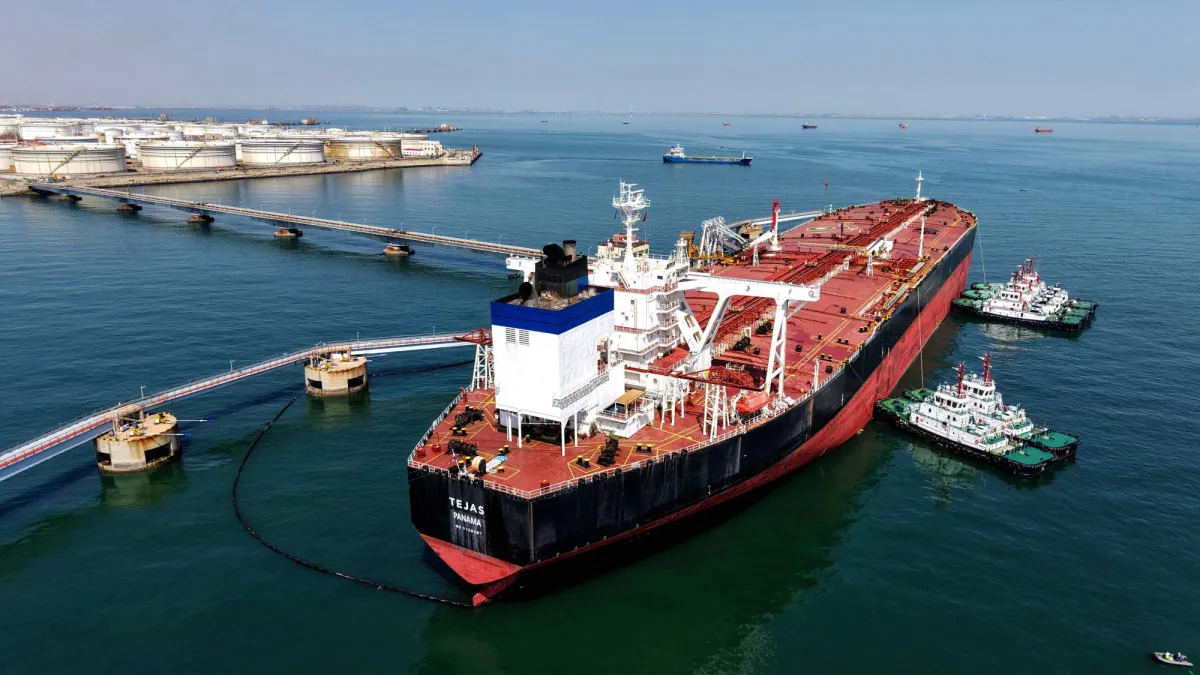
Global oil prices have risen significantly on Wednesday, with Brent crude surpassing the $111 per barrel mark, while U.S. crude climbed nearly 3% to approach $116. This spike was fueled by unprecedented escalation from U.S. President Donald Trump towards Iran, who described the current moment as "one of the most important moments in world history."
Trump announced the end of what he termed "47 years of extortion, corruption, and death" in Iran, placing energy markets on high alert. Analysts believe these statements could impact global supplies, as markets await the repercussions of what Trump called a "historic night."
Event Details
In related news, data from the London Stock Exchange indicated that the Yamal liquefied natural gas project, managed by the Russian company Novatek, has sent its first shipment to China since November. This development comes weeks before the gradual implementation of the European ban on Russian gas imports.
The project, located in the Yamal Peninsula in the Arctic, had been exporting most of its production to Europe. Russian President Vladimir Putin indicated that his country might redirect gas flows away from Europe due to the European Union's decision to ban Russian gas imports by late 2027.
Background & Context
These developments occur at a time when global markets are experiencing sharp fluctuations due to conflicts in the Middle East. Japan, for instance, faces significant challenges due to its heavy reliance on energy imports, making its economy vulnerable to rising fuel prices.
Japanese Prime Minister Sanae Takaichi confirmed that she does not intend to ask households and businesses to reduce energy consumption, despite concerns regarding supplies. Meanwhile, the Japanese Finance Minister stated that the government will remain in close contact with G7 countries to monitor developments in the Middle East.
Impact & Consequences
The sharp rise in oil prices could significantly impact the global economy, as it is expected to lead to increased production and transportation costs. Japan, which relies almost entirely on oil imports, may face pressure to prepare an additional budget to boost economic stimulus.
Government data also showed a decline in an index measuring the health of the Japanese economy, highlighting economic weakness even before the repercussions of the conflict with Iran. This decline could lead to an increase in bankruptcies in affected sectors, such as the home painting industry.
Regional Significance
The Arab region is directly affected by these developments, as many Arab countries are among the largest oil producers in the world. The rise in oil prices could benefit the economies of these countries, but at the same time, it may lead to increased political and economic tensions in the region.
In conclusion, global markets remain on alert for what the upcoming developments will bring, especially as tensions in the Middle East continue to escalate.