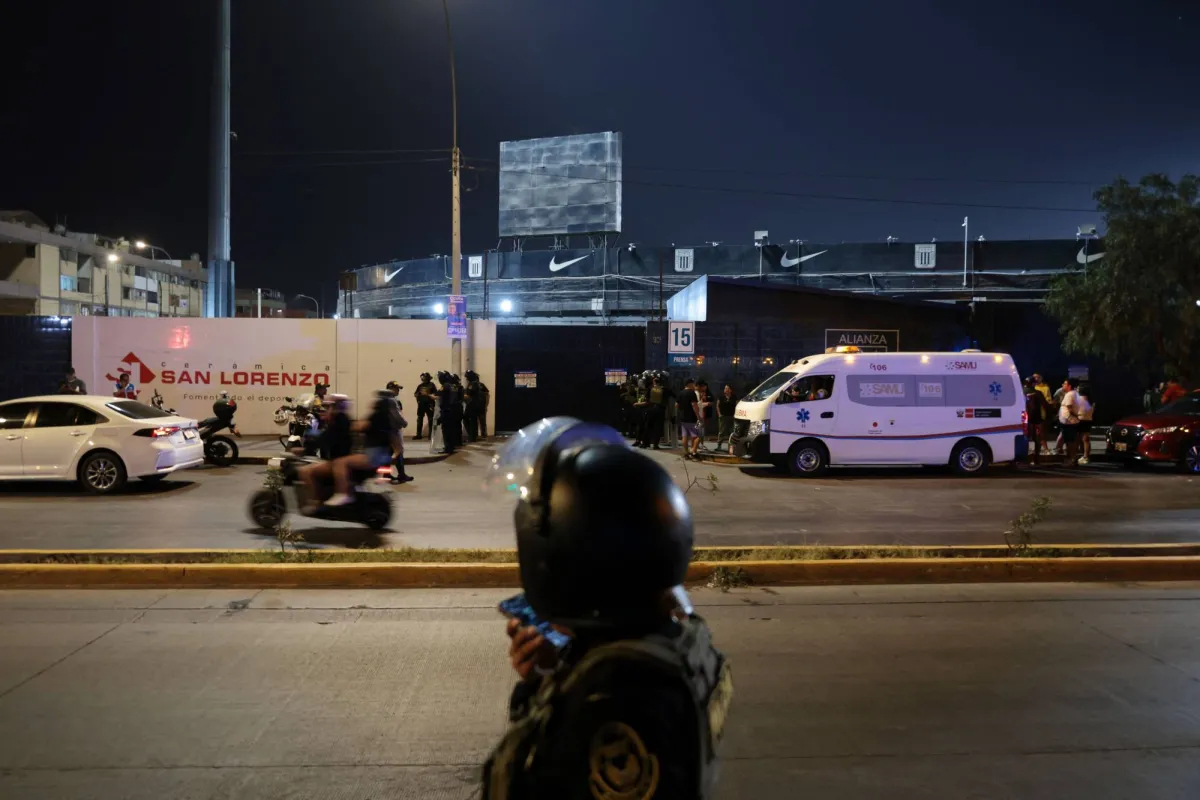
At least one person was killed and 47 others were injured in an incident that occurred on Friday at the Lima stadium during a gathering of fans ahead of a football match. Peruvian Health Minister Juan Carlos Velasco confirmed that the incident resulted in the death of one fan, while 39 individuals were transported to the hospital, including three minors, with three of them suffering from critical injuries.
Initially, there were speculations about a possible collapse of the stands at the Alejandro Villanueva stadium; however, the club and firefighters denied this. The club clarified via the X platform that the incident was not due to any wall collapses or structural defects in the sports facility.
Details of the Incident
Minister Velasco informed the press that the incident was unfortunate but did not provide precise details regarding the circumstances that led to it. A fire department official confirmed that "the structure of the southern stand appeared to be in good condition," indicating that there were no collapses or falling debris onto the field. This incident comes at a sensitive time for sports in Peru, where football matches are considered among the most important social and cultural events in the country.
It is noteworthy that the Peruvian Football League announced that the derby match between Alianza Lima and Universitario will proceed as scheduled on Saturday, reflecting a desire to maintain sporting activities despite the unfortunate incident.
Background & Context
Historically, sports venues around the world have witnessed similar incidents, where large crowds sometimes lead to unfortunate occurrences. In Peru, football is an integral part of the national culture, making any incident related to it raise widespread concern among fans. The country has seen improvements in safety standards in sports facilities in recent years, but this incident highlights the urgent need to review these standards to ensure fan safety.
Moreover, incidents at stadiums can negatively impact the reputation of sports in the country, necessitating immediate action from local authorities to prevent such occurrences in the future.
Impact & Consequences
This incident could have significant repercussions for football in Peru, as it may increase pressure on clubs and sports authorities to enhance safety standards. Additionally, this incident may affect attendance at upcoming matches, as fans might feel apprehensive about their safety while attending sporting events.
Furthermore, the government may be compelled to conduct thorough investigations into the incident, potentially leading to changes in laws and regulations concerning safety in sports facilities. This could impact how sporting events are organized in the future and increase costs associated with improving safety standards.
Regional Significance
Stadium incidents are a sensitive topic worldwide, including in Arab countries. Some Arab nations have experienced similar incidents in the past, prompting strict measures to improve safety standards in stadiums. This incident in Peru serves as a reminder of the importance of safety at sporting events and reinforces the need for knowledge exchange between countries to enhance safety standards.
In conclusion, all stakeholders, including clubs and sports authorities, must work together to ensure fan safety and prevent the recurrence of such unfortunate incidents.