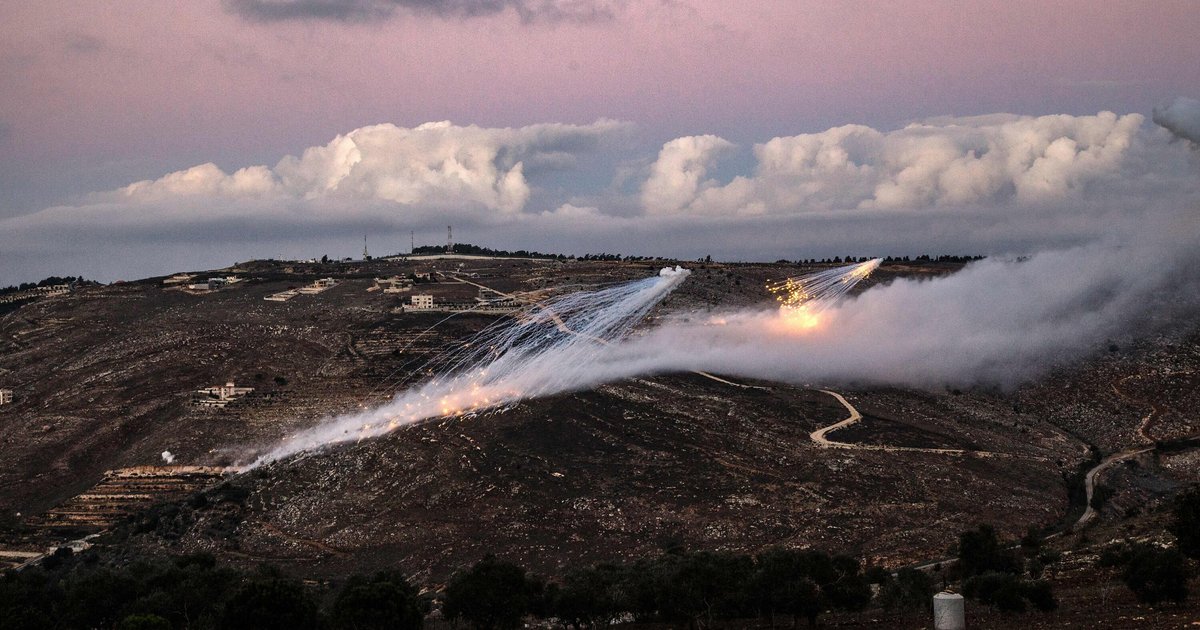
One full month after the outbreak of war on February 28, the confrontation has evolved from mere exchanges of strikes between Iran on one side and the United States and Israel on the other, into a multi-front regional war. This war began with a strike targeting the state’s leadership and military command in Iran, leading to severe civilian casualties within Iran, before its effects extended to the Gulf and Lebanon, impacting gas, steel facilities, and maritime routes.
As of March 27, the death toll in Iran surpassed 1,900 with at least 20,000 injured, while the death toll in Lebanon reached 1,142, and there were 19 fatalities in Israel and 13 American soldiers, in addition to casualties in several Gulf countries and Iraq. This reflects the widening human cost of the war across the entire region.
Details of the Event
The war began with Israeli and then American strikes targeting Tehran and other Iranian cities, where Israel announced it had eliminated around 40 Iranian leaders. In the first wave, several prominent state figures were confirmed dead, including Supreme Leader Ali Khamenei, Secretary of the Supreme National Security Council Ali Shamkhani, Revolutionary Guard Commander Mohammad Pakpour, Defense Minister Aziz Nasirzadeh, and Chief of Staff Abdul Rahim Mousavi. The first day represented a direct attack on the head of the regime and the center of political, security, and military decision-making in Iran.
On the same day, the Good Tree primary school for girls in Minab was bombed, with Tehran reporting to the UN Human Rights Council that the strike resulted in the deaths of over 175 children and teachers, while around 95 were injured. The Iranian channel Press TV also reported that the American-Israeli attacks killed 252 students and teachers and injured 184 educational staff.
The following day, the war moved from the borders of Iran and Israel directly into the Gulf, where the UAE announced 3 deaths and 58 injuries. Coverage also reported interceptions and attacks in Kuwait, Qatar, and Bahrain, confirming that the Gulf was no longer a mere backdrop to the conflict but had become a direct front affecting cities and civilian, commercial, and military facilities.
On March 2, Hezbollah entered the confrontation in support of Iran, turning the Lebanese front into a parallel theater of war. By March 27, Reuters reported from informed sources that over 400 fighters from the party had been killed, while the Lebanese Ministry of Health announced that the death toll in Lebanon had reached 1,142, including 122 children, 83 women, and 42 health workers. Thus, it became clear from the first week that the war was no longer bilateral but multi-faceted.
Background & Context
In the third week, the war entered a new wave of assassinations, as on March 17, the Iranian Supreme National Security Council announced the killing of Ali Larijani, the council's secretary, along with his son Mortaza Larijani, Deputy for Security Affairs Ali Reza Bayat, and several of their companions. On the same day, Gholam Reza Soleimani, the commander of the Basij, was killed, and Tehran confirmed the death of Intelligence Minister Ismail Khatib as well. Thus, the war transitioned from an initial head strike to a continued targeting of the upper echelons of the security and military state.
The targeting of facilities in the South Pars gas field and Asaluyeh marked a clear turning point in the course of the war. According to local coverage citing official IRNA, the field produces over 70% of the gas needed by Iran, while Reuters reports that about 85% of electricity in Iran is generated from gas. Therefore, striking South Pars was not a limited technical incident but a transition from a leadership war to a war over supply, energy, electricity, and industry.
Impact & Consequences
After the strike on the South Pars field, attacks expanded to the heart of the Gulf energy system. Iran targeted the Pearl facility in the industrial city of Ras Laffan in northern Qatar, where Qatar reported extensive damage from the attack. Reuters reported that the Pearl facility for gas-to-liquids conversion was damaged, while fires broke out in operational units at the Ahmadi and Abdullah ports in Kuwait, and gas facilities in Habshan in the UAE were halted after incidents caused by missile interceptions, with facilities in Saudi Arabia also coming under attack. At this point, the Gulf became the heart of the economic war, not its margin.
In the fourth week, the Strait of Hormuz rose to the center of the scene. The strait carries about 20% of global oil and gas trade, and Reuters reported that the war led to a reduction in daily exports from the region by at least 60% compared to pre-war levels, and passage through Hormuz approached paralysis. In this context, U.S. President Donald Trump threatened to strike Iranian power stations if the strait was not fully opened, while Tehran threatened to expand its targeting of energy infrastructure in the Gulf if its facilities were subjected to further strikes. Here, Hormuz was no longer just a maritime passage but a military, economic, and political pressure tool that determined the rhythm of the war.
Regional Significance
In the fourth week, an indirect negotiation track emerged through Pakistan, which conveyed a 15-point American proposal to Tehran to halt the war. However, Iran deemed the proposal biased and denied the existence of direct negotiations with Washington, before announcing that it had submitted its response to the Pakistani mediator regarding the American proposal. On March 26, President Donald Trump announced a suspension of attacks on Iranian energy facilities for 10 days until April 6, stating that negotiations were progressing well, while strikes and mutual attacks continued on the ground, making the diplomatic path seem more like a time-buying attempt than a decisive breakthrough.
As the first month concluded, Iranian attacks on the Gulf renewed, with reports indicating that new strikes targeted Bahrain, Kuwait, UAE, and Saudi Arabia. In Kuwait, authorities announced that drone attacks caused significant damage to the radar system at Kuwait International Airport without any casualties. On the same day, the Houthis entered the war directly by announcing the first attack on Israel since the outbreak of the confrontation, thus expanding the war scene from Hormuz in the Gulf to Bab al-Mandab and the Red Sea as well.
In just one month, the war transitioned from the assassination of the Iranian state’s top leadership to a school massacre, then to strikes on the Gulf and energy facilities, before extending to steel, nuclear sites, heavy industries, and maritime routes. The latest toll as of the evening of March 28 indicates that Iran has suffered over 1,900 deaths and 20,000 injuries, while the death toll in Lebanon reached 1,142 since opening that front on March 2. The clearest meaning of this first month is that the war began with a head strike and quickly transformed into a broader conflict in the region over people, energy, industry, and maritime straits.