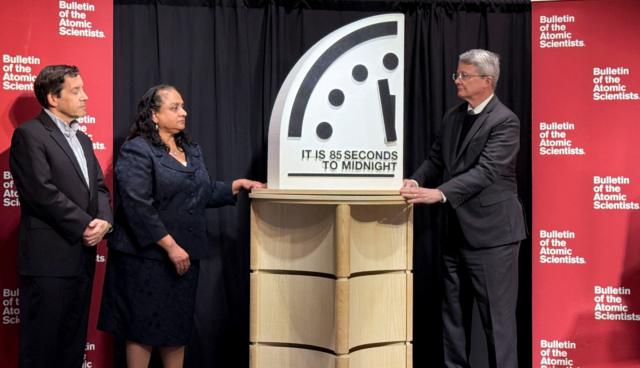
A recent American study published in the "Journal of Personality and Social Psychology" indicates that nearly one-third of Americans believe the 'apocalypse' is imminent, potentially arriving before they have the chance to withdraw their retirement savings. This belief reflects a growing sense of anxiety within American society, as economic, political, and climate crises intensify.
In his article on "The Hill," American writer John McGlynn emphasized that discussions about the end of the world are no longer confined to religious circles or specific groups of Christians; rather, it has become a topic of interest for everyone, especially with rising talk of a 'World War III' due to tensions between the United States and Iran.
Details of the Study
According to the study, more than 100 million Americans expect the end of the world within their lifetime, significantly influencing their perceptions on issues such as climate change, nuclear war, economic collapse, and artificial intelligence. These expectations manifest in their daily behaviors and future plans.
McGlynn pointed out that the belief in the end of the world has evolved from mere pessimism to a kind of psychological operating system that shapes how people think about the future. Many believe that humanity itself will cause the end of the world, exacerbating feelings of anxiety.
Background & Context
Several factors contribute to this belief, including the ongoing American-Israeli conflict with Iran, which weakens an already strained global economy. With rising interest rates, borrowing has become a heavy burden for individuals and businesses, increasing distrust in the financial system.
Moreover, artificial intelligence, once thought to enhance employee capabilities, now threatens numerous office jobs, further heightening anxiety among workers across various sectors.
Impact & Consequences
Discussions about the end of the world have transitioned from mere entertainment or fantasy to a reality experienced by many. Numerous individuals have begun to prepare mental emergency plans, feeling that circumstances are heading toward the worse. This sentiment transcends a specific group of Christians, encompassing environmental activists who believe humanity has crossed critical boundaries.
In the American context, McGlynn noted that the country has become an exhausted empire, engaged in open wars in the Middle East and suffering from record debts, leading citizens to lose hope in the future. This situation reflects a significant crisis of confidence in governmental and economic institutions.
Regional Significance
The Arab region is significantly impacted by these crises, as tensions in the Middle East, particularly between Iran and the United States, could lead to new escalations affecting regional stability. Additionally, economic crises in the United States may impact the global economy, negatively affecting Arab countries that rely on investments and trade with the U.S.
In conclusion, the growing belief in the end of the world in the United States reflects a state of anxiety and uncertainty prevailing in society, necessitating deep reflection on how to address these global challenges.