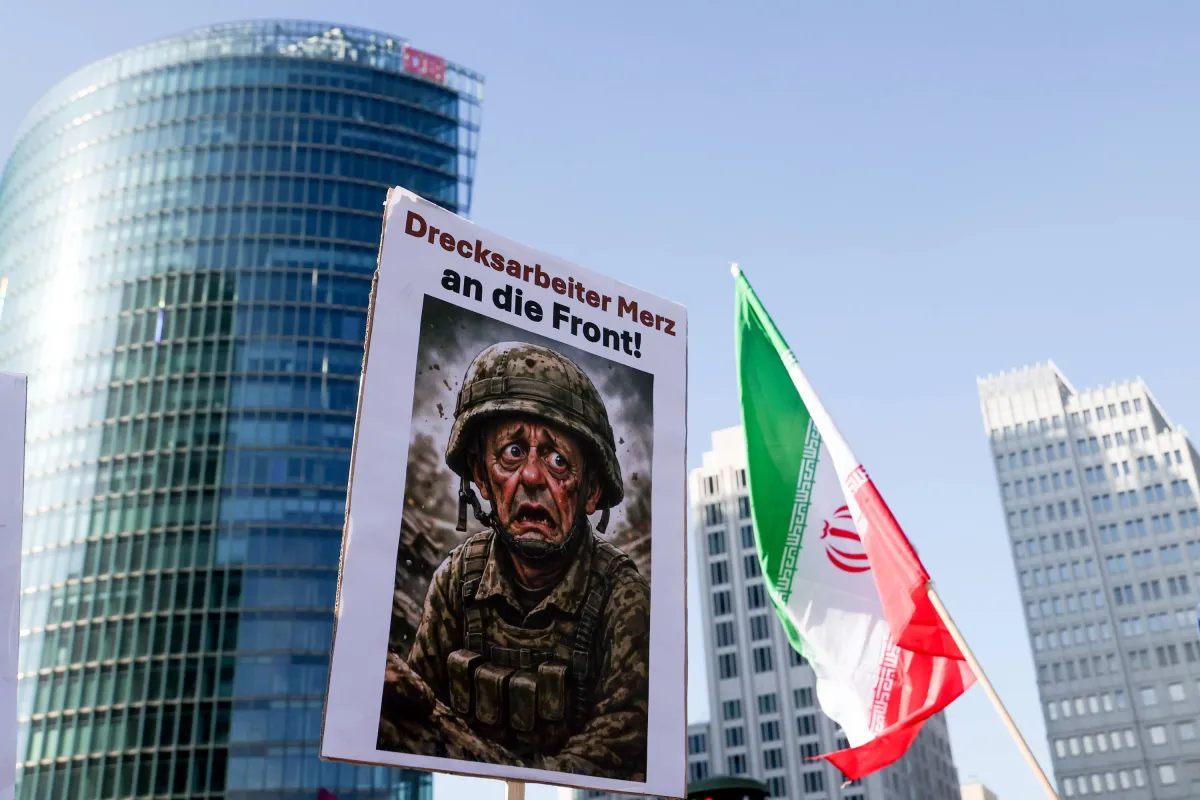
Despite escalating conditions in Iran, only 35% of Iranian asylum seekers in Germany have received protection in recent months, as reported by the German Ministry of the Interior.
This information was revealed in response to an inquiry from parliamentary representative Clara Bunger of the Left Party, which was reviewed by the German news agency (dpa) in Berlin. The data showed that the approval rate for asylum applications processed by the Federal Office for Migration and Refugees in January and February was 35% of the total applications.
Details of the Situation
It is important to note that this percentage does not include cases resolved for formal reasons, such as another country in the European Union being responsible for the application. Nevertheless, the protection rate has increased compared to the average of 26.8% during the year 2025.
These figures come at a time when Iran has been experiencing widespread protests since the end of December 2025, due to a severe economic crisis and a sudden collapse in the value of the local currency, the rial. Protests escalated on January 8 and 9, 2026, spreading to major cities, prompting a heavy-handed response from security forces. At the end of February, the United States and Israel launched airstrikes on Iran, further intensifying the situation.
Context and Background
Data from the German Ministry of the Interior indicates that Iranians have had repeated success in appealing against asylum rejection decisions, having succeeded in more than one-third of cases last year, excluding those resolved for formal reasons. Bunger considered this an indication that the Federal Office for Migration and Refugees is making stricter decisions than necessary regarding Iranian applications.
Bunger stated: "61% of women applying for asylum from Iran are systematically rejected, despite the anti-women regime and discriminatory laws... Solidarity with the people in Iran must be different." She called on German Interior Minister Alexander Dobrindt to change the decision-making approach at the Federal Office for Migration and Refugees.
Consequences and Impact
The implications of these figures go beyond mere statistics, reflecting a harsh reality faced by Iranians under a repressive regime. The continued high rate of asylum rejections could exacerbate the humanitarian conditions for many individuals fleeing persecution and discrimination in their homeland.
This situation may also affect relations between Germany and Iran, potentially increasing political tensions between the two countries, especially given the current circumstances in the region.
Impact on the Arab Region
These figures serve as an indicator of the deteriorating conditions in Iran, which may affect security and stability in the Arab region. As the number of Iranian refugees increases, pressures on neighboring countries may rise, necessitating a response from the international community to address these humanitarian crises.
In conclusion, the situation in Iran remains tense and requires greater international attention, particularly in light of the multiple crises affecting the region.