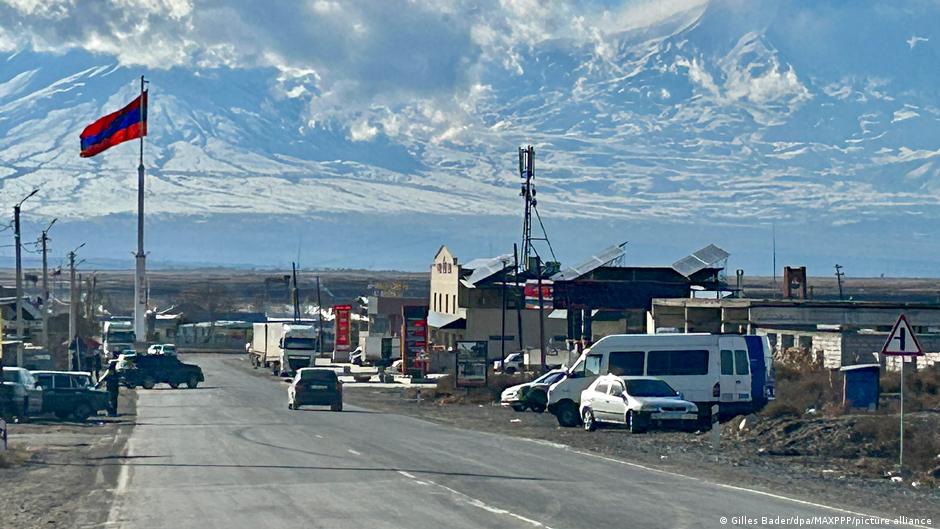
Turkey and Armenia are striving to reopen their borders after decades of enmity and isolation, with the Turkish business community hoping this move will enhance trade and stimulate the local economy. Relations between the two countries have seen a significant development following Armenian Prime Minister Nikol Pashinyan's visit to Turkey in June 2025, marking the first such visit in over a century.
Turkey and Armenia share a land border stretching approximately 330 kilometers, yet their relations have always been marred by historical tensions, particularly due to the Armenian Genocide in 1915, which many Western countries have recognized as genocide. Additionally, Ankara's stance on the Nagorno-Karabakh conflict has widened the gap between the two nations, as Turkey supported Azerbaijan and closed the borders in 1993.
Details of the Event
Since 2022, cautious talks have begun for rapprochement between the two countries, with Armenia dropping its demand for Ankara to recognize the Armenian Genocide. Last year, Armenia signed a peace agreement with Azerbaijan that ended decades of conflict over Nagorno-Karabakh, giving Turkish businesses hope for the normalization of relations and the reopening of borders that have been closed for over thirty years.
There are two border crossings between Turkey and Armenia: Alican in Iğdır Province and Akyaka in Kars Province. These crossings have been closed since the first Nagorno-Karabakh war, but observers expect them to reopen in the coming months. Armenian media reported that its government has made all necessary arrangements, while work is still ongoing on the Turkish side.
Background & Context
The history of Turkish-Armenian relations is fraught with tensions, with the dispute dating back over a century. In 2016, several Western countries recognized the Armenian Genocide, complicating relations further. However, geopolitical changes in the region, including the peace agreement between Armenia and Azerbaijan, have paved the way for new opportunities for cooperation.
The eastern regions of Turkey, such as Iğdır and Kars, are among the poorest areas in Anatolia, where residents seek to improve their economic conditions through the opening of borders. According to the Turkish Statistical Institute, the GDP in these regions ranges between €3,250 and €4,350 per capita.
Impact & Consequences
If the borders are opened before the Armenian parliamentary elections in June, it would be a significant victory for Prime Minister Pashinyan, who has long sought reconciliation with Turkey. Kan Soyak, head of the Turkish-Armenian Business Development Council, believes that trade between the two countries, currently estimated at around $300-350 million annually, could reach $1 billion with the opening of borders.
Expected traded goods include clothing, chemicals, food products, and precious metals. Soyak also anticipates the establishment of new logistical corridors, including energy and communication lines, that will connect the region to the wider Caucasus.
Regional Significance
The Turkish-Armenian relations are significant for the Arab region, as they could impact economic and political stability in the Caucasus. The opening of borders may also contribute to enhancing trade between Arab countries and Turkey, boosting economic cooperation opportunities.
In conclusion, the rapprochement between Turkey and Armenia represents a historic opportunity to strengthen economic and social relations between the two countries, potentially having a positive impact on the region as a whole.