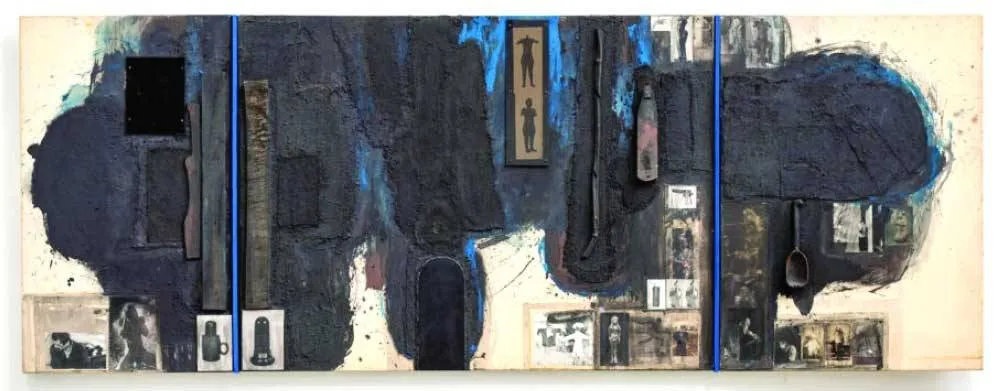
The Camden Arts Centre in London has inaugurated a retrospective exhibition of Guyanese artist Donald Locke, which includes three paintings rendered entirely in black. These pieces represent a shocking beginning, challenging the aesthetic expectations of viewers and raising questions about the relationship between art and politics.
Locke's works are characterized by their provocative nature, utilizing rows of sharp nails and metal mesh to highlight issues of slavery and colonialism. These pieces, dating back to the 1970s, transcend aesthetic abstraction to address deep humanitarian concerns, such as the sugar plantations in Guyana established by Dutch colonizers.
Event Details
Donald Locke (1930 - 2010) sought not only to depict plantations but also to remind the world of the era of slavery. The significance of Locke's art lies in the fusion of form and content, reflecting the dark history of slavery and colonialism. The exhibition highlights the artist's vision, which is inseparable from humanitarian issues, as Locke aims to shed light on the tragedy of his people who suffered from displacement and loss of identity.
The exhibition combines ceramics, painting, and sculpture, showcasing the diversity of Locke's artistic experience. It features 80 artworks, demonstrating how Locke played a pivotal role in British sculpture after World War II. It also emphasizes the evolution of his experimental tools in confronting issues of identity and oppression.
Background & Context
Locke's works trace his artistic journey between Guyana, the United Kingdom, and the United States, influenced by the people and places he lived in. The exhibition begins with his early ceramic works that evoke human and natural forms, tracking his transition to multimedia sculpture and black paintings. It also displays his large-scale paintings from the 1990s, reflecting the assemblage process Locke employed.
In the later years of his life, Locke completed a series of experimental works in Atlanta, blending memory and mythology, influenced by the art scene in the southern United States. This presentation reflects the unique contributions of Black culture to modernity, making it an important artistic event.
Impact & Consequences
Donald Locke's experience serves as a model for a diasporic artist striving to present a layered and complex vision of identity. The contribution of Black culture to artistic modernity remains one of the most significant ideas in the post-colonial era. Locke represents an artist who successfully integrates modernity with heritage, adding depth to his artistic experience.
His works intertwine Western artistic traditions with Caribbean cultural references, creating a mystery that distinguishes his experience. Through his art, Locke seeks to offer a new vision that reflects the experiences and struggles of his people, contributing to the reshaping of contemporary artistic understanding.
Regional Significance
Locke's experience contributes to enhancing cultural dialogue among peoples, reflecting issues of identity and displacement faced by many Arab communities. The exhibition opens the floor for discussions about the impact of colonialism and slavery on diverse cultures, reinforcing the importance of the arts as a means of expressing human suffering.
In conclusion, the Donald Locke exhibition in London represents an opportunity to reflect on issues of identity and memory, illustrating how art can serve as a medium for expressing the experiences of diverse peoples, thereby enhancing the significance of the arts in understanding human history.