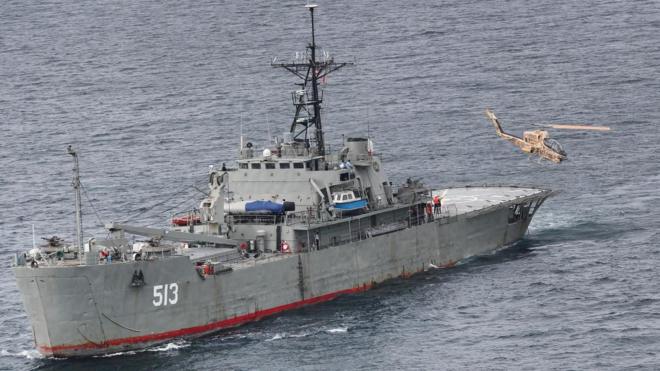
The Economist warns that any attempt to reopen the Strait of Hormuz by force will require a lengthy and complex military operation that passes through three main phases, each with its own challenges and dangers. Iran possesses a variety of offensive capabilities, including missiles, drones, fast boats, and sea mines, making the mission more difficult.
The operation begins by targeting Iranian military capabilities that threaten navigation, such as fast boats, missiles, drones, and mines. This phase primarily relies on airstrikes, with the possibility of involving ground forces later, aiming to reduce Iran's ability to attack ships. However, the deployment of these weapons in hidden locations along the coast makes it challenging to eliminate them completely.
Details of the Operation
After mitigating direct threats, the operation moves to clearing the strait of mines, a complex and dangerous task due to the variety of mines and the potential for them to be planted by various means, including civilian ships. The available capabilities for mine removal are relatively limited, which could prolong this phase for weeks.
The U.S. fleet currently has 14 destroyers in the region, but 6 of them are occupied with protecting aircraft carriers. Bringing more destroyers to the Gulf may take weeks, requiring the diversion of additional U.S. forces from other parts of the world, such as Asia. While America's allies may be willing to help, most are hesitant to send ships amid ongoing warfare.
Background & Context
The Strait of Hormuz is considered one of the most important maritime passages in the world, through which approximately 20% of global oil supplies pass. Therefore, any military escalation in this area could significantly affect oil prices and global markets. Iran, which controls a large part of the coastline, views any threat to its interests in the region as a threat to national security.
Historically, the strait has witnessed numerous military conflicts, including the Gulf Wars, making the current situation more complex. In recent years, tensions between the United States and Iran have increased, making the region more sensitive to any military movements.
Impact & Consequences
Executing these three phases will keep the participating forces in a state of danger for an extended period, in a complex combat environment with Iranian capabilities that have the potential to endure. Additionally, reopening the strait by force could lead to greater military escalation, threatening regional stability.
Reports anticipate that the cost of these operations will be high, further depleting America's and its allies' dwindling stock of anti-missile munitions. The complex geography of the strait, which is no more than 50 kilometers wide at its narrowest point, presents additional challenges, as U.S. warships will need to execute precise maneuvers in strong currents.
Regional Significance
Arab countries neighboring the Strait of Hormuz, such as the United Arab Emirates and Oman, find themselves in a sensitive position, as they may be directly affected by any military escalation. Any disruption in navigation could impact Arab economies that rely on oil. Therefore, stability in this region is vital for regional security.
In conclusion, reopening the Strait of Hormuz by force remains an uncertain option, as military and political challenges may complicate this mission significantly.