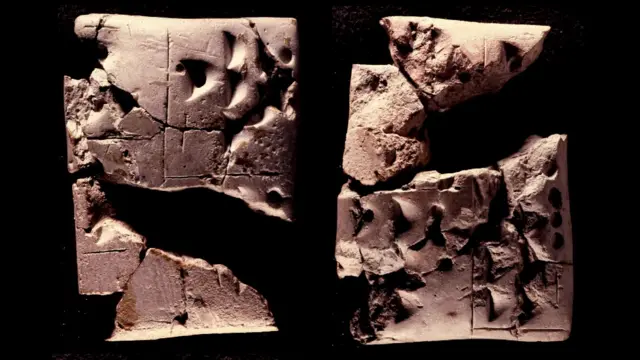
The division of the hour into 60 minutes traces back to ancient civilizations, particularly the Sumerians in ancient Iraq. This article reveals how this timekeeping system was born and continues to influence our daily lives.
In ancient Iraq, specifically within the Sumerian civilization, a counting system based on the number 60 was developed, significantly impacting how time was measured. The Sumerians were among the first peoples to use numbers to organize their daily lives, leading to the invention of a time system still in use today.
Details of the Event
The Sumerians used the number 60 because it was considered an ideal number, easily divisible into several parts, facilitating calculations. This system was not limited to measuring time; it extended to other measurements such as angles. Thus, the hour was divided into 60 minutes and the minute into 60 seconds.
Over the centuries, this knowledge was passed on to other civilizations such as the Babylonians and the Greeks, who adopted this system for measuring time. These civilizations contributed to the development of time-measuring tools like water clocks and sand timers, which helped promote the use of this system.
Background & Context
During the Middle Ages, as sciences and arts advanced, the use of the hour and minute system continued to expand. The need for better time organization in daily life led to the development of mechanical clocks, which began to appear in Europe in the 13th century. These clocks relied on the same time system established by the Sumerians, demonstrating the continuity of this system through the ages.
With technological advancements, time measurement became more precise, leading to the invention of atomic clocks in the 20th century, which measure time based on atomic frequency with high accuracy. Nevertheless, the hour and minute system established by the Sumerians remains the foundation upon which the world relies today.
Impact & Consequences
The hour and minute system established by the Sumerians is an integral part of our daily lives. It affects how we organize work, appointments, and even social activities. This system has also contributed to the development of sciences, as accurate and standardized time measurement has aided advancements in fields such as astronomy and physics.
Furthermore, our understanding of the history of this system reflects the evolution of human civilizations and their interaction with time. Studying how this system emerged helps us gain a deeper understanding of ancient cultures and their impact on modern life.
Regional Significance
The history of ancient Iraq and its Sumerian civilization represents an important part of the Arab cultural heritage. Understanding how the hour and minute system originated highlights the significant contributions made by ancient civilizations in shaping the modern world. This history also enhances the cultural identity of Arabs, showing how past achievements continue to influence our lives today.
In conclusion, the hour and minute system serves as a living example of how ancient civilizations have impacted our daily lives. Understanding this history can deepen our appreciation for ancient cultures and their role in shaping the world we live in.