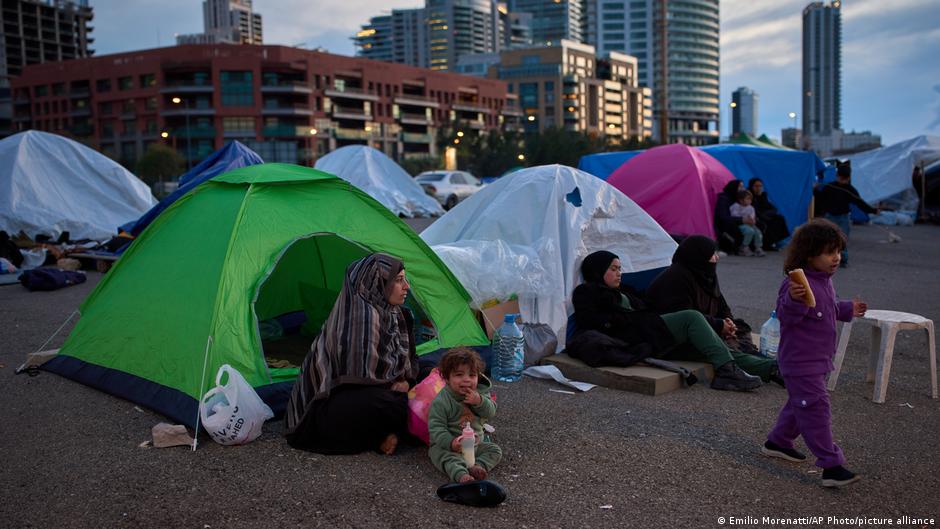
More than 1.1 million Lebanese have been forced to leave their homes due to the ongoing fighting in the south and Israeli airstrikes targeting suburbs, leading to a worsening humanitarian situation in the country. The Fatima family, living in temporary shelters in the Al-Azariyeh buildings in the heart of Beirut, is trying to maintain some semblance of normal life amid harsh conditions.
Fatima lives with her husband, her seven-year-old daughter, and her mother in a temporary tent, sharing the space with 250 other families. Humanitarian organizations provide water and a communal kitchen, but the space is cramped with little privacy or peace.
Details of the Situation
Fatima describes her daily life, spending most of her time inside the tent, avoiding the bathroom due to overcrowding. She says, "When I see my daughter playing with the other children, I feel some hope, but the loud noises quickly bring me back to the harsh reality." Fatima, who used to live a normal life in the Ouzai neighborhood, longs for her home, her belongings, and her daily routine.
Concerns are growing over the deteriorating situation as Israeli attacks continue, with new areas in Beirut being bombed, increasing panic among residents. Israeli Defense Minister Israel Katz has stated there is an intention to create a buffer zone within Southern Lebanon, heightening anxiety among the Lebanese population.
Background & Context
Historically, Lebanon has witnessed multiple conflicts, but the current situation is different due to regional interventions. Following the death of Ali Khamenei, the Iranian leader, in February, Hezbollah joined the fighting, escalating the violence. This conflict has not only affected Lebanon but the entire region, with rising tensions among regional powers.
Hezbollah is considered a major political and military force in Lebanon, with its armed wing classified as a terrorist organization by several countries. However, many Lebanese live in areas like the Southern Suburb, which they consider home, where markets and restaurants thrive, making it a vibrant area despite the challenges.
Impact & Consequences
The horrifying numbers of casualties and injuries are increasing, with reports indicating that more than 1240 people have died and 3500 have been injured in Lebanon. These figures reflect the deteriorating humanitarian situation, as residents suffer from a loss of hope in returning to their homes.
Jeremy Resourd, head of Doctors Without Borders programs in Lebanon, states that Israeli attacks not only destroy homes and infrastructure but also undermine the foundations of daily life. This situation places additional pressure on families like Fatima's, who are suffering from a loss of safety and stability.
Regional Significance
The repercussions of the Lebanese conflict extend beyond the country's borders, raising concerns in neighboring nations. The number of refugees and displaced individuals is increasing, putting pressure on other Arab countries hosting them. Additionally, the ongoing violence reflects a state of instability in the region, affecting the national security of Arab states.
In closing, Fatima expresses her hope of returning to her normal life, noting that "life was good here." However, concerns remain as voices calling for urgent solutions to the escalating humanitarian crisis grow louder.