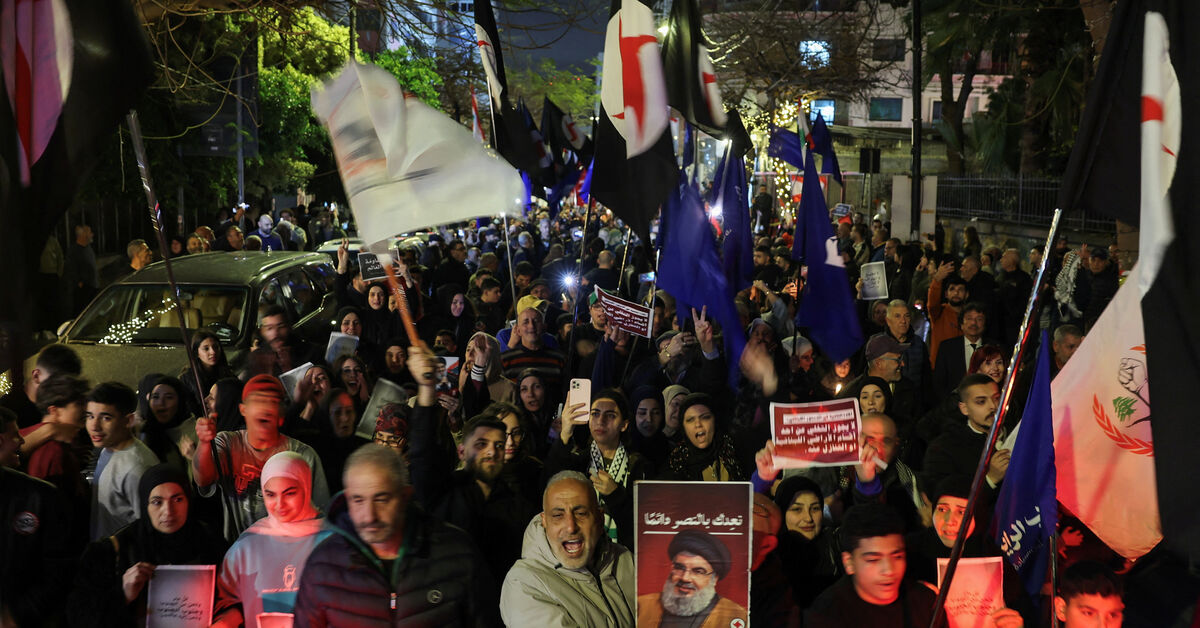
Reports indicate that over 400 fighters from Hezbollah have died since the Lebanese group, backed by Iran, launched its first attacks in the new war with Israel on March 2. This figure represents the first disclosed death toll among Hezbollah ranks, as the group has not yet provided comprehensive official statistics, issuing only sporadic notifications about individual fighters.
The Israeli military campaign continues, featuring airstrikes and artillery shelling, in an unprecedented escalation. Reports have shown that fighting has spread to new areas in Lebanon, complicating the security situation in the region.
Details of the Ongoing Conflict
Events in Lebanon are rapidly unfolding as fighting intensifies between Hezbollah and Israel, with several areas in southern Lebanon facing heavy bombardment. Images and videos circulated on social media have shown the destruction caused by Israeli airstrikes. Hezbollah, considered one of the prominent armed factions in Lebanon, faces significant challenges in countering the superior Israeli military force.
At the same time, the Lebanese government is striving to contain the situation, but internal and external pressures make this difficult. Some analysts have pointed out that this war could have long-term repercussions on the stability of Lebanon and the entire region.
Background & Context
Historically, the relationship between Hezbollah and Israel has been marked by increasing tensions, especially following the war that erupted in 2006. Since then, Hezbollah has become a prominent military and political force in Lebanon, supported by Iran, making it a constant target for Israeli military operations. These dynamics have led to a continuous escalation in the conflict, raising concerns about the outbreak of a new comprehensive war in the region.
In recent years, fears have grown that any escalation in the conflict could lead to broader repercussions involving other countries in the region, especially with the presence of regional and international powers with conflicting interests.
Impact & Consequences
This new war could exacerbate the humanitarian situation in Lebanon, where the Lebanese people are already suffering from severe economic and social crises. The rising death toll among Hezbollah fighters may affect the morale of the fighters and increase pressure on the party's political leadership.
Furthermore, the escalation of fighting could increase tensions between Lebanon and neighboring countries, threatening regional stability. The international community is closely monitoring the situation, as new developments may require urgent diplomatic interventions.
Regional Significance
These events serve as a wake-up call for Arab countries, as any escalation in the conflict between Hezbollah and Israel could impact regional security. Neighboring countries such as Syria and Jordan may be directly affected by the repercussions of this war, further complicating the security landscape in the region.
In conclusion, the death of over 400 Hezbollah fighters in this new war signifies a serious escalation in the conflict, and the international community must act swiftly to prevent worsening conditions in Lebanon and the region.