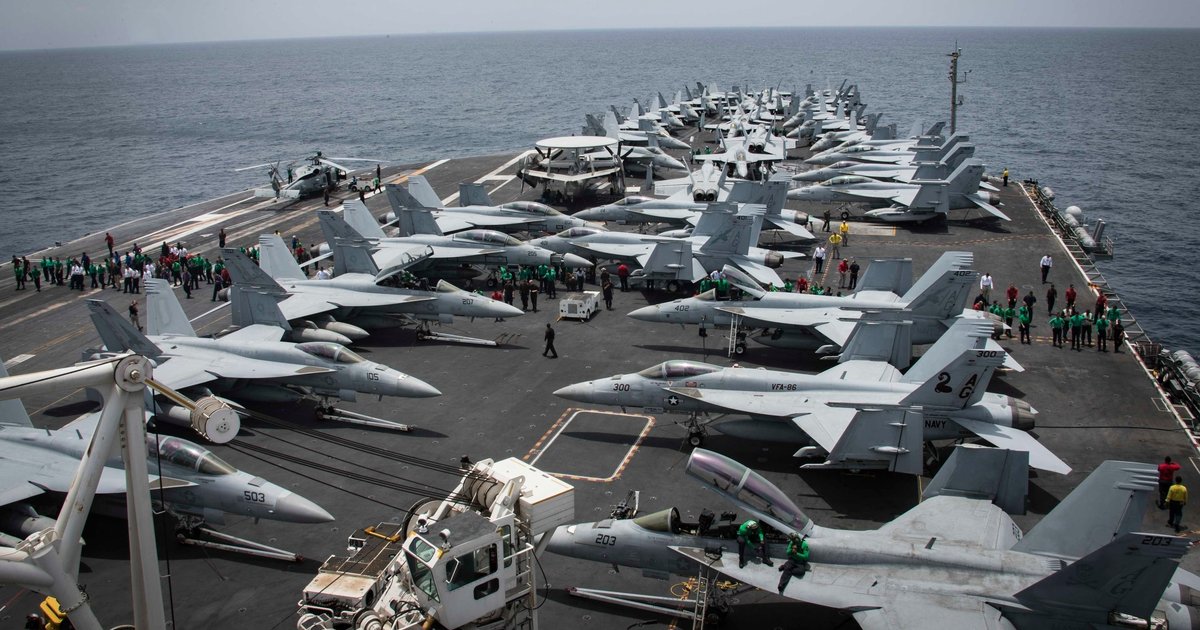
The US Department of Defense has announced that over 50,000 American soldiers are participating in support of the 'Epic Fury' operation in the Middle East, with the department confirming that strikes have targeted more than 10,000 sites inside Iran since the operations began. This step comes as part of the United States' efforts to enhance its military presence in the region, amid escalating tensions with Iran.
The military operation announced includes precision strikes targeting strategic sites, including military facilities and command centers. This military escalation reflects the United States' commitment to protecting its interests and allies in the region, especially in light of the increasing threats from Iran.
Details of the Operation
Reports indicate that the 'Epic Fury' operation began as part of a broader US strategy to counter destabilizing Iranian activities. Airstrikes have been carried out in coordination with US allies in the region, reflecting military coordination among the involved countries.
The targets hit in Iran include sensitive military sites, weapon depots, and intelligence centers. The US Department of Defense has confirmed that these strikes aim to reduce Iran's capability to conduct military operations against US forces or its allies.
Background & Context
Historically, US-Iranian relations have seen increasing tensions, particularly after the United States withdrew from the nuclear agreement in 2018. Since then, Washington has imposed strict economic sanctions on Tehran, exacerbating the situation in the region.
Iran is considered one of the largest security challenges facing the United States in the Middle East, as Tehran seeks to enhance its influence in Iraq, Syria, and Lebanon. This has led to heightened tensions between US forces and Iran-backed militias, threatening regional stability.
Impact & Consequences
These military operations raise questions about the potential escalation of conflict in the region. While the United States seeks to protect its interests, airstrikes may provoke retaliatory responses from Iran, increasing the risk of a broader conflict.
Moreover, these operations could affect relations between the United States and its allies in the region, as some allies may feel concerned about the military escalation. Conversely, Iran may exploit this situation to strengthen its position in international negotiations, particularly regarding its nuclear program.
Regional Significance
These developments pose a threat to security and stability in the Arab region, as they may lead to the escalation of existing conflicts. Additionally, the presence of over 50,000 American soldiers in the Middle East may raise concerns among neighboring Arab countries, prompting them to reassess their security strategies.
Furthermore, these operations may impact oil prices and financial markets, as any military escalation could lead to increased instability in global energy markets.
In conclusion, the situation in the Middle East remains complex, with political and military interests intertwining. As US military operations continue, the question of how this will affect the future of regional and international relations remains open.