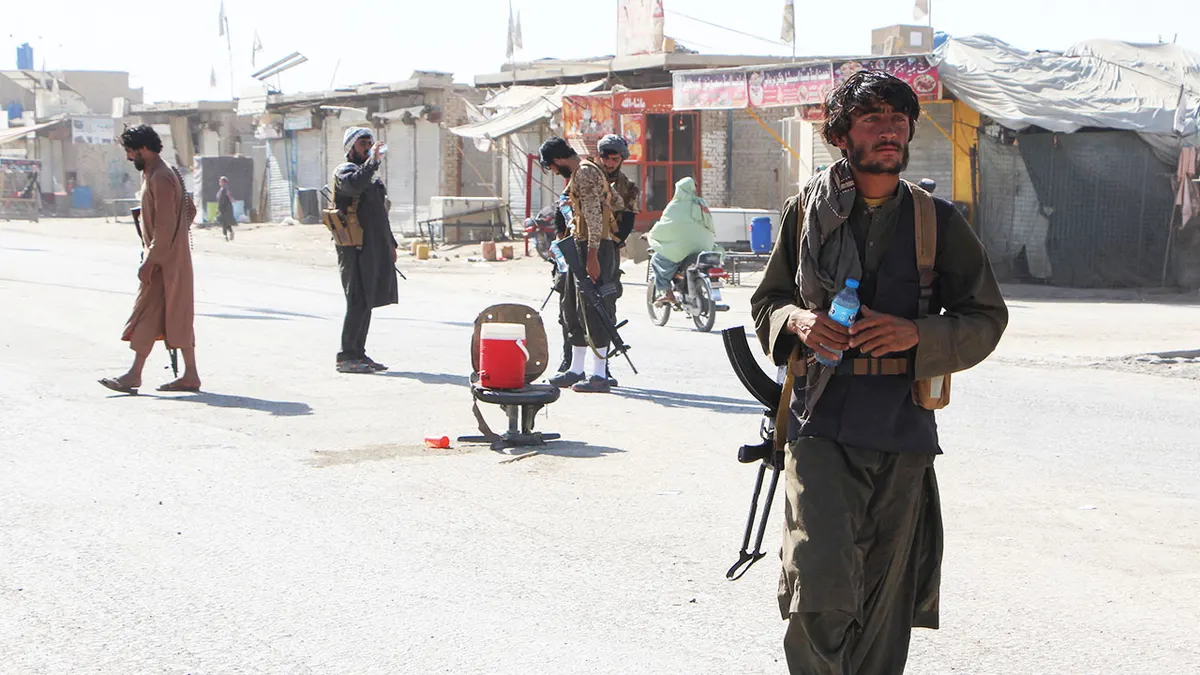
In a move that may help alleviate tensions between Pakistan and Afghanistan, China has announced that the two countries have agreed to avoid any escalation in their armed conflict during talks hosted in Beijing in recent days. This development comes at a time when relations between the two sides have been increasingly strained due to Pakistan's accusations against Afghanistan of harboring militants responsible for cross-border attacks, a claim that the Taliban government denies.
Clashes intensified sharply at the end of February, following Pakistani airstrikes that followed an Afghan ground assault, prompting Islamabad to declare an 'open war.' The Pakistani airstrikes on March 16 resulted in the deaths of hundreds of civilians at a hospital in Kabul, triggering widespread international condemnation and calls for the resumption of talks to end the conflict.
Details of the Recent Talks
During the week of April 1 to 7, representatives from China, Afghanistan, and Pakistan held informal meetings in the city of Ürümqi, where opinions were exchanged in a positive atmosphere. Chinese Foreign Ministry spokesperson Mao Ning confirmed that the three delegations engaged in frank and realistic discussions. Both Pakistan and Afghanistan expressed their commitment to resolving their disputes as soon as possible and returning to normal bilateral relations, agreeing not to take any actions that would escalate or complicate the situation.
Although diplomats from Pakistan and Afghanistan reported on the talks hosted by China last week, Beijing only recently confirmed this. The ceasefire that was implemented during the Eid al-Fitr holiday, marking the end of Ramadan, ended on March 24.
Background & Context
The roots of the tensions between Pakistan and Afghanistan date back decades, with relations oscillating between alliances and hostilities. Following the withdrawal of U.S. forces from Afghanistan in August 2021, concerns about escalating violence along the border increased, as Pakistan accused Afghanistan of harboring armed groups that threaten its security. On the other hand, the Taliban seeks to consolidate its authority in Afghanistan, further complicating the situation.
The border between Pakistan and Afghanistan is considered one of the most complex in the world, stretching over 2,400 kilometers and serving as a vital crossing point for trade and individuals. As fighting escalated, the border was nearly completely closed, leading to significant economic repercussions on both sides.
Impact & Consequences
The agreement between Pakistan and Afghanistan to avoid escalation may have positive implications for regional security. If the talks continue and succeed in yielding tangible results, they could contribute to stabilizing the region and alleviating the suffering of civilians affected by the conflict. However, the biggest challenge remains how to implement this agreement on the ground, especially amid ongoing military operations.
This agreement may also pave the way for greater diplomatic interventions by other regional powers, such as Iran and Russia, which may seek to enhance their role in stabilizing Afghanistan. At the same time, the international community must closely monitor the situation to ensure that the humanitarian crisis does not worsen.
Regional Significance
For the Arab world, the stability of Afghanistan and Pakistan has direct implications for regional security. Tensions in this area could lead to an influx of refugees, adding new burdens on Arab countries that host large numbers of refugees. Additionally, any escalation in the conflict may negatively impact relations between Arab states and neighboring countries.
In conclusion, there is hope that these talks will contribute to achieving peace and stability in the region, benefiting all parties involved and alleviating the suffering of civilians.