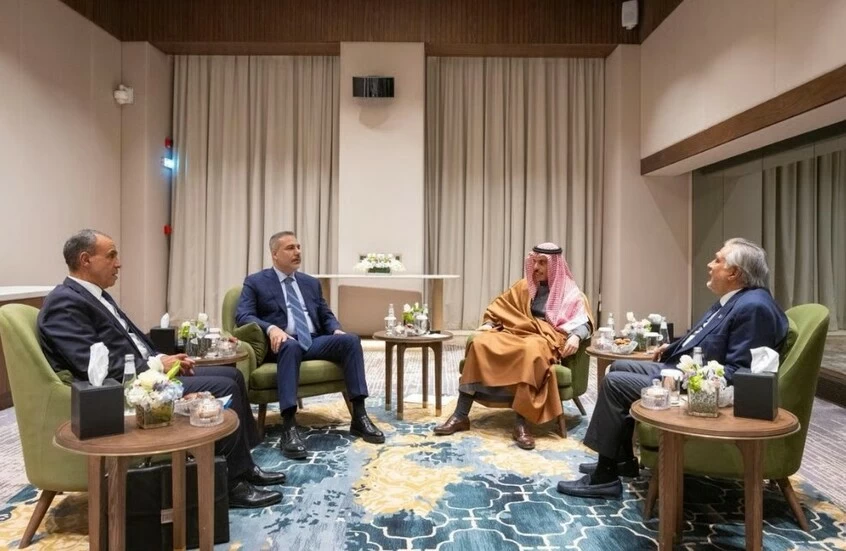
Pakistan is preparing to welcome the foreign ministers of Saudi Arabia, Turkey, and Egypt for a quadruple meeting scheduled for March 29 and 30 in the capital, Islamabad. The meeting will focus on diplomatic efforts aimed at resolving ongoing disputes in the Middle East.
A statement issued by the Pakistani Foreign Ministry indicated that the meeting aims to conduct in-depth discussions on several issues, including ways to reduce tensions in the region. Pakistani Foreign Minister Ishaq Dar mentioned in remarks to Geo News that the meeting was initially planned to take place in Turkey but was moved to Islamabad due to scheduling constraints.
Event Details
Dar confirmed that Pakistan is working diligently and sincerely to resolve existing conflicts and that it enjoys strong support from friendly nations. He explained that talks with Iran are ongoing, but officials are refraining from making public statements due to the sensitivity of the negotiations. He also noted that the four foreign ministers will hold separate meetings with Pakistani Prime Minister Shehbaz Sharif on Monday.
In a related context, Sharif's office announced that he had a phone call with Iranian President Masoud Pezeshkian, during which regional tensions and peace efforts were discussed. Pezeshkian emphasized the importance of "building trust" for negotiations, praising Pakistan's role in the peace process.
Background & Context
These developments come at a time when the region is experiencing increasing tensions, particularly with the ongoing conflict in the Middle East since February 28. The Pakistani Foreign Minister confirmed that his country is playing a mediating role between the United States and Iran, seeking to end the ongoing conflict.
German Foreign Minister Johann Wadephul clarified that the United States and Iran are preparing for direct talks in Pakistan. Although Tehran refuses to acknowledge negotiations with Washington, the Iranians have formally responded, through a Pakistani intermediary, to a 15-point American plan, according to the Iranian news agency Tasnim.
Impact & Consequences
This meeting is considered a significant step towards achieving stability in the region, as it brings together countries that have a substantial influence on regional politics. The success of these talks could contribute to alleviating tensions and enhancing the prospects for peace in the Middle East.
Furthermore, Pakistan's role as a mediator in these discussions reflects its status as an influential nation striving to promote security and stability in the region, potentially opening new avenues for cooperation among the involved countries.
Regional Significance
This meeting represents an opportunity for Arab countries to unify their efforts in facing regional challenges. The success of these discussions could lead to improved relations between Arab nations and Iran, contributing to enhanced stability in the region.
In conclusion, hopes are pinned on the outcomes of this quadruple meeting, as progress in the talks could have positive effects on the situation in the Middle East and bolster the chances for lasting peace.