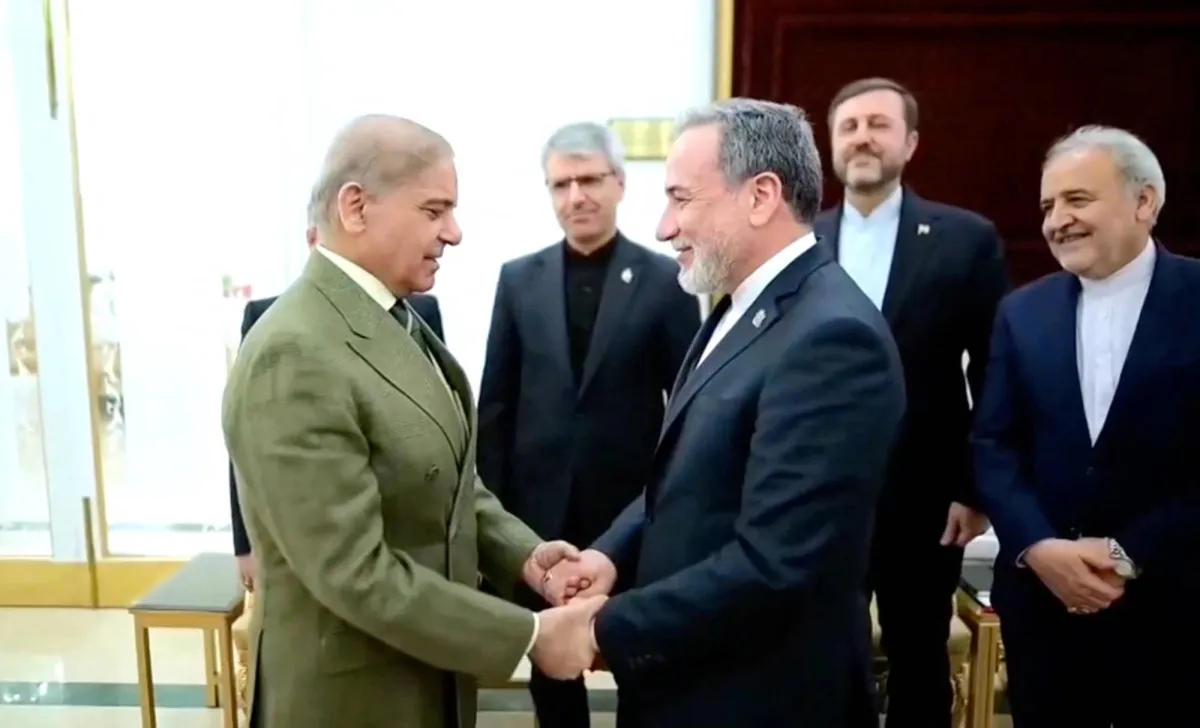
Pakistan's Prime Minister Shahbaz Sharif stated on Wednesday that his country is diligently working to contribute to easing the escalating tensions between the United States and Iran. This statement was made during a cabinet meeting in the capital, Islamabad, where Sharif emphasized the significance of direct dialogue between the two sides.
Sharif explained that a "marathon session" took place in Islamabad on April 11, which resulted in notable progress in ceasefire efforts that are still ongoing. He affirmed that these efforts reflect Pakistan's commitment to supporting regional stability.
Details of Recent Developments
In a related context, Shahbaz Sharif mentioned the visit of Iranian Foreign Minister Abbas Araghchi to Pakistan over the weekend, where an extensive round of talks took place between the two sides. Araghchi later departed for Oman before returning briefly to Pakistan and then heading to Russia.
Sharif spoke with Araghchi by phone before his departure to Moscow, where the latter assured him that he would respond as soon as possible after consultations with Iranian leadership. Although the nature of the response was not specified, Pakistan is seeking to host a second round of talks between the United States and Iran, aiming to enhance dialogue.
Background & Context
These developments come at a time when the Middle East is witnessing increasing tensions, with 21 individuals executed and over 4,000 arrested in Iran for political or national security reasons since the onset of the war in the region. The United Nations High Commissioner for Human Rights has stated that these figures reflect the deteriorating situation in Iran.
Reports also indicate that the war, along with American-Israeli attacks on Iran, has escalated conditions, with nine individuals executed in connection to protests that occurred in January 2026, in addition to widespread arrests of more than four thousand people.
Impact & Consequences
Through these efforts, Pakistan aims to play a mediating role in alleviating tensions between major powers in the region. This role reflects Islamabad's commitment to regional stability, especially given the volatile conditions in Iran.
At the same time, U.S. President Donald Trump's remarks regarding the situation in Tehran, stating that Iran is in a "state of collapse," highlight the increasing pressures facing Tehran. This situation has raised concerns among many countries in the region, as they seek to mitigate the impacts of these tensions on regional security.
Regional Significance
These developments are particularly significant for Arab countries, as any escalation in tensions between the United States and Iran could directly affect security and stability in the region. Additionally, Pakistan's mediation efforts may open new avenues for dialogue among the involved parties.
In conclusion, attention remains focused on the outcomes of the upcoming talks and the developments they will bring, as the stability of the region heavily relies on the parties' ability to overcome differences and seek peaceful solutions.