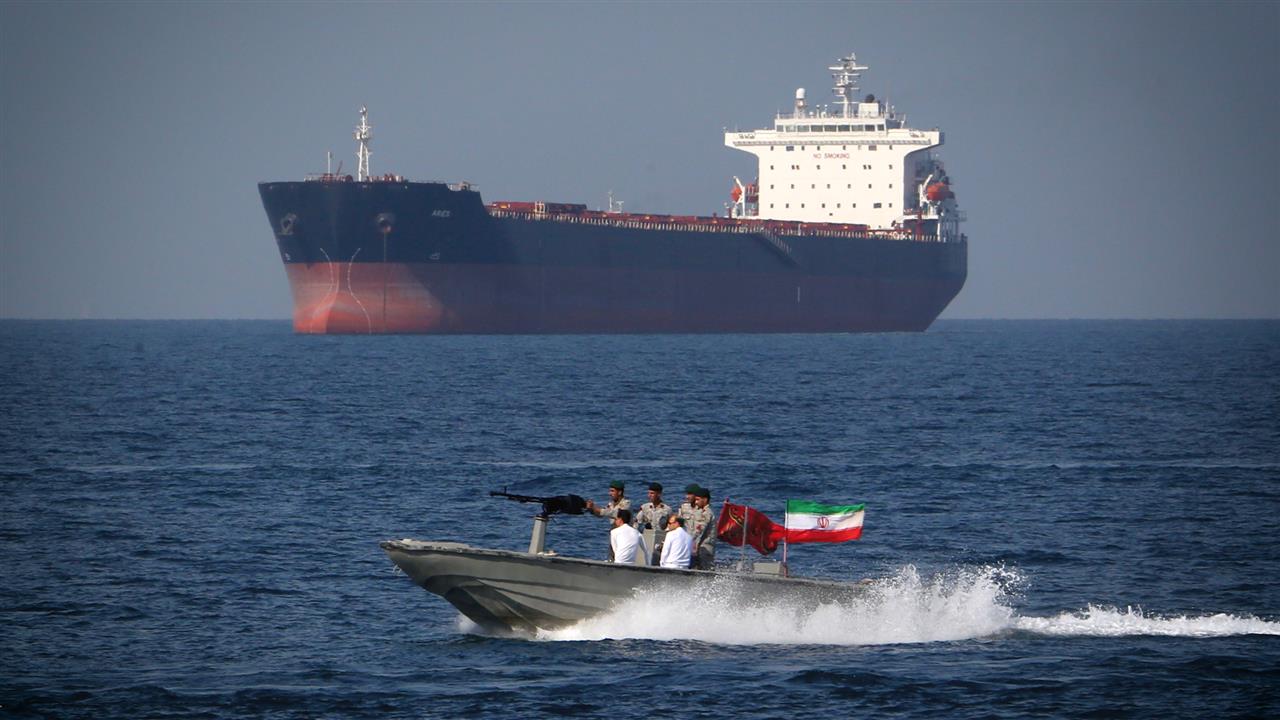
Two Pakistani tankers have withdrawn from crossing the Strait of Hormuz after three consecutive attempts, clearly indicating a rise in navigational caution in the area. This withdrawal comes amid U.S.-Iranian disputes regarding military movements in the maritime corridor, complicating the regional landscape further.
According to data from the 'Marine Traffic' website, the oil tankers 'Shalamar' and 'Kherpur' departed from the port of Karachi in Pakistan heading towards the Strait of Hormuz, with their declared destinations being Al-Jazira port in the UAE and Abdullah port in Kuwait. However, the data revealed unusual behavior, as both tankers altered their course upon nearing the strait, executing a backward maneuver before attempting to advance again in three repeated attempts, ultimately resulting in a complete withdrawal without completing the crossing.
Details of the Incident
This pattern of navigational behavior reflects a high level of caution in the maritime environment, particularly given the restrictions and tensions that have characterized the strait since the outbreak of the war. Direct security risks significantly influence shipping companies' decisions, even amidst discussions about attempts to partially reopen the maritime corridor.
In contrast, a parallel debate emerged regarding the U.S. announcement of two warships, the 'USS Frank E. Peterson' and 'USS Michael Murphy', crossing the Strait of Hormuz on April 11. Washington confirmed that this mission aimed to secure the strait and clear mines, a statement supported by the U.S. Secretary of Defense, who considered the move part of broader efforts to ensure navigational safety.
Background & Context
Despite this, Iran directly denied the occurrence of this crossing, deeming the U.S. narrative inaccurate. Iranian media reported military and diplomatic interventions that halted one ship's movement before completing its mission, placing the two narratives in direct confrontation. In the context of open verification, tracking data showed limited appearances of the destroyer 'Michael Murphy' off the coast of Oman, with no similar records for the other vessel.
The withdrawal of the tankers coincides with the ambiguity surrounding military movements, reflecting a state of uncertainty prevailing over the Strait of Hormuz. Security calculations intertwine with commercial routes in a volatile regional environment, with negotiations that have yet to yield clear results, keeping the world's most crucial maritime corridor under continuous pressure between fragile de-escalation and potential escalation.
Impact & Consequences
The recent round of direct negotiations between the United States and Iran in the Pakistani capital Islamabad ended without an agreement after more than 20 hours of intensive discussions. This situation opens the door to a murky phase of either escalation or fragile de-escalation, amidst what Western reports describe as a 'strategic stalemate'. The failure to reach an agreement may exacerbate tensions in the region, impacting global shipping and trade.
Tensions in the Strait of Hormuz are not new, as this maritime corridor is one of the world's most vital trade routes, through which a significant percentage of global oil exports pass. Any escalation in this context could affect oil prices and global markets in general.
Regional Significance
For the Arab region, the continuation of tensions in the Strait of Hormuz could impact security and stability in Gulf states. Additionally, any military escalation may lead to economic and social repercussions, as many Arab countries rely on oil exports. Therefore, maintaining stability in this maritime corridor is vital to ensuring regional stability.
In conclusion, the situation in the Strait of Hormuz remains under observation, as security risks and military tensions increase. Future developments in this context will determine the fate of navigation and trade in the region and the world.