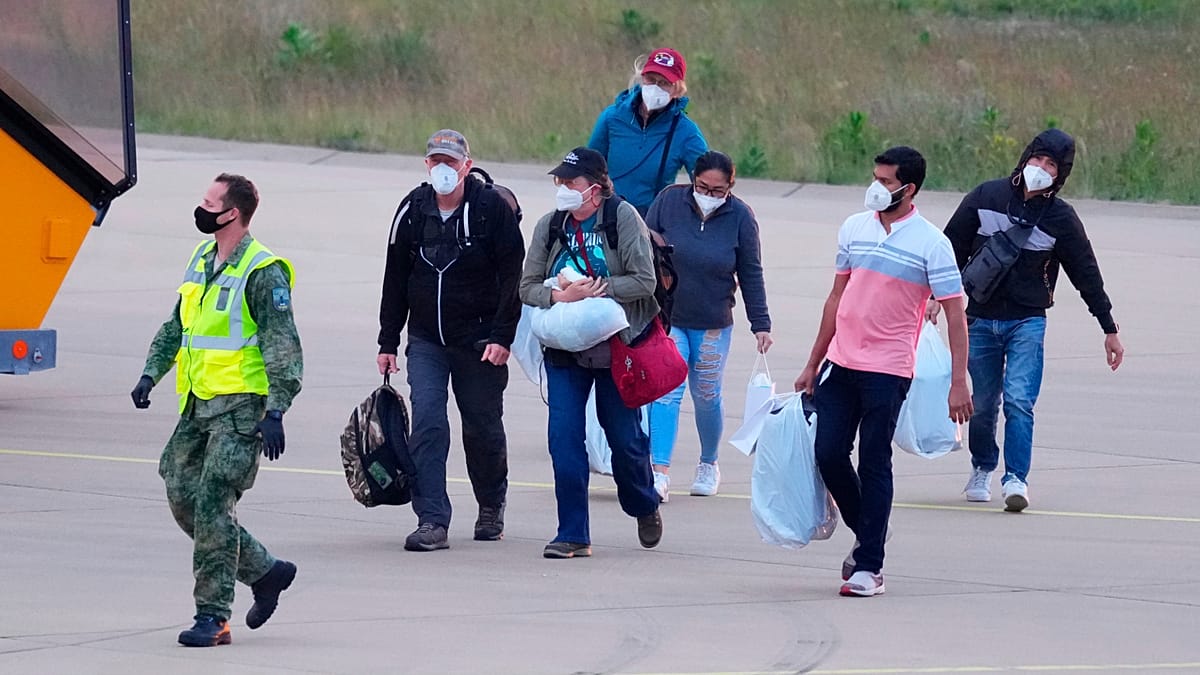
Most passengers from the cruise ship that experienced a Hanta virus outbreak have returned to their countries, where they will undergo medical tests and a quarantine period. The ship, which was placed under emergency protocols, arrived in the Spanish Canary Islands on Sunday, carrying 147 individuals, including passengers and crew, representing 23 different nationalities, with 70 European citizens among them.
The repatriation process for the passengers was organized in coordination with the Spanish government, the World Health Organization, and the European Centre for Disease Prevention and Control. All passengers on board the ship were screened for symptoms of the disease, and transportation was arranged to return them to their respective countries.
Details of the Repatriation Process
There are still 54 individuals remaining on the ship, with 32 of them staying on board for sea travel, while 22 others will be transported by air. All are headed to the Netherlands, including six individuals who will continue their journey to Australia. Meanwhile, the 14 Spanish citizens were transferred to the Gómez Ulla Military Hospital in Madrid, which is one of the hospitals equipped with high-level isolation units.
The Spanish Ministry of Health announced that the passengers will undergo a quarantine period lasting up to 42 days, during which periodic PCR tests will be conducted to assess any potential new cases. In parallel, five individuals left Spain heading to France, where one began showing symptoms of the disease during transport and was confirmed to be infected with the Hanta virus.
Background & Context
The Hanta virus is a rare but potentially deadly disease that is typically transmitted through contact with rodents or their droppings. The recent outbreak on the cruise ship has raised concerns about the virus's spread and the necessary precautions to prevent further infections. The coordinated efforts between health authorities and international organizations highlight the importance of swift action in managing such health crises.
In light of this incident, health officials are emphasizing the need for increased vigilance and preparedness to tackle potential outbreaks. The cruise industry, which has faced significant challenges during the pandemic, is now confronted with additional scrutiny regarding health protocols and passenger safety.
Impact & Consequences
This incident underscores the potential negative impacts on tourism and travel, especially in regions heavily reliant on tourism. The fear of outbreaks can deter travelers, leading to economic repercussions for local businesses and communities. Furthermore, the situation may prompt stricter health regulations and protocols for cruise lines and travel agencies.
The ongoing monitoring and testing of returning passengers will be crucial in preventing further spread of the virus. Authorities are also likely to review and enhance existing health measures to ensure the safety of travelers and the general public.
Regional Significance
The Canary Islands, a popular tourist destination, are now facing the challenge of managing public health while maintaining their appeal to visitors. The local government and health officials are working diligently to reassure the public and potential tourists that safety measures are in place.
As the situation develops, the response from health authorities will be closely watched, not only for its immediate effects but also for its long-term implications on public health policy and tourism strategies in the region.
This incident highlights the critical importance of international coordination in public health efforts, especially in the face of emerging infectious diseases. The lessons learned from this outbreak may inform future responses to similar health threats.