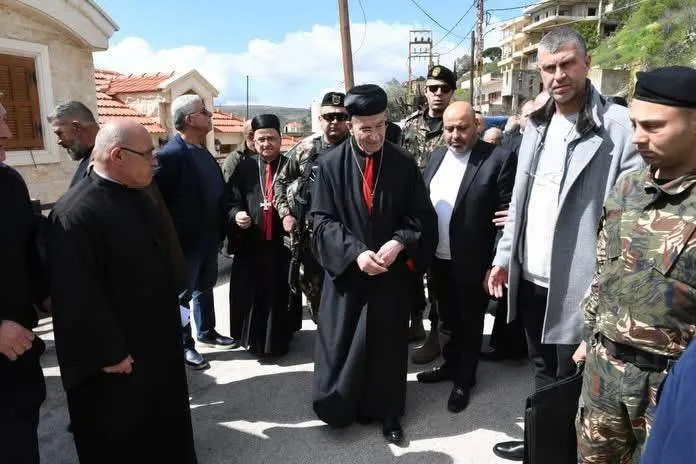
During a pastoral visit to border villages in southern Lebanon, Maronite Patriarch Beshara Raï emphasized the residents' attachment to their land, highlighting the importance of unity and solidarity in facing military escalation.
Raï stated that the inhabitants of the border areas are the nation's shield, noting that a person without their land is like an orphan. He said: "We are always with the southern towns, and today we have the opportunity to visit you, and on your behalf, I say: We remain on our land and steadfast."
Details of the Event
Raï began his tour in the town of Koukaba in the Hasbaya district, where he held a meeting in the hall of "St. Elias Church," attended by a large crowd of townspeople and local religious and social figures. The parish priest and the mayor welcomed the patriarch's visit, considering it a "fatherly and national gesture that carries messages of support and resilience for the region's inhabitants."
In his speech, Raï stressed the importance of holding onto the land and enhancing the spirit of unity and solidarity during this critical phase the nation is experiencing. Following this, Raï moved to "St. George's Church" in Qlay'a, as part of a tour that also included Marjeyoun.
The patriarch was accompanied by a church and official delegation that included Papal Ambassador Archbishop Paolo Borgia, along with several bishops and media and security delegations to accompany the visit.
Background & Context
This visit comes amid ongoing military escalation in southern Lebanon, where border areas are witnessing reciprocal shelling between Israel and Hezbollah, leading to waves of displacement from several villages. Despite the dangers, some residents insist on staying on their land.
In a related context, the papal ambassador had toured the south carrying aid for the border villages, but his attempt to reach the town of Dibb was thwarted due to the ongoing shelling and intensifying clashes, forcing him to return after a long wait.
Impact & Consequences
Amid the escalation of Israeli airstrikes on Lebanon, which are considered the most intense since the war began, Lebanese President Joseph Aoun and Prime Minister Nawaf Salam condemned the attacks that targeted densely populated residential areas, deeming them a violation of international laws.
Aoun affirmed that these barbaric assaults demonstrated a disregard for all international laws and norms, emphasizing that the serious escalation places full responsibility on Israel for its repercussions. He also called on the international community to fulfill its responsibilities to stop these repeated assaults.
Regional Significance
The visit of Patriarch Raï serves as a strong message reflecting the attachment to land amid difficult circumstances, showcasing the spirit of resistance and resilience among the Lebanese people. This visit comes at a critical time, as tensions in the region are escalating, necessitating the strengthening of unity and solidarity among Arab peoples.
In conclusion, the situation in southern Lebanon remains under observation, as residents look forward to continued support from religious and political leaders in facing security and economic challenges.