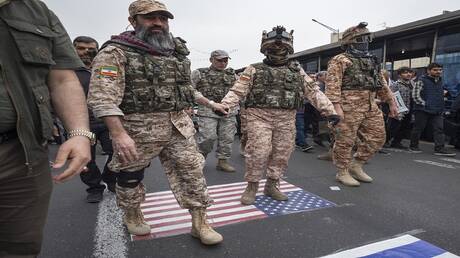
U.S. defense sources reveal that the Pentagon is contemplating limited ground operations in Iran in the coming weeks, pending President Donald Trump's approval. This decision comes as tensions between the U.S. and Iran escalate, with Washington seeking to strengthen its position in the region. The information has raised significant concerns regarding the potential risks that American soldiers may face if these operations are carried out.
According to reports, the Pentagon is devising plans that may involve military operations, including the deployment of special forces or targeted airstrikes. These plans are part of a response to threats perceived by the U.S. from Iran, which includes its support for armed groups in the region.
Details of the Operations
It is important to note that these plans are still in their preliminary stages and depend on President Trump's approval, who is facing pressure from certain political and military circles to adopt a tougher stance towards Iran. However, there are concerns that any military escalation could provoke strong reactions from Tehran, complicating the situation in the region further.
Background & Context
Historically, U.S.-Iran relations have been tense since the Islamic Revolution in 1979. These relations have seen a notable escalation in recent years, particularly after the U.S. withdrawal from the Iranian nuclear deal in 2018. Since then, Washington has imposed severe economic sanctions on Tehran, exacerbating the economic and social conditions in Iran.
In this context, Iran seeks to enhance its influence in the region by supporting armed groups in Iraq, Syria, and Lebanon, which the U.S. considers a direct threat to its national security. Thus, the Pentagon's plans are part of a broader strategy to counter this increasing Iranian influence.
Impact & Consequences
If these ground operations are approved, they could lead to significant military escalation in the region, threatening the lives of American soldiers and heightening tensions between the U.S. and Iran. Any escalation could open the gates of hell, as some have described it, potentially leading to a full-scale armed conflict.
Moreover, these plans could affect U.S. relations with its allies in the region, as some may be concerned about the repercussions of any American military intervention in Iran. Potential Iranian responses could include escalating attacks on U.S. forces in the region, further complicating the security situation.
Regional Significance
Neighboring Arab countries are watching these developments with cautious anticipation. Countries like Iraq, Syria, and Lebanon could be directly affected by any military escalation between the U.S. and Iran. There are also fears that these operations could destabilize the entire region.
At the same time, some armed groups in the region may exploit these circumstances to bolster their positions, further complicating the security landscape. Therefore, any decision made by the Pentagon regarding ground operations in Iran will have far-reaching implications for security and stability in the region.
In conclusion, the situation in Iran and the related U.S. decisions remain a sensitive topic that requires careful monitoring, as any uncalculated steps could lead to catastrophic outcomes on both regional and international levels.