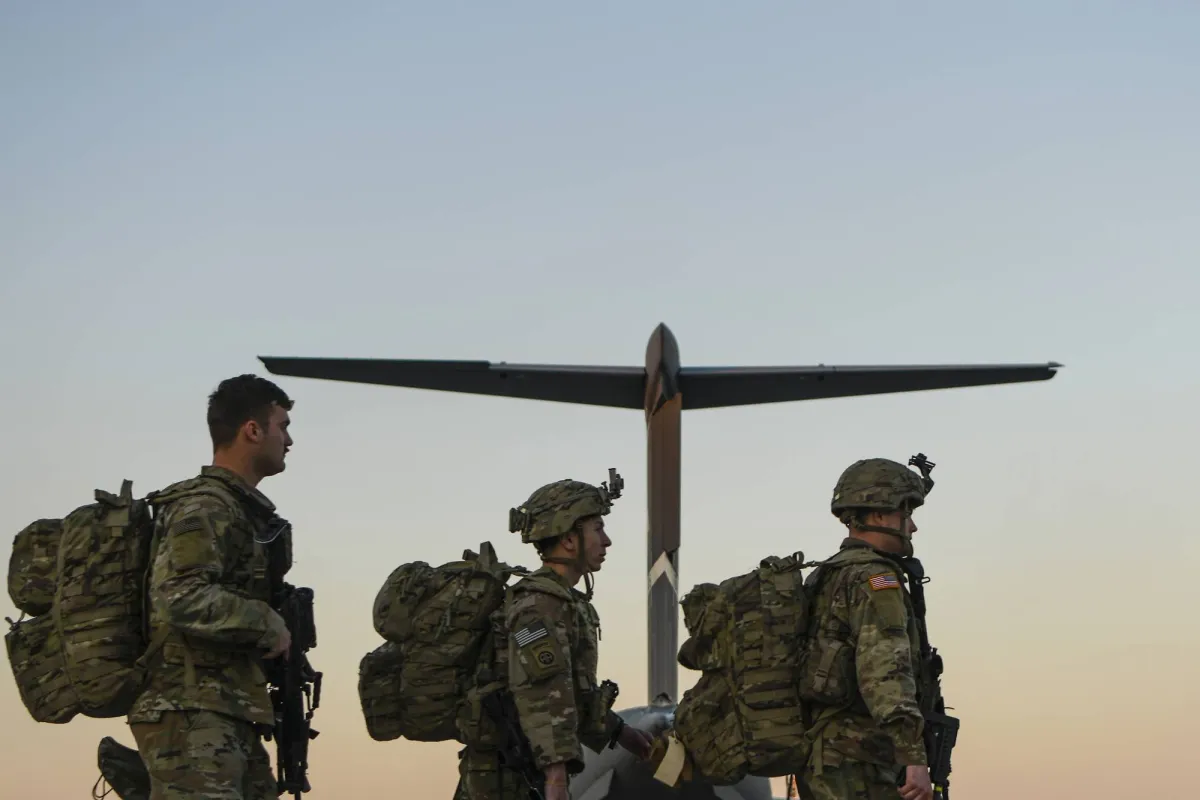
The Pentagon is preparing to study the deployment of a combat brigade from the 82nd Airborne Division of the U.S. Army as part of preparations for potential military operations against the Iranian island of Khurgu. This step comes amid escalating tensions between the United States and Iran, with this move seen as part of a precautionary planning effort to counter any potential threats.
No official orders have been issued by the Pentagon or the U.S. Central Command yet, as officials indicated that these plans are still in the works. The officials spoke on condition of anonymity, reflecting the sensitivity of the matter.
Details of the Deployment
The combat forces will come from the Immediate Response Force of the 82nd Airborne Division, which consists of approximately 3,000 soldiers capable of deploying anywhere in the world within 18 hours. These forces could be used to secure Khurgu, which is considered the main hub for Iranian oil exports. If authorized by President Donald Trump, an attack involving around 2,500 Marines from the 31st Expeditionary Unit could be executed as they head toward the region.
The airstrip on Khurgu has been damaged due to recent U.S. airstrikes, prompting U.S. commanders to consider sending Marine forces first, as their combat engineers can quickly repair runways and other infrastructure. Once the airstrip is repaired, air forces can begin transporting equipment and supplies, as well as troops if necessary, using C-130 aircraft.
Background & Context
Historically, relations between the United States and Iran have been tense, with recent years witnessing an escalation in military conflicts and mutual threats. In January 2020, troops from the 82nd Airborne Division were deployed to the Middle East following an attack on the U.S. embassy in Baghdad. They were also deployed to Afghanistan in August 2021 to support evacuation operations and to Eastern Europe in 2022 to bolster operations in Ukraine.
At the same time, U.S. intelligence sources have claimed that Iran has planted at least 12 mines in the Strait of Hormuz, complicating the security situation in the region. Iranian mines, such as Mission 3 and Mission 7, are considered advanced weapons that are difficult to detect, increasing tensions in the Strait of Hormuz, which is a vital passage for global oil trade.
Impact & Consequences
If the deployment of troops is approved, it could lead to a significant escalation in the conflict between the United States and Iran. This move could be seen as a declaration of war, potentially dragging the region into a broader conflict. Additionally, the presence of U.S. forces on Khurgu could affect global oil prices and heighten tensions between Iran and neighboring countries.
These plans also require careful coordination between U.S. forces and local forces, complicating military operations. Any escalation in the conflict may provoke reactions from Iran's allies in the region, such as Hezbollah in Lebanon, increasing the risk of a wider conflict.
Regional Significance
These developments are particularly significant for Arab countries, as any escalation in the conflict between the United States and Iran could impact security and stability in the region. Moreover, rising tensions could lead to an increase in oil prices, affecting Arab economies that rely on oil exports.
Under these circumstances, Arab nations must take proactive steps to ensure their security and stability, collaborating with major powers to avoid any military escalation that could have dire consequences for the region.