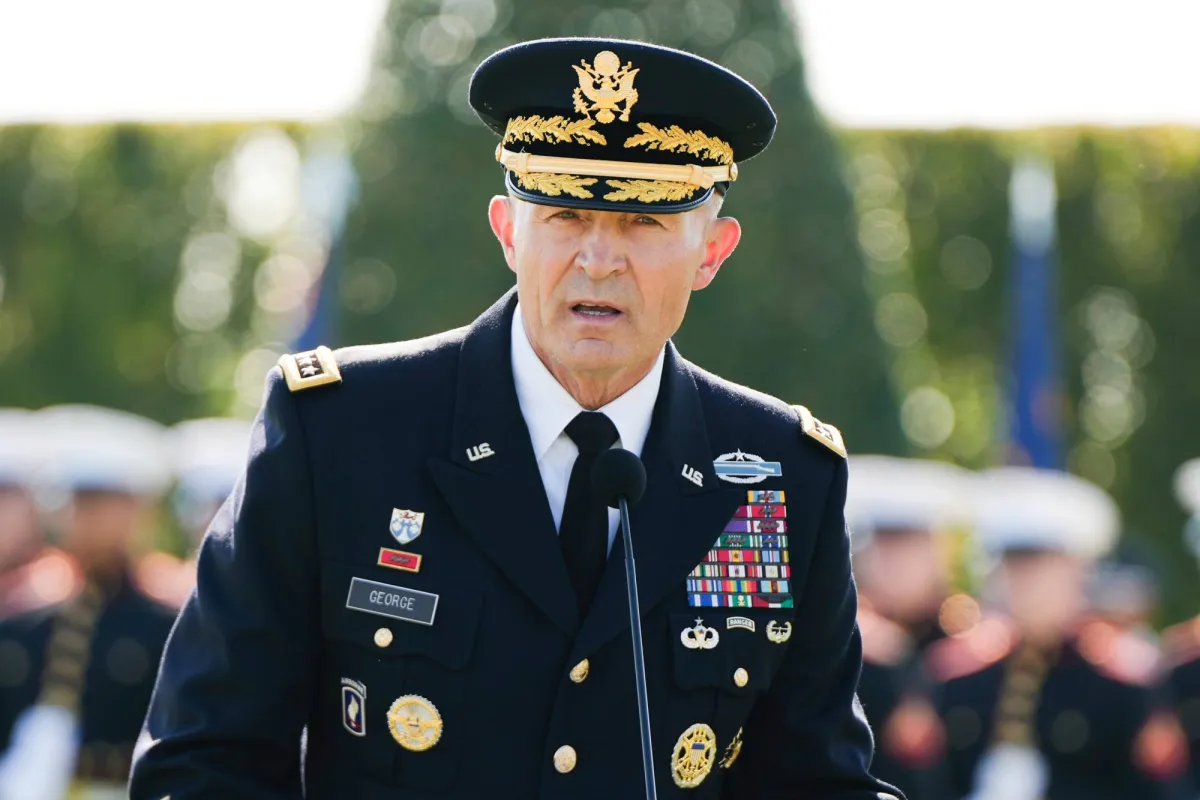
The Pentagon announced the immediate resignation of Army Chief General Randy George in an unexpected move, coinciding with the dismissal of two other generals at the request of Secretary of War Pete Hegseth. These decisions raise questions about the political loyalty of officials within the military institution, as Democrats and some military circles view this change not merely as a reshuffling of leadership but as a reflection of a sorting process of political loyalty within an institution that is supposed to remain neutral.
The recent decisions, which have not been clearly explained, come at a sensitive time as many of the generals who were dismissed were linked to military leaderships that served under President Joe Biden, increasing concerns about the impact of partisan politics on the military.
Details of the Event
In a related context, data from the U.S. Department of Defense revealed that the number of injured soldiers in the army has reached 247, in addition to 63 sailors, 19 marines, and 36 air force pilots. The death toll remains at 13 soldiers, highlighting the increasing tensions in the region.
These events come at a time when U.S. forces are searching for a crew member of an F-15E aircraft that was forced to parachute after being shot down over Iran. While President Donald Trump has shown no willingness to disclose the next steps if the missing pilot is harmed, this raises concerns about the security situation in the region.
Context and Background
These events coincide with increasing tensions in relations between the United States and Iran, as these dismissals represent part of a broader strategy regarding military control in the region. Trump has indicated in his speeches that the war with Iran may be nearing its end, but the military reinforcements sent to the area suggest the possibility of military escalation.
Admiral John Miller, former commander of the U.S. Fifth Fleet, believes that the mission in Iran is not yet over, emphasizing the need to destroy Iranian missile capabilities. This statement reflects the growing concern about Iran's ability to threaten regional and international security.
Impact and Consequences
Analyses suggest that these dismissals could affect the dynamics of the U.S. military, as there are fears that they may undermine the neutrality of the military institution. Additionally, these steps could lead to increased tensions between the two major parties in the United States, negatively impacting internal stability.
Moreover, the potential military escalation in the region could have serious repercussions for regional security, especially with U.S. forces present in sensitive areas. These developments could increase tensions between the United States and Iran, which may adversely affect relations between Arab countries and the United States.
Impact on the Arab Region
These events are significant for Arab countries, as any military escalation in the region could affect the security and stability of Gulf states. Additionally, tensions between the United States and Iran may lead to increased sectarian and political tensions in the region, which could negatively impact peace and stability efforts.
In conclusion, developments in U.S.-Iranian relations remain under close observation, as any changes in military leadership could affect military and political strategies in the region. It is crucial to closely monitor these events to understand their potential implications for regional and international security.