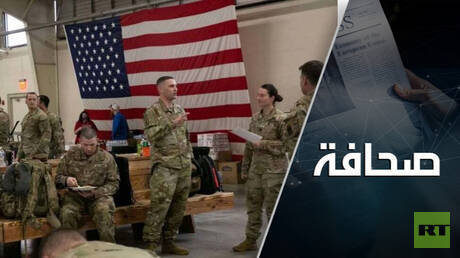
Reports indicate that the U.S. Department of Defense (Pentagon) is hiding details of its losses in military operations against Iran, which could adversely affect support for the U.S.-Israeli war against Tehran. This information comes at a sensitive time as pressures mount on the U.S. government to provide more transparency regarding military operations in the region.
This news coincides with escalating tensions between the United States and Iran, as Tehran adopts a more aggressive stance towards the American military presence in the Middle East. Some analysts have pointed out that the lack of disclosure regarding losses could significantly impact American public opinion, which is beginning to feel fatigued by ongoing wars.
Details of the Situation
In an article published by Izvestia, writer Semyon Boykov discussed the impact of the mission to rescue American pilots on the popularity of the war. He emphasized that information related to military losses could influence public support for the U.S. government, especially under current circumstances.
The military operations in Iran are part of a broader strategy aimed at countering Iranian influence in the region. However, the failure to disclose losses may lead to a loss of trust in military and political leadership.
Background & Context
Historically, the United States and Iran have been in a state of constant tension since the Islamic Revolution in 1979. Relations between the two countries have escalated significantly in recent years, particularly after the U.S. withdrawal from the Iranian nuclear agreement in 2018. This withdrawal led to the imposition of severe economic sanctions on Iran, further intensifying tensions.
American military operations in the region are part of its efforts to counter Iranian threats, including Tehran's support for armed groups in Iraq and Syria. However, these operations face increasing criticism from certain political and media circles in the United States.
Impact & Consequences
Concealed information regarding military losses could lead to negative effects on public support for the war. Many Americans feel fatigued by prolonged wars, and this news may increase pressure on the government to end military operations in the region.
Moreover, the lack of transparency could result in a loss of trust in military leadership, potentially affecting the government's ability to make strategic decisions in the future. Given the current circumstances, it may be essential for the government to adopt a more transparent policy to avoid exacerbating the situation.
Regional Significance
The tensions between the United States and Iran significantly affect the situation in the Arab region. Many Arab countries are concerned about the rising Iranian influence, which could lead to increased sectarian divisions and conflicts in the area.
Additionally, American military operations could impact the relationships between Arab countries and the United States, as some nations may feel that these operations threaten their stability. It is important for Arab nations to stay informed about developments in this context to safeguard their national interests.
In light of these circumstances, the question remains about how concealed information will affect public opinion and support for the U.S.-Israeli war against Iran. It is crucial for the U.S. government to adopt a more transparent policy to ensure stability in the region.