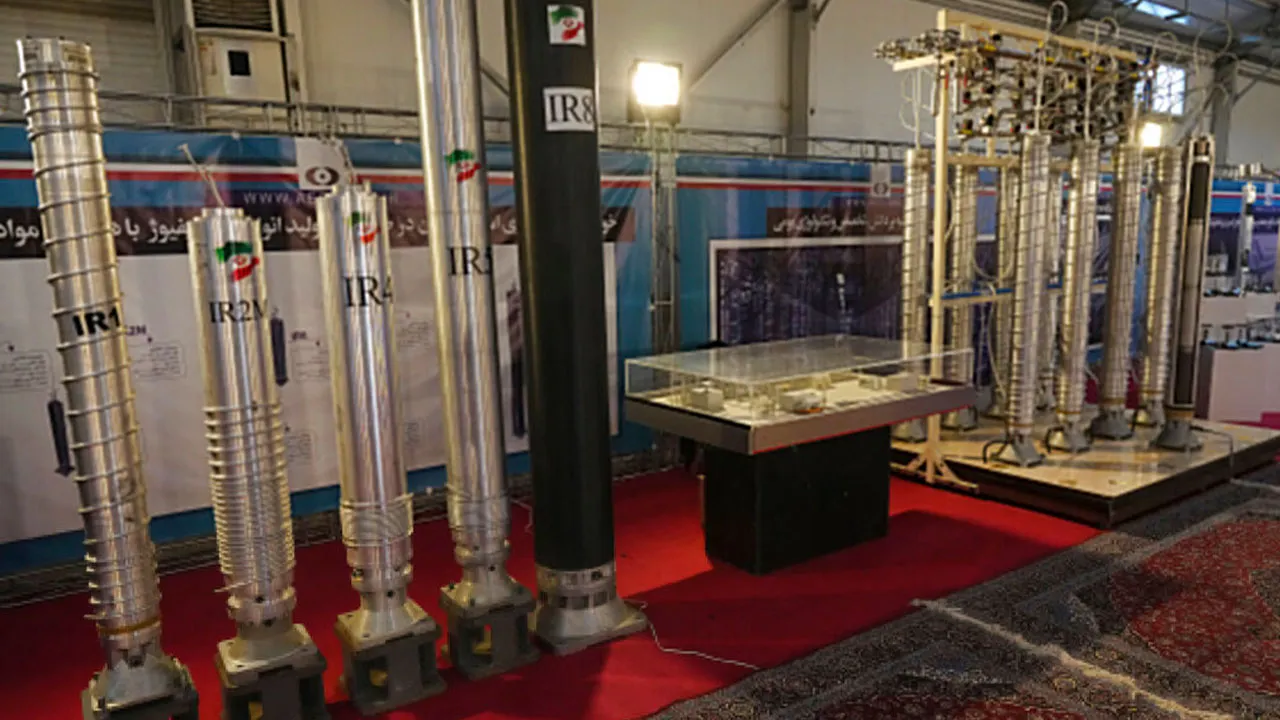
The Pentagon has revealed a plan to recover enriched uranium from Iran, based on a request from President Donald Trump. The plan, presented last week, requires complex and costly operations, including the deployment of hundreds or even thousands of soldiers and heavy equipment by air to extract nuclear materials.
The plan involves complicated drilling operations that require specialized equipment to penetrate concrete and lead shielding to reach the bottom of the silo containing the nuclear materials, then extracting the containers and transporting them by air. One source noted that this operation has never been executed before, adding to its complexity.
Details of the Operation
In an interview with CBS, Trump declined to comment on whether he would consider the operation successful without recovering the enriched uranium, stating that these materials are "buried deep" and that retrieving them would be "extremely difficult." This move comes at a sensitive time, as tensions between the United States and Iran are escalating, particularly following the mutual attacks between the two sides in June of last year.
On June 13, 2025, Israel launched an attack on Iran, claiming that Tehran was running a secret military nuclear program, which Iran has vehemently denied. This was followed by a series of retaliatory attacks, with the United States targeting Iranian nuclear facilities, escalating the situation in the region.
Background & Context
Historically, relations between Iran and the United States have been tense since the Islamic Revolution in 1979. In recent years, tensions have escalated due to Iran's nuclear program, which the United States and its allies consider a threat to regional and international security. In 2015, a nuclear agreement was reached between Iran and major powers, but the U.S. withdrawal from the agreement in 2018 exacerbated the situation.
Iran is currently seeking to enhance its nuclear capabilities, raising international concerns about its intentions. In this context, the Pentagon's plan comes as part of a broader strategy to counter potential Iranian threats.
Impact & Consequences
The Pentagon's plan to retrieve Iranian uranium is seen as a step that could escalate tensions in the region. If implemented, it could provoke strong reactions from Iran, which may view it as a violation of its sovereignty. Additionally, this move could affect U.S. relations with its allies in the region, who may see it as an unnecessary escalation.
Moreover, executing this plan may require massive resources, raising questions about its economic and political viability. Should the operation fail, it could weaken the United States' position in future negotiations with Iran.
Regional Significance
Tensions between the United States and Iran directly impact Arab countries, especially those located in the Arabian Gulf. Increased tensions could lead to escalated conflicts in the region, threatening the stability of neighboring countries. Furthermore, any military escalation could affect oil prices and financial markets, negatively impacting Arab economies.
In conclusion, the Pentagon's plan to retrieve Iranian uranium remains a complex issue that requires close monitoring, as its repercussions could have far-reaching implications for regional and international security.