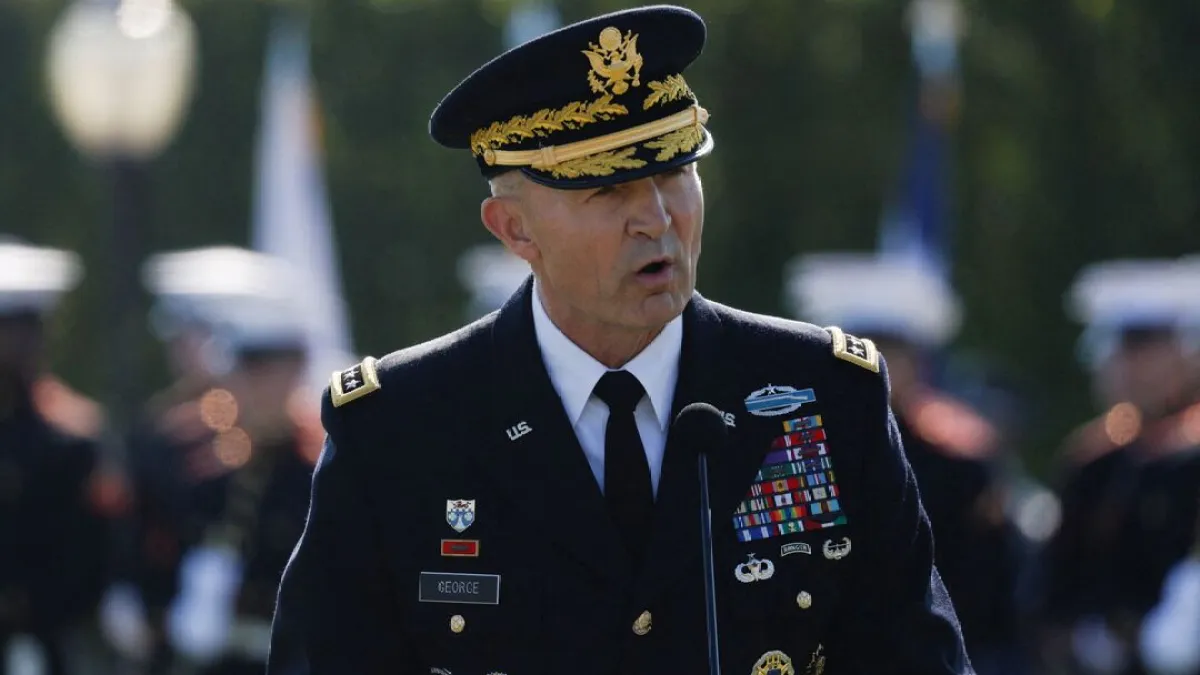
The Pentagon spokesperson, Sean Parnell, announced that the Chief of Staff of the U.S. Army, General Randy George, will retire from his position unexpectedly, effective immediately. This move is part of extensive administrative changes occurring within the U.S. Department of Defense, with Parnell indicating that the decision was made at the request of Secretary of Defense Pete Hegseth.
Earlier, CBS News reported that Hegseth had asked George to submit his resignation, reflecting the new administration's direction in restructuring military leadership. These changes come at a sensitive time as the U.S. military faces significant challenges on the international stage, particularly amid increasing tensions with Iran.
Details of the Event
General Randy George, who was close to former Secretary of Defense Lloyd Austin, held his position during the administration of former President Joe Biden. It appears that Hegseth's changes aim to reshape military leadership to align with the new strategies the current administration seeks to implement. Al Jazeera's correspondent in Washington, Ihab Al-Absi, noted that this step is not directly linked to the ongoing conflict with Iran but reflects a desire to reorganize military command.
In a related context, Al-Absi conveyed remarks from former President Donald Trump to Time magazine, where he asserted that Israel would cease its military operations when he decides, indicating that Tel Aviv would abide by what it has not been provoked. These statements come as military operations continue, with Trump confirming that the U.S. military is nearing its objectives as the war against Iran persists.
Background & Context
U.S.-Iranian relations have been increasingly tense for a long time, with rising concerns over the Iranian nuclear program and associated threats. In this context, changes in U.S. military leadership are part of a broader strategy aimed at enhancing deterrence against Iran. The United States has witnessed frequent changes in its military leadership in recent years, reflecting instability in American defense policy.
Moreover, the criticisms Trump faced from some political circles in the U.S., including from some Republicans, reflect a division on how to handle external threats. Democrats have argued that the president has not provided clear answers on how to end the war, while some Republicans have defended the continuation of military operations.
Impact & Consequences
The U.S. military buildup in the region opens the door to multiple possibilities, including the potential for ground operations. Although the U.S. administration asserts that these reinforcements are aimed at deterrence, there are concerns about military escalation that could lead to unforeseen consequences. Observers note that options for ground operations, whether to secure the Strait of Hormuz or to deal with Iranian nuclear facilities, are already on the president's table.
Warnings about the high costs of these operations raise concerns, especially amid American analyses suggesting that Washington will not be able to end the war without addressing the Strait of Hormuz issue and its impacts on the global economy. These dynamics reflect the significant challenges facing the U.S. administration in its foreign policy.
Regional Significance
The recent developments in U.S. military leadership are of great importance to the Arab region, raising fears of military escalation that could impact the stability of Gulf countries. Additionally, ongoing tensions with Iran could have repercussions on regional security, prompting Arab nations to take precautionary measures to counter any potential escalation.
In conclusion, the situation in the region remains volatile, necessitating close monitoring of political and military developments, especially in light of the challenges facing the U.S. administration in its foreign policy.