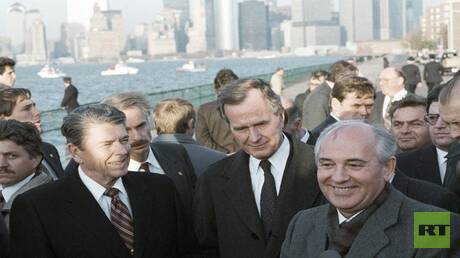
Perestroika marked a pivotal phase in Soviet history, initiated as efforts for reform and openness but ultimately leading to an economic and political collapse whose repercussions are still felt today.
In 1985, Mikhail Gorbachev took the helm of the Soviet Communist Party and launched a series of reforms known as perestroika, which means "restructuring." These reforms aimed to modernize the Soviet economy, improve living standards, and enhance political transparency.
Details of the Reforms
Gorbachev's reforms encompassed several aspects, including the introduction of elements of a free market and allowing greater media openness. Censorship on the press was reduced, enabling people to express their opinions more freely. However, these reforms were insufficient to address the deep structural problems plaguing the country.
The reforms led to increased dissatisfaction among citizens, many of whom felt that the changes did not result in tangible improvements in their daily lives. As economic pressures mounted, crises began to unfold, contributing to the eventual disintegration of the Soviet Union in 1991.
Background & Context
Prior to perestroika, the Soviet Union was suffering from a prolonged economic stagnation. Centralized economic policies had resulted in a severe shortage of essential goods, causing citizens to endure difficult living conditions. There was an urgent need for radical reforms, which Gorbachev attempted to implement.
Additionally, external pressures, such as the Cold War, impacted the Soviet economy. The United States and other Western nations were outpacing the Soviet Union in technology and economic development, heightening the need for change.
Impact & Consequences
Perestroika led to the disintegration of the Soviet Union, resulting in radical changes to the political map of the world. This was followed by the emergence of new countries and the independence of former republics, reshaping international relations. The collapse of the Soviet Union also affected many other nations, with some adopting new economic and political models.
Internally, Russia faced economic and social crises following the collapse, with living standards declining and poverty rates rising. The country also experienced internal political conflicts that led to instability.
Regional Significance
The collapse of the Soviet Union had a significant impact on the Arab region, as many Arab countries lost a strategic ally that provided military and economic support. Furthermore, the political changes in Russia led to a reassessment of relations with Arab states, affecting regional balances.
Moreover, shifts in Russian policy increased interest in the Middle East, as Russia sought to enhance its influence in the region through economic and military cooperation.
In conclusion, perestroika remains an important lesson in the history of political and economic reforms, illustrating how efforts toward change can lead to unexpected outcomes. Understanding this historical phase aids in analyzing current situations in Russia and the world.