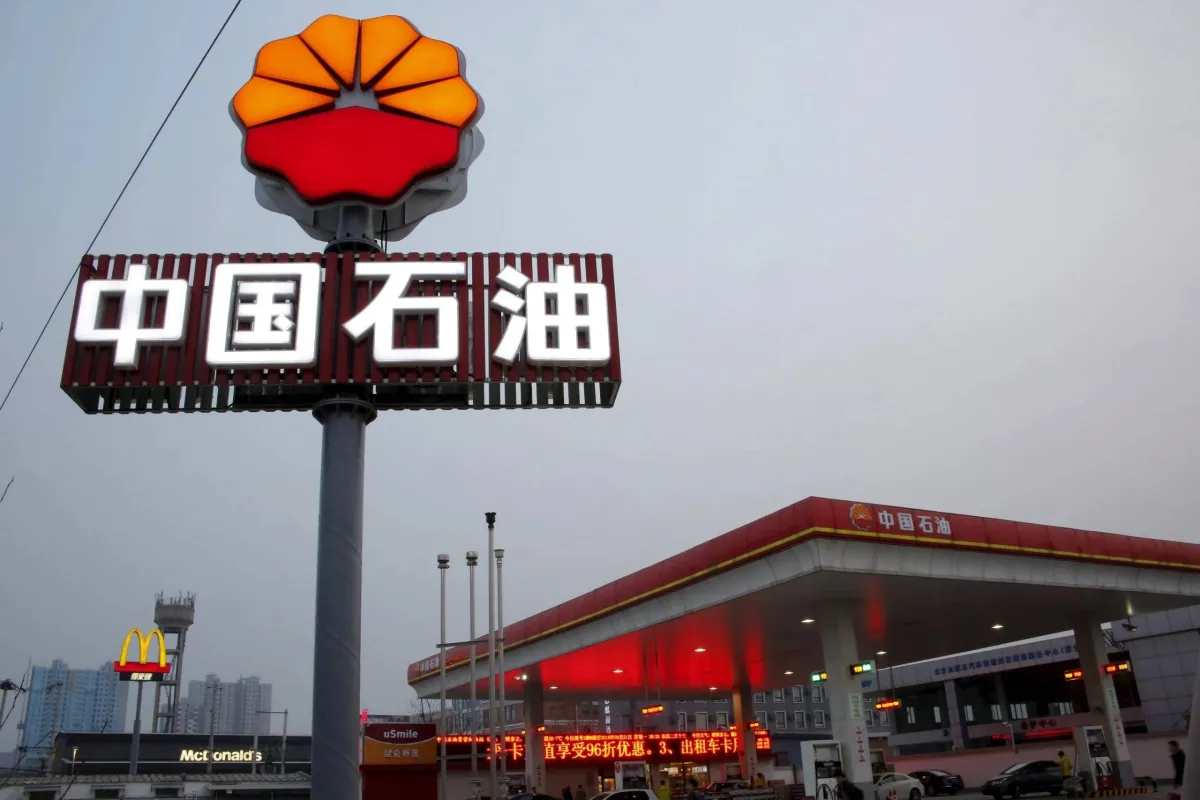
PetroChina, Asia's largest oil and gas producer, reported a 4.5% decrease in its annual net profits for 2025 compared to the record figures achieved in 2024. The net income reached 157.3 billion yuan (approximately 22.76 billion USD), down from 164.7 billion yuan in the previous year.
The company also indicated that revenues fell by 2.5%, amounting to 2864.5 billion yuan, according to a statement submitted to the Shanghai Stock Exchange.
Event Details
In a related context, local competitor Sinopec reported a 11.5% decline in its net profits, reaching 122.08 billion yuan, while the profits of the refining giant Sinopec dropped by 37% to 31.8 billion yuan.
In terms of production, PetroChina produced 948 million barrels of crude oil last year, equivalent to 2.6 million barrels per day, marking an increase of 0.7% from 2024. Additionally, natural gas production rose by 4.5%, reaching 5363.2 billion cubic feet.
Background & Context
It is noteworthy that the average selling price of crude oil in 2025 was 14.2% lower compared to levels in 2024. Furthermore, crude oil refining operations at PetroChina, the second-largest refining company in China after Sinopec, decreased by 0.2% from the previous year, totaling 1.376 billion barrels, or approximately 3.77 million barrels per day.
In mid-2025, PetroChina closed its largest refinery located in northeastern China as part of Beijing's policy to cap the total refining capacity in the country.
Impact & Consequences
Reflecting the impact of the rapid expansion of electricity use in China on gasoline and diesel consumption, PetroChina reported a 2.3% decline in its domestic gasoline sales compared to last year, while local diesel sales increased by 0.8%.
As for aviation fuel, sales surged by 18.3% due to the ongoing recovery in air travel. The natural gas sector of PetroChina remained robust, with operating profit in this sector rising by 12.6% to 60.8 billion yuan.
Regional Significance
These developments at PetroChina indicate the challenges faced by oil and gas companies amid global geopolitical and economic fluctuations. Such changes could influence oil prices in global markets, impacting the economies of Arab countries that heavily rely on oil revenues.
In conclusion, PetroChina is expected to continue facing significant challenges this year, with forecasts suggesting that geopolitical factors may periodically affect supply and prices, creating risks of uncertainty and sharp fluctuations.