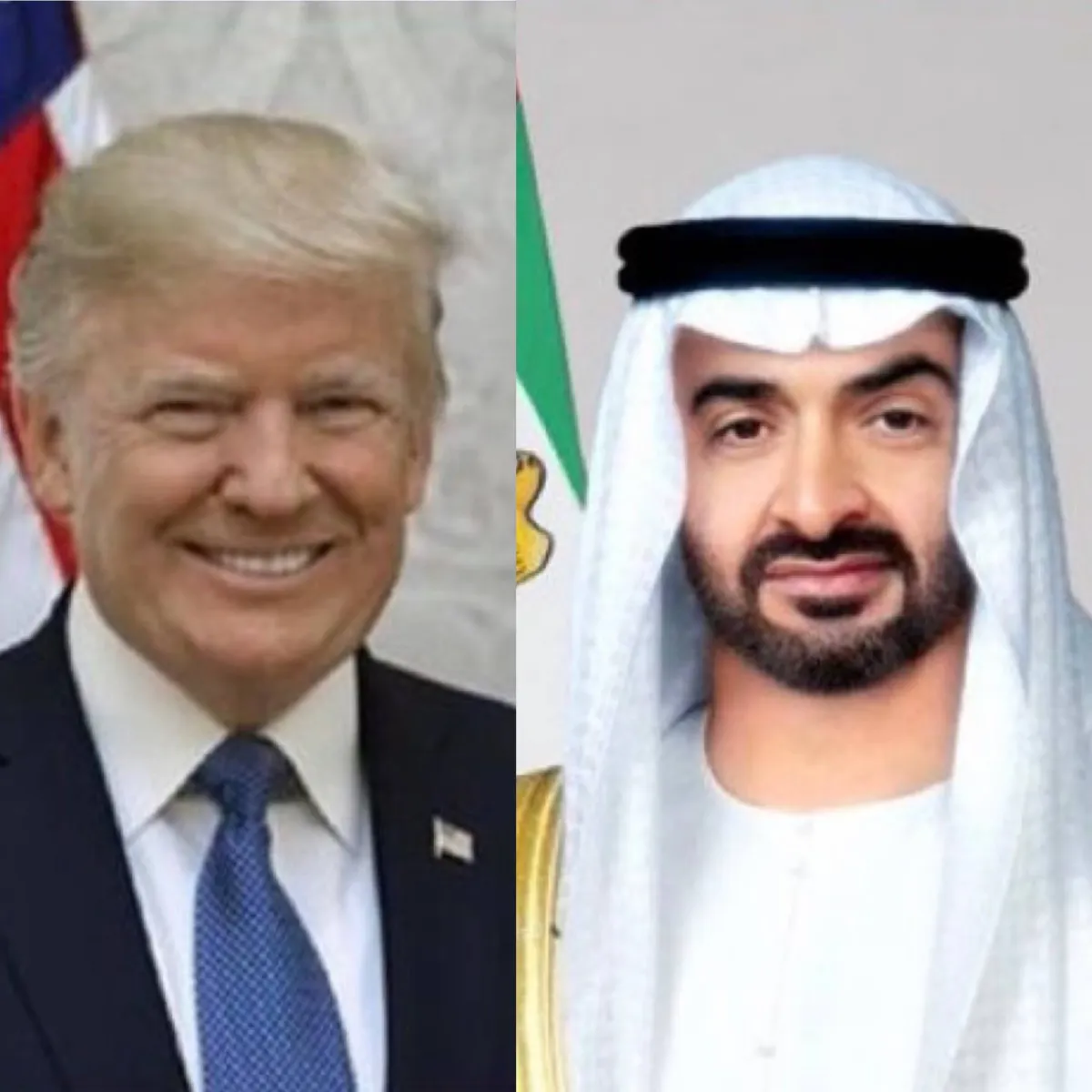
Sheikh Mohammed bin Zayed Al Nahyan, President of the UAE, discussed regional developments and their implications for regional and international security during a phone call with Donald Trump, President of the United States. This conversation comes at a time when the region is experiencing escalating tensions, which directly impact global market stability and international navigation security.
During the call, both sides addressed various dimensions of the current escalation, exchanging views on the implications of these tensions for the global economy and supply chains. They also discussed the ongoing Iranian attacks against the UAE and other countries in the region, which target civilians and vital facilities, constituting a violation of state sovereignty and international laws, and posing a direct threat to security and stability.
Details of the Incident
In a related context, the UAE Ministry of Defense announced that the UAE air defenses successfully intercepted several attacks today (Wednesday), including 5 ballistic missiles and 35 drones launched from Iran. These attacks are part of a series of continuous assaults targeting the UAE in recent times, with a total of 438 ballistic missiles and 2012 drones dealt with since the onset of these assaults.
These attacks resulted in the martyrdom of two armed forces members while performing their national duty, in addition to a Moroccan civilian, as well as the death of 9 civilians of various nationalities, and injuries to 190 individuals with varying degrees of severity. The UAE Ministry of Defense confirmed its highest state of readiness to deal with any threats, emphasizing the necessity of protecting national sovereignty.
Background & Context
Since February 28, Iran has continued its aggressive attacks against Gulf countries in response to military pressures exerted by the United States and Israel. These assaults have been met with widespread international condemnation, as the UN Security Council adopted a resolution on March 11 condemning the Iranian attacks, considering them a violation of international law and a threat to international peace and security.
The resolution, endorsed by 136 countries, affirmed the right of affected states to defend themselves, calling on Tehran to cease all attacks immediately. These developments come at a sensitive time, as concerns grow regarding the impact of these tensions on regional and international stability.
Impact & Consequences
Analyses indicate that the escalation of tensions in the region could lead to negative repercussions on the global economy, especially given the heavy reliance on oil and gas from Gulf countries. Furthermore, the continuation of Iranian attacks may disrupt navigation in the Gulf, increasing shipping costs and affecting global oil prices.
Moreover, these conditions could heighten tensions between major powers in the region, potentially adversely affecting peace and stability efforts. This situation poses a significant challenge to international diplomacy, requiring greater coordination among concerned countries to ensure regional security.
Regional Significance
These developments are of great importance to Arab countries, as they highlight the need to enhance security and defense cooperation among Gulf states. The Iranian escalation underscores the necessity for effective strategies to address security threats, ensuring the protection of national sovereignty.
In conclusion, the situation in the region remains under observation, necessitating urgent actions from the international community to ensure stability and prevent the escalation of crises. Strengthening dialogue and cooperation among the involved countries will be essential to face the current challenges.