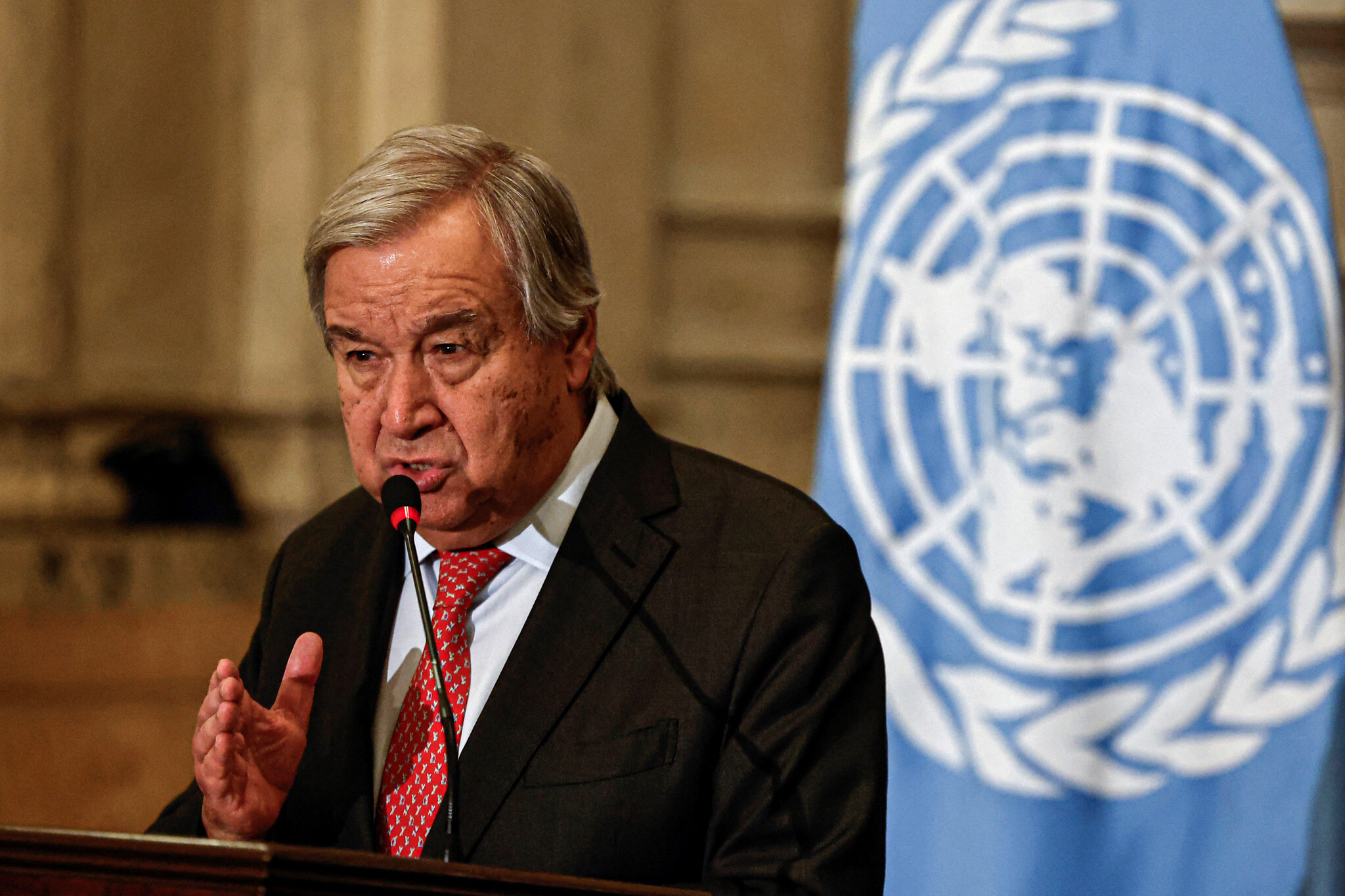
UN Secretary-General Antonio Guterres held a phone call with Egyptian Foreign Minister Sameh Shoukry, where they discussed recent developments regarding the conflict in Iran and its impact on regional security. These discussions come at a sensitive time when the region is experiencing escalating tensions, which calls for intensified diplomatic efforts to resolve conflicts.
Iran is considered one of the key countries in the Middle East, playing a pivotal role in many regional conflicts. In recent years, the country has witnessed a rise in tensions, both internally and externally, significantly affecting the stability of the region.
Details of the Event
During the phone call, Guterres emphasized the importance of dialogue and cooperation among nations to ensure security and stability in the Middle East. For his part, Shoukry pointed out the necessity of enhancing international efforts to reach peaceful solutions to conflicts, especially in light of the increasing challenges facing the region.
The discussions also addressed the humanitarian dimensions of the crisis, with both sides highlighting the urgent need to provide humanitarian assistance to those affected by conflicts in Iran and neighboring countries. They agreed on the importance of joint efforts between the United Nations and Egypt to achieve this goal.
Background & Context
Historically, Iran has experienced numerous political and social crises, where internal and external tensions have exacerbated conditions. Since 1979, when Iran witnessed the Islamic Revolution, the country has become a focal point for many regional and international conflicts.
The interests of major powers intertwine in Iran, as the United States and its allies seek to diminish Tehran's influence in the region, while Iran aims to bolster its presence and impact. These dynamics directly affect regional security and complicate the political landscape.
Impact & Consequences
These discussions come at a critical time, as fears of escalating conflict in the region are growing. The continuation of tensions in Iran could lead to negative repercussions for neighboring countries, including Iraq, Syria, and Lebanon.
Moreover, any escalation in the conflict could impact global oil prices, adversely affecting the global economy. Therefore, current diplomatic efforts aim to avoid any escalation that could lead to new crises.
Regional Significance
Egypt is considered one of the main Arab countries directly affected by events in Iran. Egypt's stability partially depends on the stability of the region as a whole, so any escalation in Iran could impact Egyptian national security.
Furthermore, the historical tensions between Egypt and Iran have increased the importance of diplomatic dialogue between the two countries. Egypt seeks to enhance its role as a mediator in the region, reflecting its commitment to regional security.
In conclusion, the discussions between Guterres and Shoukry represent an important step towards enhancing international cooperation in addressing the increasing challenges in the Middle East. Joint efforts between the United Nations and Arab countries could contribute to achieving peace and stability in the region.