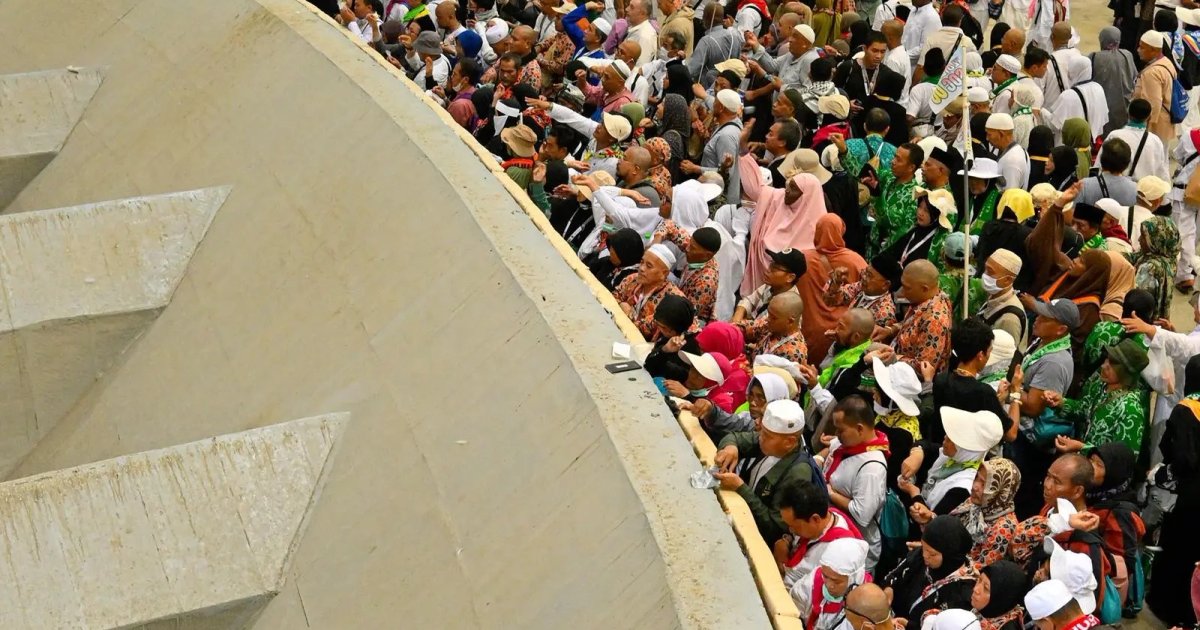
Pilgrims at the Sacred House of Allah continued the ritual of stoning the Jamarat on the first day of Tashreeq (Days of Tashreeq) on Thursday, throwing pebbles at the three pillars that symbolize Satan. This ritual was carried out in an organized atmosphere, with pilgrims moving in groups according to their designated times.
Upon reaching the Jamarat, they chanted "Allahu Akbar" as they began throwing pebbles at the small pillar (Jamrat al-Aqaba), followed by the middle and finally the large pillar, with each pilgrim throwing seven pebbles at each pillar. After stoning the first two pillars, the pilgrims prayed and then quickly moved on after stoning the third pillar, following the tradition of the Prophet Muhammad (peace be upon him).
Event Details
Multiple pathways were designated to ensure the smooth movement of pilgrims to the multi-level Jamarat complex. This innovative structure was designed to efficiently distribute pilgrims during the stoning ritual. The Jamarat were connected by pedestrian bridges linking them to the Mashair Metro and surrounding camps in Mina, facilitating safe and comfortable movement.
The stoning ritual was conducted within a comprehensive system of services and security, supported by meticulous organizational measures that ensured smooth crowd movement at the Jamarat facility. This process was guided by a carefully designed crowd management strategy, implemented through close coordination among stakeholders and continuous on-site monitoring. These efforts contributed to ensuring the highest levels of safety and security, enabling pilgrims to perform their rituals in an atmosphere of comfort and reassurance.
Background & Context
The stoning of the Jamarat is considered one of the most important rituals of Hajj, with roots tracing back to the time of Prophet Ibrahim (peace be upon him), who demonstrated his obedience to Allah by stoning Satan. This ritual symbolizes the rejection of evil and sins and is an essential part of the Hajj rites that pilgrims must perform during the designated days.
This ritual coincides with the Days of Tashreeq, which are an important period in Hajj, where pilgrims gather in Mina to perform these rites, reflecting the spirit of solidarity and cooperation among Muslims from around the world.
Impact & Consequences
Modern crowd management organizations enhance the Hajj experience by ensuring the safety of pilgrims and facilitating their movement. Innovations such as the Jamarat complex reflect Saudi Arabia's commitment to providing the best services to pilgrims, contributing to improving their spiritual experience.
These efforts also demonstrate the Kingdom's ability to accommodate large numbers of pilgrims, enhancing its status as a global religious destination. The success of these organizations can serve as a model for organizing major events in the future.
Regional Significance
The Hajj rituals symbolize Islamic unity, as Muslims from all over the world gather in one place to perform their rites. Well-organized events reflect the Arab countries' capacity to host major events, enhancing cooperation among countries in the field of religious tourism.
The success of Hajj also projects a positive image of the Arab world, strengthening relations between Islamic countries and encouraging further cooperation in the future.
Stoning the Jamarat is an integral part of the Hajj experience, reflecting the spirit of faith and sacrifice. As pilgrims continue to perform this ritual, there remains hope that their deeds will be accepted and that this experience will be a source of peace and reassurance.