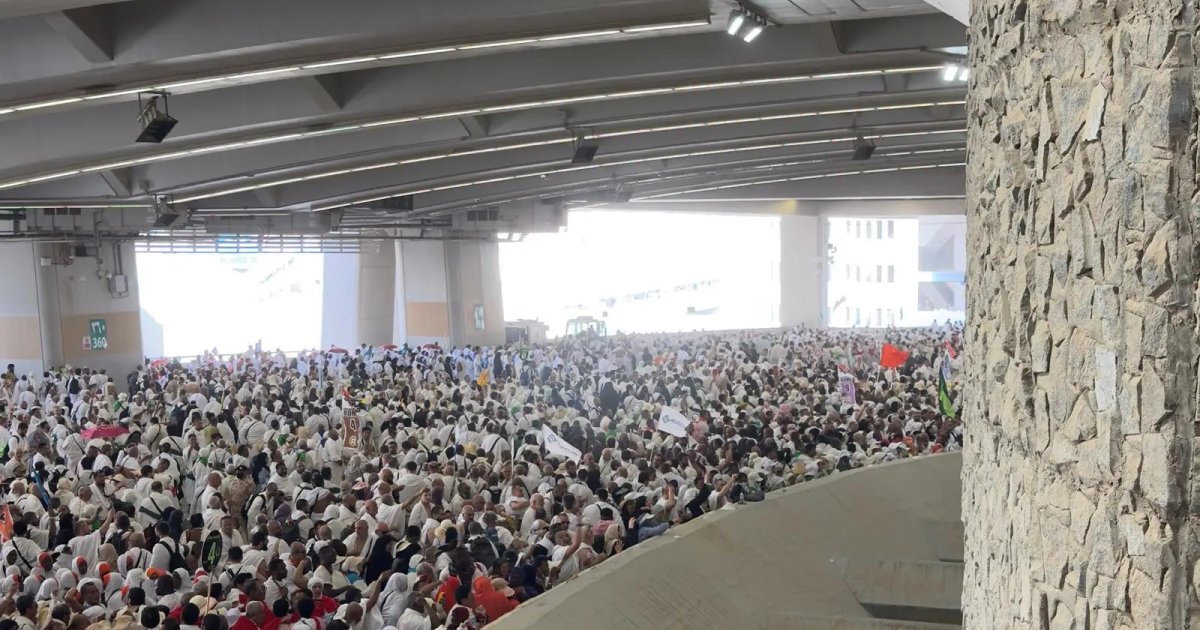
On the third day of the Hajj rituals, pilgrims commenced the performance of five main rituals, which include the stoning of the devil, shaving their heads, and sacrificing animals, in addition to the Tawaf al-Ifadah and Sa'i. Pilgrims who spent the night in Muzdalifah arrived in Mina on Wednesday morning to carry out the stoning rituals.
After enjoying the pivotal standing at Arafat, considered the climax of the Hajj, they proceeded to the stoning of the devil under the scorching sun. This rite marks the final days of Hajj and the beginning of the celebrations of Eid al-Adha for Muslims worldwide, coinciding with the tenth day of Dhu al-Hijjah, known as the Day of Sacrifice.
Main Event Details
Upon their arrival in Mina, pilgrims performed the stoning at Jamrat al-Aqaba, the largest symbol of the devil, following the tradition of the Prophet Muhammad (peace be upon him). Pilgrims used seven pebbles to carry out the stoning ritual, and the movement at the Jamarat Bridge was organized and smooth thanks to the precautionary measures in place.
As they approached the stoning site, pilgrims ceased reciting the Talbiyah and began chanting the Takbir (Allahu Akbar) while heading to perform the stoning ritual. The facilities at the stoning site witnessed a smooth flow of the crowd, supported by field monitoring and operational plans designed to organize pedestrian movement and ensure their safety among the holy sites.
Background & Context
Historically, Hajj is one of the five pillars of Islam, attracting millions of Muslims from around the world each year. This year, the number of pilgrims exceeded 1.7 million, including 1,546,655 pilgrims from abroad and 160,646 local pilgrims. This figure represents a significant increase compared to previous years, reflecting the efforts of the Kingdom of Saudi Arabia to facilitate the performance of Hajj rituals.
The rituals of Hajj provide Muslims with an opportunity to draw closer to God and renew their faith, as the pilgrimage encompasses a series of rites that date back to the time of Prophet Ibrahim (peace be upon him).
Impact & Consequences
The large number of pilgrims demonstrates the ability of the Kingdom of Saudi Arabia to successfully organize and manage this massive event. Comprehensive security and health measures were implemented to ensure the safety of the pilgrims, including the provision of emergency services and healthcare, reflecting the Saudi government's commitment to providing a safe and comfortable experience for pilgrims.
Furthermore, organizing Hajj in this manner enhances the Kingdom's status as a global religious destination and showcases its capacity to accommodate large numbers of visitors during peak times.
Regional Significance
The Hajj is an important event not only for Muslims but also for the Arab region as a whole. It strengthens cultural and religious ties between Arab countries and contributes to enhancing religious tourism, which is a significant source of revenue in many nations.
The success of this year's Hajj is seen as a positive indicator of the Arab countries' ability to organize major events, thereby enhancing regional cooperation in tourism and economic sectors.
In conclusion, Hajj is a unique spiritual experience where Muslims from around the world gather to perform their religious rituals, reflecting the unity of the Islamic nation and the diversity of its cultures.