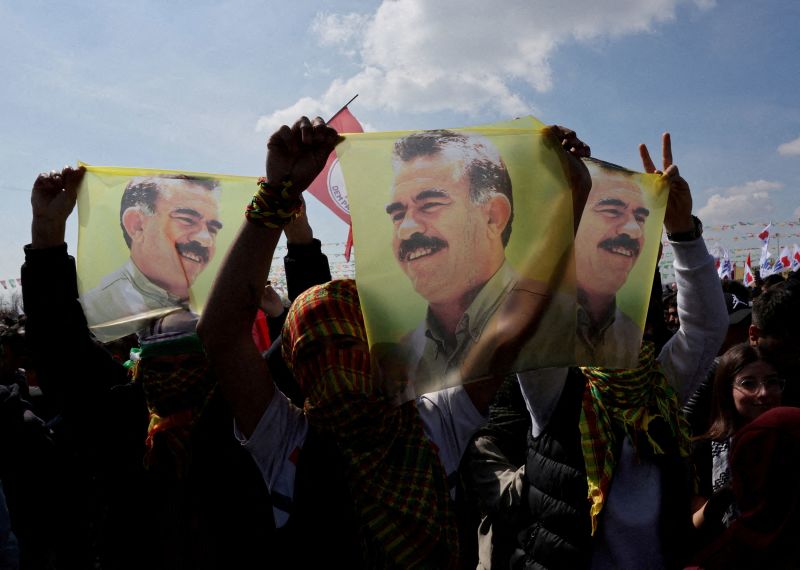
PKK fighters have initiated the first steps of handing over their weapons in a cave in northern Iraq, with the presence of several party leaders. This move is part of ongoing peace efforts, raising questions about the possibility of ending a conflict that has lasted for decades.
The weapon handover represents a new phase in the history of the Kurdish struggle, as the party seeks to achieve a peaceful settlement with the Iraqi government. This step comes after years of armed conflict that resulted in significant human and material losses.
Details of the Event
The weapon handover took place at a secret location, where fighters surrendered a number of heavy and light weapons. This process was documented in the presence of media, reflecting the transparency the party aims to demonstrate at this stage. Observers believe that this step could be the beginning of a broader process that includes complete disarmament.
In recent years, the region has witnessed significant political shifts, as the Iraqi government has sought to strengthen its authority in Kurdish areas. This handover comes at a sensitive time, as pressures on the party increase to make concessions in order to achieve peace.
Background & Context
The PKK was founded in the 1970s and has since waged an armed struggle against the Turkish government, demanding rights for Kurds. Over time, its activities expanded to include northern Iraq, where it established bases. This conflict has led to military interventions by Turkey and Iraq, complicating the situation further.
Over the years, several governments have attempted to achieve a peaceful settlement with the party, but negotiations have often stalled due to mutual distrust. However, current circumstances seem to be paving the way for the start of serious dialogue.
Impact & Consequences
The handover of weapons could have positive effects on stability in the region. If this process is successful, it may open the door to further talks between the Iraqi government and the PKK, potentially leading to an end to the conflict that the Kurdish people have suffered for decades.
Nevertheless, the biggest challenge remains how to implement future agreements and ensure that violence does not recur. Genuine efforts from all parties involved are required to achieve lasting peace.
Regional Significance
The developments in northern Iraq are of great importance to the Arab region as a whole. The Kurdish conflict has implications for neighboring countries, particularly Turkey and Iran, as each seeks to maintain its internal stability.
If the peace process succeeds, it could serve as a model for other regions in the Middle East suffering from similar conflicts. Additionally, stability in Iraq could contribute to improving relations between Arab countries and enhancing regional cooperation.
In conclusion, hope remains that this step marks the beginning of a new era of peace and stability in the region, where everyone strives for a better future.