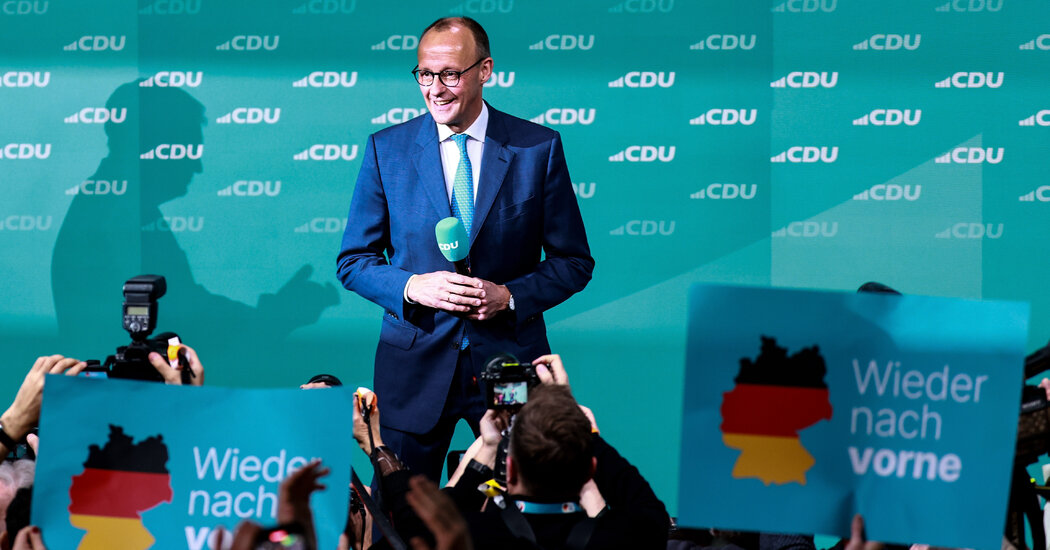
German Chancellor Friedrich Merz announced today, Monday, a plan aimed at repatriating 80% of the Syrians residing in Germany, who number over 900,000. This announcement came during a visit by Syrian President Ahmad al-Shara to Berlin, where several issues related to the reconstruction of Syria and the return of refugees were discussed.
During a press conference, Merz confirmed that both parties are working together on the refugee return file, noting that the majority of Syrians who sought asylum in Germany during the rule of ousted President Bashar al-Assad wish to return to their homeland to rebuild it and live there in safety, freedom, and dignity.
Details of the Announcement
During the conference, Merz stated, "We are working together to enable Syrians to return to their homeland." He expressed his belief that political stability and economic growth in Syria will be crucial for ensuring the success of reconstruction efforts. He also indicated that Germany would support Syria's post-war reconstruction efforts, confirming that a delegation from the German government would visit Damascus soon for this purpose.
In this context, President al-Shara clarified that his country is working in collaboration with the German government to establish a "circular migration" program, which allows Syrian professionals to contribute to the reconstruction of their homeland without abandoning the lives they have built in Germany.
Background & Context
Germany hosts the largest Syrian community in the European Union, with over a million Syrians arriving during the peak of the migration wave that Europe experienced in 2015 and 2016 due to the ongoing conflict in Syria. Germany reopened its embassy in Damascus in March 2025 after a closure lasting 13 years, reflecting its desire to enhance relations with Syria.
During his visit, President al-Shara held a meeting with representatives of German companies, where presentations were made in various fields including energy, finance, security, and digital transformation. Several memorandums of understanding were signed between the Syrian side and the participating companies.
Impact & Consequences
These steps signify a shift in German policy towards Syria, as Berlin seeks to enhance economic and political cooperation with Damascus. This also reflects Germany's desire to leverage the Syrian talents present on its territory to contribute to the reconstruction of Syria, which could help improve the economic situation in the country.
Moreover, the return of Syrians to their homeland could contribute to regional stability, as the return of refugees will bolster efforts to rebuild infrastructure and achieve social stability.
Regional Significance
This initiative is an important step in the context of Arab-European relations, as it could open new avenues for cooperation between Arab countries and Europe in various fields, including reconstruction and development. The success of this step may also encourage other countries to take similar actions regarding Syrian refugees.
In conclusion, this initiative remains under observation, as its success depends on the political and economic conditions in Syria, and the ability of the Syrian government to accommodate returnees and provide suitable conditions for them.