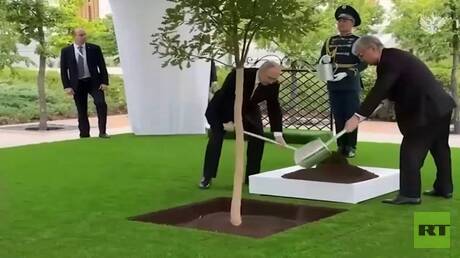
In a symbolic step reflecting the depth of relations between Russia and Kazakhstan, Russian President Vladimir Putin and Kazakh President Kassym-Jomart Tokayev planted an oak tree in the 'Friendship Corridor' in the Kazakh capital, Astana. This event comes at a time when bilateral relations between the two countries are witnessing significant development, as both sides seek to enhance cooperation in various fields.
The planting of the tree symbolizes friendship and sustainable cooperation between the two nations, reflecting their commitment to strengthening cultural and economic ties. Putin emphasized the importance of this partnership in his speech during the event, highlighting the need to enhance cooperation in security, energy, and trade.
Event Details
The ceremony took place in a festive atmosphere, attended by several government officials and media representatives. The oak tree was chosen as a symbol of strength and resilience, mirroring the aspirations of both countries for a shared future. The significance of the 'Friendship Corridor' was also highlighted as a platform for enhancing cultural and economic exchanges between Russia and Kazakhstan.
This event is part of a series of activities aimed at strengthening bilateral relations, during which several economic agreements were signed in the fields of energy, agriculture, and transportation. This cooperation is considered part of Kazakhstan's strategy to enhance its role as a bridge between the East and the West.
Background & Context
Historically, Russia and Kazakhstan have enjoyed close relations dating back to the Soviet era when they were part of the Soviet Union. After the collapse of the union in 1991, Kazakhstan sought to build independent relations with Russia while maintaining cooperation in various fields. In recent years, there has been an increase in trade exchanges and investments between the two countries, reflecting both sides' desire to strengthen their strategic partnership.
Kazakhstan is also one of Russia's largest partners in Central Asia, playing an important role in China's Belt and Road Initiative. This cooperation includes areas such as regional security and counter-terrorism, reflecting the common challenges faced by both nations.
Impact & Consequences
This event is considered an important step towards enhancing relations between Russia and Kazakhstan, reflecting both sides' commitment to developing a strategic partnership. These activities are expected to lead to increased mutual investments and enhanced cooperation in energy and transportation sectors.
Furthermore, strengthening relations between the two countries could have a positive impact on regional stability in Central Asia, as nations seek to address security and economic challenges. This cooperation may also contribute to enhancing Kazakhstan's role as a mediator in regional and international issues.
Regional Significance
Although the event focuses on Russian-Kazakh relations, it has potential implications for the Arab region. Strengthening cooperation between Russia and Kazakhstan could open new avenues for Arab-Russian collaboration, particularly in energy and trade sectors.
Moreover, stability in Central Asia can affect regional security in the Middle East, where Arab nations seek to strengthen their relations with major powers like Russia. Thus, this event represents an opportunity to enhance dialogue and cooperation between Arab countries and Russia.
In conclusion, planting the oak tree in the 'Friendship Corridor' is not just a symbolic event but embodies the desire of both nations to enhance bilateral relations and build a shared future. This step reflects the commitment of Russia and Kazakhstan to sustainable cooperation and opens new horizons for regional and international collaboration.