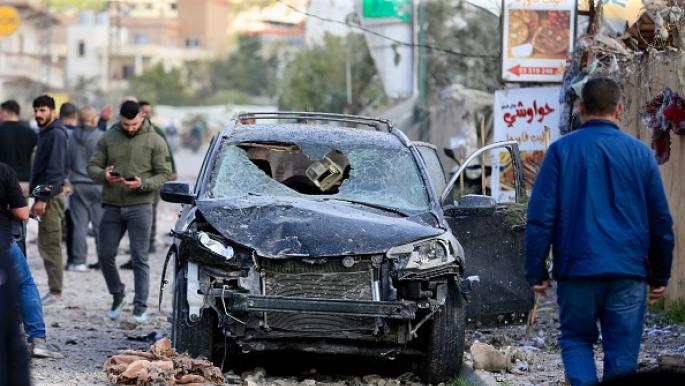
The political situation in Lebanon remains complex, as recent diplomatic efforts, including the Egyptian initiative, have failed to make any progress towards ending the ongoing conflict. The political horizon remains blocked, raising concerns about the country's future and stability.
Despite ongoing diplomatic movements, the situation in Lebanon continues to face significant challenges. Initiatives that have been proposed, including those led by regional and international mediators, have not been able to break through the complex political landscape. It appears that the involved parties remain distant in their positions, complicating peace efforts further.
Details of Recent Diplomatic Efforts
In recent days, a number of Egyptian diplomats visited Lebanon in an attempt to find solutions to the ongoing crisis. However, these visits have not yielded any tangible results, as the various Lebanese parties remain unable to reach a consensus on how to end the conflict. The situation is becoming increasingly complicated with the ongoing political and sectarian divisions.
These initiatives are part of broader efforts aimed at restoring stability in Lebanon, which has been suffering from the repercussions of a civil war that has lasted for years. However, the lack of genuine political will among the involved parties makes it difficult to achieve any progress.
Background & Context
Lebanon has a long history of political and sectarian conflicts, with the civil war that erupted in 1975 leading to the division of the country and creating political and economic chaos. Since then, the country has suffered from instability, with recurring political and economic crises.
In recent years, the situation has worsened due to external interventions and regional conflicts, making Lebanon a battleground for settling scores between regional and international powers. These dynamics significantly affect Lebanon's ability to overcome its internal crises.
Impact & Consequences
The continued political stalemate in Lebanon has serious implications for the country's stability and security. The absence of political solutions exacerbates chaos and increases the suffering of citizens, who are already grappling with the repercussions of economic and social crises.
Moreover, the ongoing conflict affects relations between Lebanon and its neighbors, as it could lead to escalating regional tensions. Neighboring countries are closely monitoring the situation, as any escalation in Lebanon could impact the stability of the entire region.
Regional Significance
The Lebanese crisis is not merely a local issue; it has wide-ranging effects on the Arab region. The continuation of the conflict in Lebanon could encourage the escalation of disputes in other countries suffering from political and sectarian divisions.
Furthermore, external interventions in Lebanon could exacerbate crises in countries like Syria and Iraq, where regional and international interests overlap. Therefore, finding a solution to the Lebanese crisis is essential not only for Lebanon's stability but also for the stability of the entire region.
In conclusion, hope remains pinned on diplomatic efforts to find an exit to the Lebanese crisis. However, the absence of political will and consensus among the involved parties represents a major obstacle to achieving peace and stability in the country.