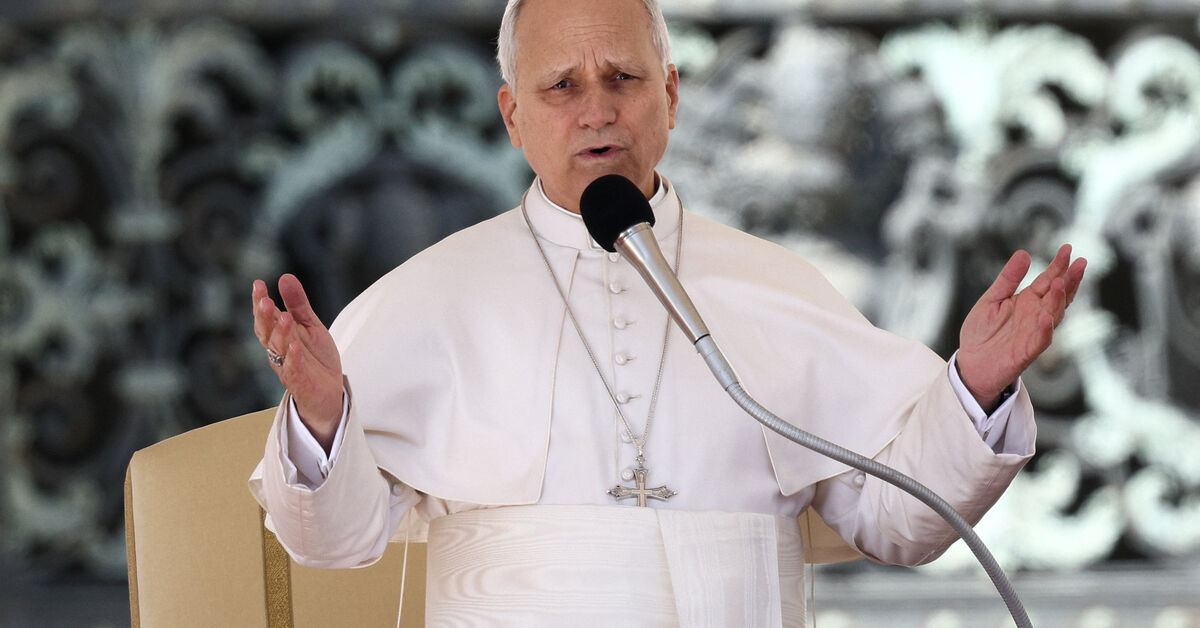
In a move reflecting his commitment to issues of peace and justice, Pope Leon has sharply criticized aerial bombardment, asserting that it should be banned in wars. These statements come at a time when the ongoing conflict in the region is intensifying, as the dispute between the United States, Israel, and Iran enters its fourth week. The Pope expressed his concern over the use of air power in conflicts, stating, "No one should feel threatened by death and destruction coming from the sky."
While the Pope did not directly address the escalating conflict between the powers, his comments carry significant weight amidst rising violence in the region, raising questions about the ethical principles surrounding the use of military force. This comes at a time when the international community is striving to ease existing tensions and work towards peaceful solutions to ongoing conflicts.
Details of the Event
During his meeting with employees of the Italian airline ITA Airways, Pope Leon expressed his discontent with the devastating consequences resulting from aerial bombardment. He added that these military methods do not only target enemies but also inflict significant harm on civilians, creating a vicious cycle of violence. He warned that communities and areas affected by bombardment tend to deteriorate faster, hindering peacebuilding efforts.
The Pope also highlighted the importance of political and diplomatic solutions, emphasizing the need to activate dialogue between conflicting parties, as the use of military force may complicate matters rather than resolve them. The world must seriously consider alternative methods for solutions based on dialogue and understanding.
Background & Context
Historically, wars have increasingly relied on the use of air power, from World War II to modern conflicts, where this strategy represents a part of contemporary military tactics. The sporadic uses of aerial bombardment have sparked much debate over its ethics and consequences, especially in densely populated civilian areas.
The current conflict between the United States, Israel, and Iran is one of the most complex in contemporary history, intertwining political and military interests. Returning to the logic of dialogue and diplomacy has always been the best option for resolving disputes; however, the use of aerial bombardment severely complicates matters and leads to the proliferation of hatred and violence.
Impact & Consequences
The Pope's statements carry deeper implications regarding how the international community thinks about wars and conflicts. The call to ban aerial bombardment reflects a desire to initiate a new phase in handling conflicts, based on ethics and humanity. This call could mark the beginning of a new strategy that transcends traditional methods used in wars.
On another note, the Pope's call reflects the grim reality faced by civilians in conflict zones, which may contribute to increasing pressure on governments to find peaceful solutions. If this call is heeded, we may see positive shifts in how military crises are managed and how the world addresses the problems of wars.
Regional Significance
Pope Leon's words are closely tied to the current situations in the Arab region, which has witnessed numerous wars and conflicts rooted in historical and political issues. Conflicts such as the situation in Syria and Yemen reflect on the movement of displaced persons and refugees, leading to a deterioration of humanitarian conditions.
Reflecting on the Pope's stance on aerial bombardment may contribute to enhancing dialogue between Arab states and some global powers, potentially paving the way for concrete actions towards peace in the region.
In conclusion, the Pope's position regarding aerial bombardment may open the door for further discussions on how to address global conflicts, allowing such calls to influence international policy. It is crucial for everyone to unite in seeking peaceful solutions to chronic issues faced by countries around the world.