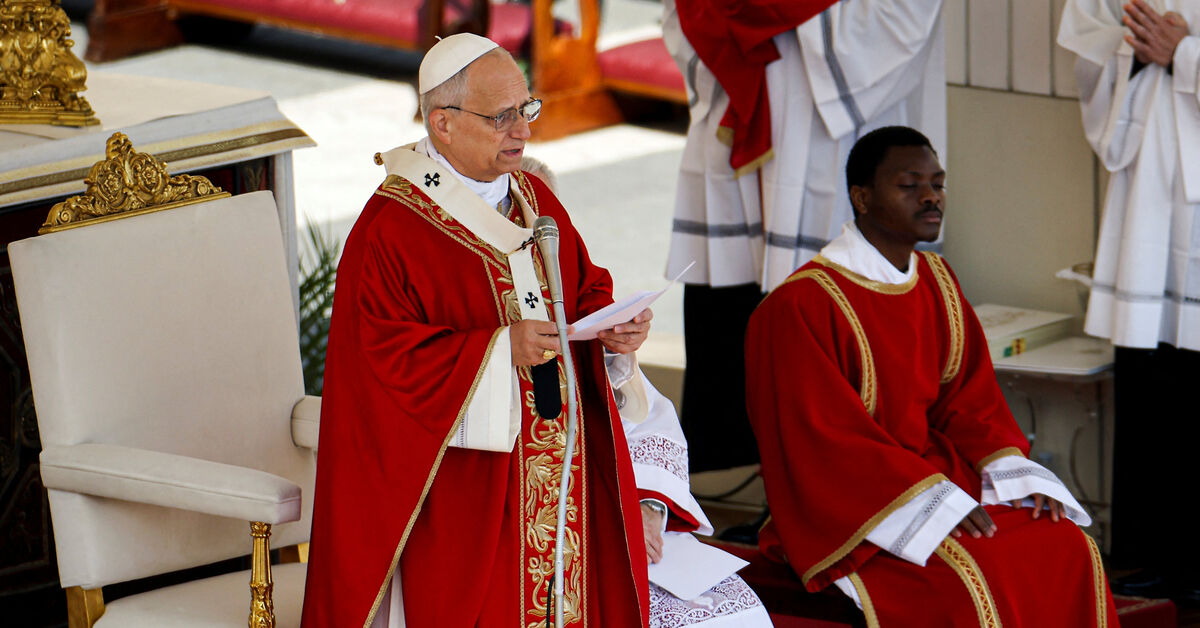
Pope Leon made unprecedented statements affirming that God rejects the prayers of leaders who initiate wars, indicating that these leaders have "blood-stained hands." These remarks were delivered during the Palm Sunday celebrations in St. Peter's Square, where tens of thousands of believers gathered to celebrate the beginning of Holy Week leading up to Easter, one of the most significant religious occasions in the Catholic calendar.
In his speech, Pope Leon stressed that Jesus Christ cannot be used as a pretext to justify wars, reflecting a strong stance from the Catholic Church regarding armed conflicts. These statements come at a sensitive time as tensions escalate in the Middle East, particularly with the ongoing conflict in Iran.
Event Details
During the celebration, Pope Leon highlighted the importance of peace and reconciliation, urging leaders to take effective steps towards ending conflicts. His words sparked significant reactions among the attendees, with many expressing their support for his position. He also pointed out that prayer should be a means of drawing closer to God, not justifying violent actions.
These remarks come at a critical juncture, as fears of escalating violence worldwide increase, making the Pope's words carry strong implications in the context of current events. Numerous studies have shown that wars lead to significant human suffering, making the Pope's call for peace more vital than ever.
Context and Background
Historically, the Catholic Church has always been a voice for peace, advocating for the end of wars and conflicts. However, Pope Leon's statements come at a time when the world is witnessing a rise in armed conflicts, making it essential to reconsider the role of religion in these tumultuous times.
The war in Iran, which has entered its second month, has significantly impacted the region, exacerbating humanitarian crises and increasing the number of displaced persons. Pope Leon's stance reflects the Church's concern over these conditions and expresses its desire to see a more peaceful world.
Impact and Consequences
Pope Leon's statements could significantly influence how leaders address conflicts. His words are expected to spark discussions about the role of religion in politics and how it can contribute to promoting peace rather than fueling disputes. Additionally, his call for peace may inspire many leaders to work towards ending wars.
Furthermore, these statements may increase pressure on governments to seek peaceful solutions to conflicts, potentially improving humanitarian conditions in war-affected areas.
Impact on the Arab Region
In the Arab context, Pope Leon's remarks come at a sensitive time, as many countries are suffering from armed conflicts. His call for peace may resonate in Arab nations enduring wars, such as Syria, Yemen, and Libya, where humanitarian suffering has significantly increased.
Moreover, the Pope's position could bolster peace efforts in the region and encourage Arab leaders to take steps towards ending conflicts and achieving reconciliation. The Pope's words may serve as a call to return to dialogue and understanding rather than resorting to force.