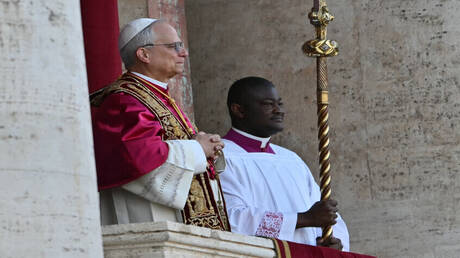
In a powerful message during the Palm Sunday mass, Pope Leo XIV emphasized that God does not listen to the prayers of those who wage wars or invoke the divine to justify their violent actions. These statements come at a sensitive time as Christians in the Middle East endure ongoing crises and conflicts.
The Pope's words are part of his call for peace and tolerance, where he pointed out that using religion as a pretext for violence is entirely unacceptable. He expressed deep concern over the current situation of Christians in the region, who are facing persecution and violence in many countries.
Event Details
During the mass held at the Vatican, Pope Leo XIV called for unity among all religions, stressing the importance of dialogue and understanding between different cultures. He noted that God cannot be a party to human conflicts, and that faith should be a source of peace rather than violence.
The Pope also addressed the humanitarian crises facing Christian communities in the Middle East, emphasizing the need to provide support and assistance to them. This message is part of the Pope's ongoing efforts to promote peace and tolerance worldwide.
Context and Background
Historically, the Arab region has witnessed numerous conflicts where religion has been used as a means to justify violence. With the escalation of disputes in recent years, it has become essential to reconsider how religion is utilized in political and social discourse. Christian communities in the Middle East have suffered from deteriorating security and economic conditions, leading to the emigration of many individuals and families.
In recent years, the Pope has launched several initiatives to promote interfaith dialogue, aiming to build bridges of communication between different communities. This approach is part of a comprehensive vision for global peace, focusing on shared human values rather than division.
Impact and Consequences
The effects of the Pope's statements extend beyond the Vatican, contributing to raising global awareness about the suffering of Christians in the Middle East. They also encourage reflection on how to address conflicts peacefully, away from using religion as a pretext for violence.
These statements are expected to provoke reactions from various circles, both religious and political, and may stimulate further discussions about the role of religion in politics. Additionally, this message could bolster the efforts of humanitarian organizations working to provide support to affected communities.
Significance for the Arab Region
Given the current circumstances, the Pope's message serves as an important call to unify efforts toward achieving peace in the region. As armed conflicts continue, Christians in the Middle East require greater support from the international community, especially amid the harsh conditions they face.
These statements serve as a reminder to everyone that religion should be a source of peace and love, not violence and division. Many hope that this message will contribute to enhancing tolerance and understanding among different religions and cultures in the region.