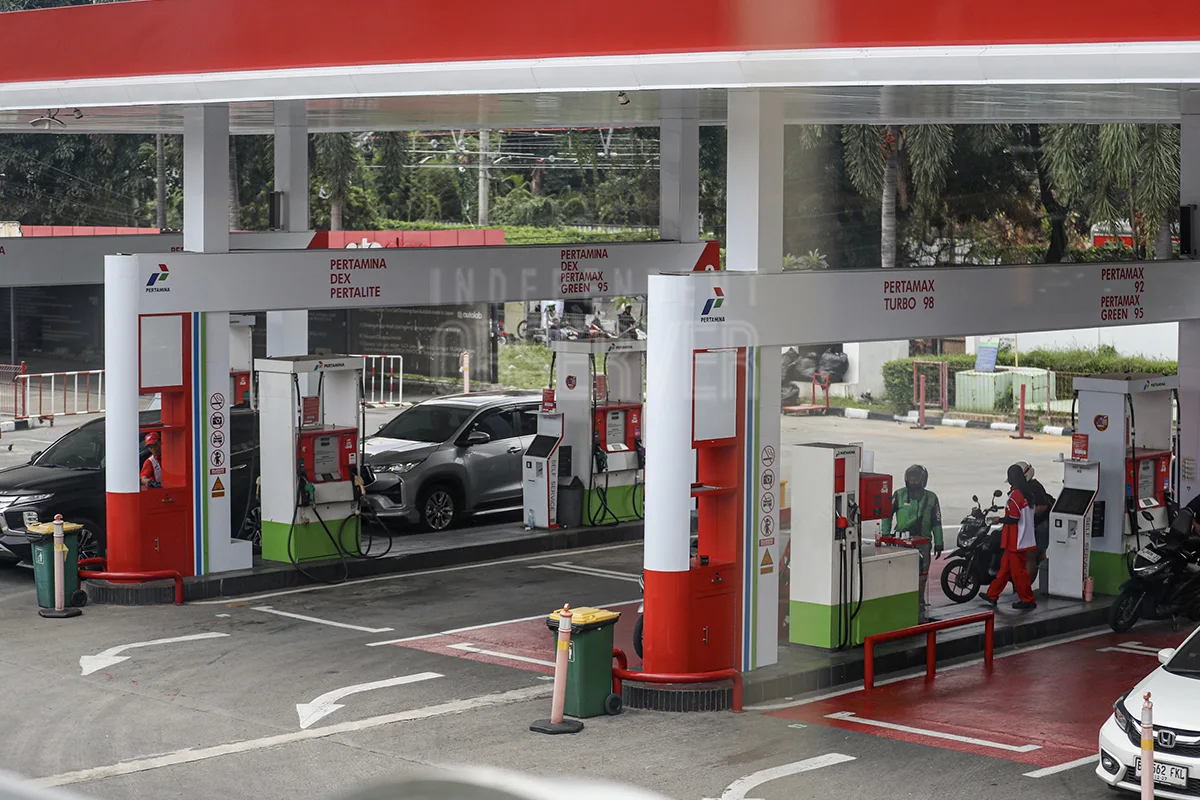
In a move that reflects the Indonesian government's concern for the people's interests, President Prabowo Subianto announced the postponement of a fuel price increase, amid the difficult economic conditions facing the world. This step comes at a time when many countries are experiencing significant increases in fuel prices, making Indonesia's decision a commendable achievement.
In his statements, Iwan Setiawan, Executive Director of Indonesia Political Review, confirmed that this decision reflects the political will of President Prabowo Subianto, noting that the government is working to maintain fuel price stability, whether subsidized or not. He explained that this approach demonstrates the president's empathy and concern for the people's interests.
Details of the Announcement
Setiawan reported that the Indonesian government, through the Minister of Energy and Mineral Resources, Bahriel Lahadalia, is making significant efforts to maintain fuel price stability at a time when many countries are facing substantial increases in fuel prices. He pointed out that Indonesia has managed to keep fuel prices at relatively safe levels, despite global crises affecting energy prices.
The Minister of State, Prastyo Hadi, also confirmed that the government is working to ensure that there is no increase in both subsidized and non-subsidized fuel prices, following coordination with the Ministry of Energy and PT Pertamina. He clarified that the president always prioritizes the interests of the people.
Background & Context
Indonesia is considered one of the countries facing significant challenges in the energy sector, having been directly affected by global crises, such as conflicts in the Middle East and their impact on energy markets. While countries like Cambodia, Laos, Singapore, and Vietnam have experienced substantial increases in fuel prices, Indonesia has managed to maintain relative stability.
Historically, Indonesia has undergone many changes in its energy policies, with the government adopting fuel price support policies to alleviate the burden on citizens. However, global economic challenges may force the government to reconsider these policies in the future.
Impact & Consequences
This step by the Indonesian government is of great importance, as it reflects the government's ability to adapt to global crises. Under current conditions, where the world is facing an energy crisis, maintaining fuel price stability can contribute to enhancing economic and social stability in the country.
Moreover, this move may enhance citizens' trust in the government, potentially leading to greater support for government policies. However, the government must be prepared to deal with any future changes in global energy prices.
Regional Significance
The global energy crisis is an issue that affects all countries, including Arab nations. While some countries are suffering from significant increases in fuel prices, Indonesia presents a model for how to handle such crises. Arab countries can benefit from Indonesia's experience in maintaining fuel price stability and providing support to citizens during times of crisis.
In conclusion, the Indonesian government's decision to postpone the fuel price increase reflects its concern for the people's interests and enhances the country's stability amid difficult economic conditions. It remains to be seen how the government will address future challenges in the energy sector.