Tensions are rising in the Strait of Hormuz, raising questions about the military options that the U.S. administration under President Donald Trump may resort to. The proposed scenarios vary from limited, swift operations to extensive military movements, amidst increasing operational and strategic complexities.
In this context, colleague Salam Khadr explained through Al Jazeera's interactive map that the first scenario involves a swift landing operation in Isfahan, aimed at extracting an estimated 450 kilograms of enriched uranium. However, this option remains unlikely due to logistical difficulties and the complexities of the terrain, making its execution on the ground nearly impossible.
Details of the Proposed Operations
The second scenario pertains to executing a landing on a group of small islands near the Strait of Hormuz, such as Lark, Qeshm, and Siri, which host military facilities. The operations are likely to focus on seizing Khark Island, considered a key hub for Iranian oil exports, a choice previously suggested by Trump due to its strategic importance.
The third scenario involves expanding military operations by integrating naval and air power, leveraging the presence of combat groups that include destroyers, submarines, and aircraft carriers, allowing for complex operations despite the challenges in a sensitive operational environment.
Background & Context
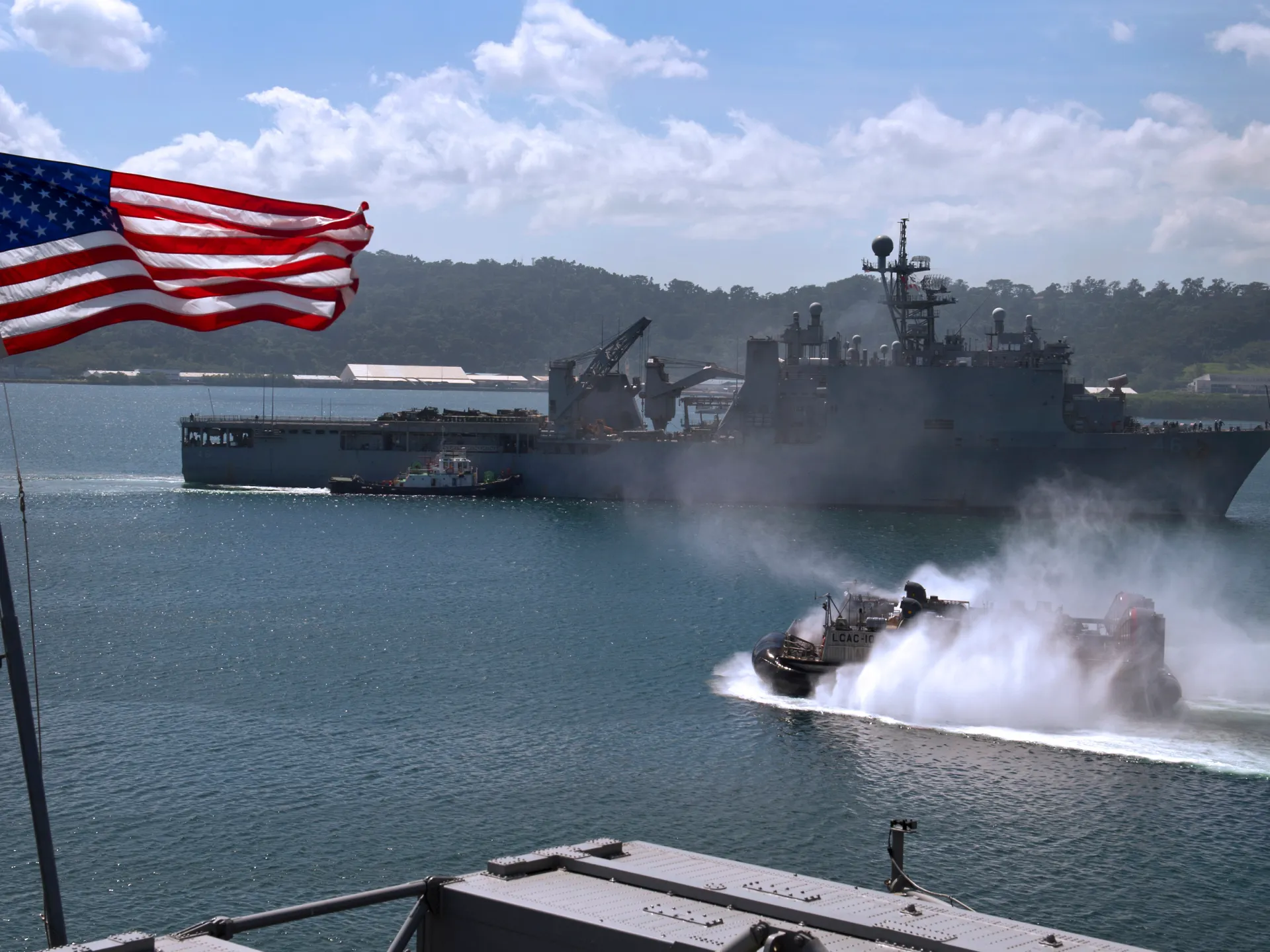
Reports indicate that any ground operation would require the mobilization of significant military assets, such as the amphibious ship USS Boxer, which carries a contingent of approximately 2,500 Marines, along with two additional ships for logistical support. Additionally, the status of the aircraft carrier USS George H.W. Bush and its strike group remains uncertain, adding an element of ambiguity to the U.S. capability to execute any large-scale operation.
The Atlantic magazine revealed that U.S. military officials are considering two potential ground attacks within Iran, with the first scenario targeting Khark Island, while the second focuses on seizing enriched uranium, which could have strategic implications for Iran's nuclear program.
Impact & Consequences
Military expert Brigadier General Elias Hanna discussed President Trump's potential strategy in the Strait of Hormuz, noting that the U.S. seeks to project a clear image of victory despite military and logistical complexities. He clarified that controlling the three main straits is no longer a direct strategic goal, as Iran has lost a significant portion of its nuclear and military capabilities.
Any large-scale ground or air operation would face substantial challenges, particularly regarding control over Khark Island and the surrounding islands in the Strait of Hormuz, where Iran's defense network reaches all entrances and exits. Furthermore, closing or controlling the strait would directly impact global oil markets, potentially removing around 2.5 million barrels per day from the market, complicating any military decision further.
Regional Significance
The available U.S. options require balancing its interests with those of its NATO allies and regional countries, amidst significant challenges in deploying amphibious and exploratory forces. Additionally, reliance on British naval power or NATO is limited due to maintenance of several key vessels, placing Washington in a difficult position.
The importance of Arab and Gulf weight in managing the Strait of Hormuz remains evident, whether through opening it to establish global bases or seeking alternative routes for oil and gas exports, which requires substantial time, effort, and financial resources. Since February 28, the U.S. and Israel have been waging a war against Iran under the pretext of eliminating what they describe as the threat posed by its nuclear and missile programs, while Tehran responds with strikes on Israel and targets what it describes as U.S. bases and interests in the region.