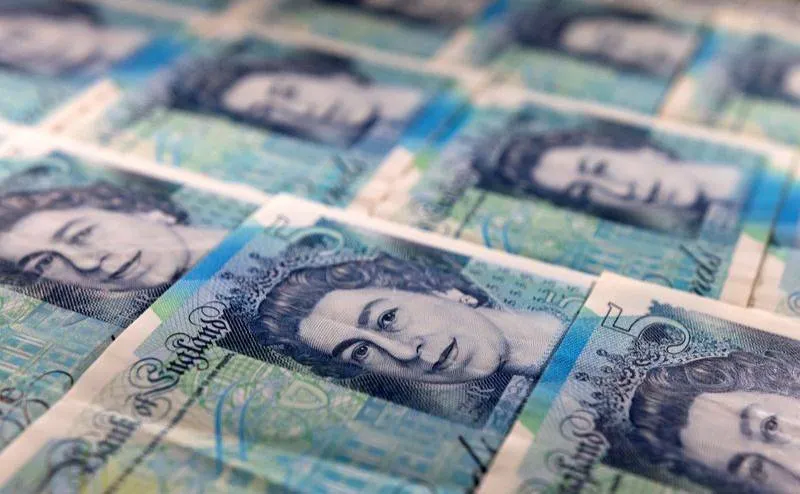
The British pound has fallen to its lowest level in over three weeks against the euro, and it is heading towards a fifth consecutive daily loss against the dollar, amid rising investor fears about the impact of the Iranian war on the UK economy.
The dollar approached its highest level in ten months on Monday, as conflicting signals from Iran and the United States dampened expectations for a quick resolution to the conflict in the Middle East, according to Reuters.
Event Details
Despite the decline of the pound, it remains the best-performing currency against the dollar since the war began in early March. During the same period, the euro has dropped by approximately 2.7%, while the yen has decreased by 2.4%.
Strategic analysts indicate that the pound faces clear risks due to the UK's heavy reliance on imported natural gas, persistent inflation, and public financial pressures, which have led to a sharp decline in its government bonds.
The yields on British government bonds for 10 years settled at 4.98%, after reaching 5.118% last week, the highest level since 2008. Some British pension funds have been asked to increase their cash liquidity to manage hedge positions following the sharp drop in bond prices, although the impact so far has been limited compared to the crisis that led to the resignation of former Prime Minister Liz Truss.
Background & Context
In a research note, Barclays strategy analysts stated that geopolitical developments have pushed British policy into the background, but the risks of adopting an expansionary fiscal policy are likely to have increased following the energy shock and with local elections approaching in May.
Investors are looking ahead to the local elections scheduled for May 7, where the ruling Labour Party led by Keir Starmer trails behind the populist Reform Party and the leftist Green Party.
Economic data released last week showed that British business activity grew at its slowest pace in six months, while manufacturing input costs accelerated at the fastest rate since 1992, and retail sales declined.
Impact & Consequences
The pound has decreased by 0.15%, reaching 1.324 US dollars, after losing 1.67% during March. In contrast, the euro rose by 0.11% to 86.83 pence, after hitting 86.87 pence, its highest level since March 6.
Market analysts expect the European Central Bank to raise interest rates at the earliest opportunity in April, while the Bank of England is expected to delay any potential rate cuts.
Regional Significance
The Arab region is directly affected by ongoing events, as rising oil prices due to the Iranian war could negatively impact the economies of Arab countries, especially those reliant on oil imports. Additionally, the decline of the pound may affect trade relations between Britain and Arab nations.
In conclusion, the pound remains under significant pressure under current circumstances, requiring investors and analysts to closely monitor geopolitical and economic developments.