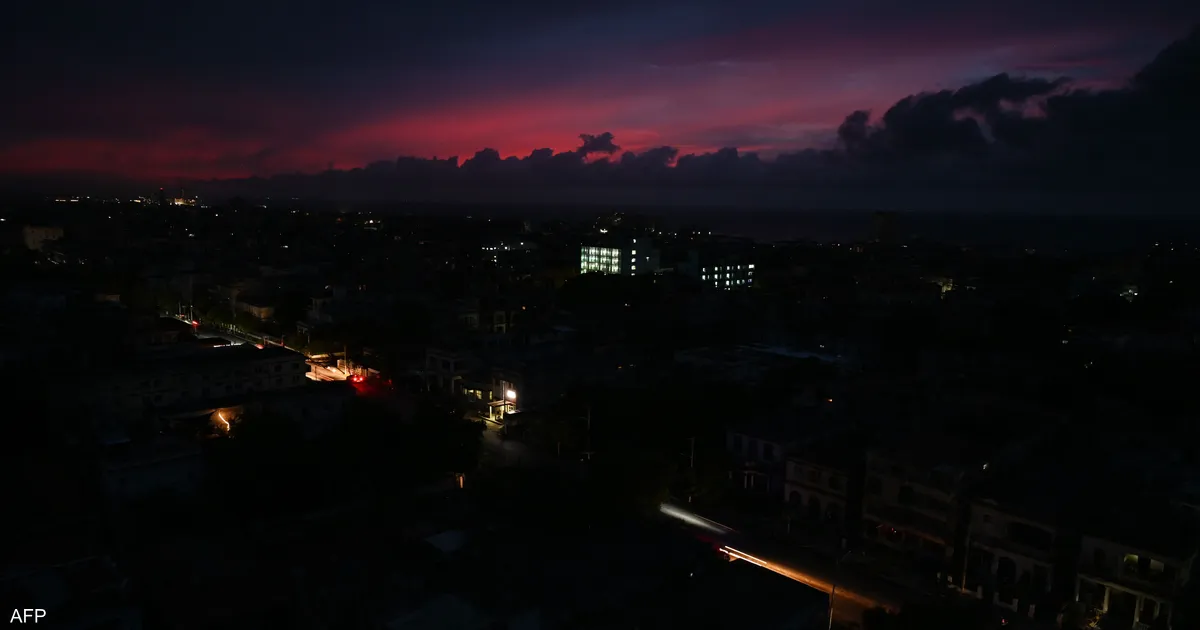
The complete power outage in Cuba has deprived over 10 million citizens of electricity, as the national electricity grid collapsed for the second time in just one week. The Cuban Ministry of Energy announced that a "full shutdown of the national electricity system has occurred," confirming that "service restoration protocols have already begun."
Cuba continues to suffer from the collapse of its electrical network amid complex economic and political conditions, deteriorating electricity infrastructure, and a severe fuel shortage due to harsh U.S. sanctions preventing the import of essential oil needed to operate power plants. Notably, the country faced three major blackouts this month due to these sanctions, highlighting the seriousness of the situation faced by Cuban citizens.
The state-owned electricity company UNE is working to gradually restore power, prioritizing vital centers such as hospitals and water systems. However, as the crises persist, reports of public anger have surged, with residents in the capital, Havana, banging pots and pans and taking to the streets in unauthorized protests, which challenge the authorities that ban such demonstrations.
The BBC reported that the dire conditions have driven some citizens to express their frustration, with one Havana resident stating, "Things are really bad. There are political and economic problems as well as crises of all kinds." Another woman expressed her discontent, saying, "There is no place to live or escape. There is no work for young or old, and things are getting worse."
The frequent power outages are linked to a series of crises hitting Cuba due to sanctions. Both Biden and Trump defend their tough stance against Cuba, with reports indicating that the Trump administration had proposed a "friendly takeover" of Cuba as part of efforts to increase pressure on the Cuban government.
In light of these circumstances, international humanitarian aid has rushed to provide assistance, with a group of international socialist organizations arriving in Havana carrying supplies including solar panels and fresh food. The "Nuestra America" convoy, which departed from Mexico, is expected to arrive at the port today.
Cuban President Miguel Díaz-Canel has confirmed that there is a plan to prepare the Cuban people to defend against any potential military aggression from the U.S., as preliminary dialogue between the U.S. and Cuban governments appears to have begun, though the outcomes remain unclear.
In an analytical perspective, the situation in Cuba highlights the severe implications of sanctions on human development and basic living conditions. The ongoing crises raise questions about the Cuban government's ability to manage the situation and put social stability under tension and strain.
Instead of being a beacon for the third world in how to manage countries under siege, Cuba is suffering from recurring crises that indicate the weaknesses of its economic systems, drawing global attention to the plight of its people. While citizens strive to find a way out of the swamp of suffering, Cuba remains under the watchful eyes of the world as a symbol of the impact of international politics on daily life.