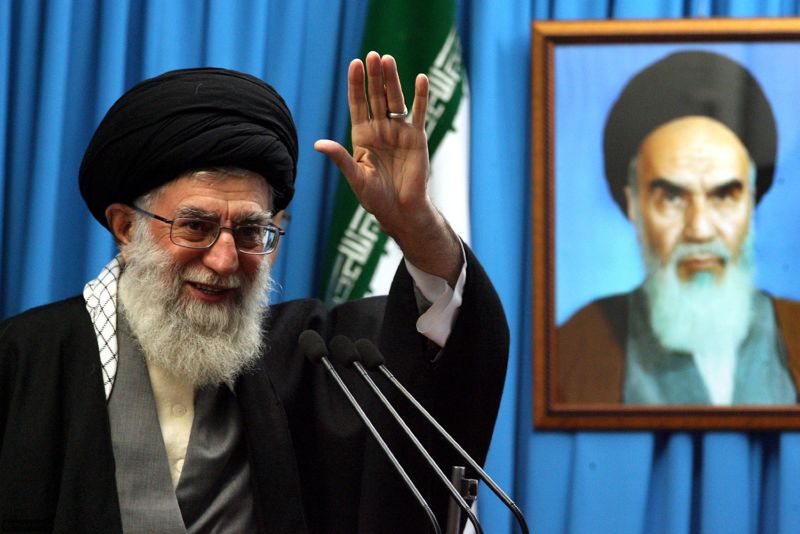
Israeli news site 'Walla' has revealed that Iranian leader Mojtaba Khamenei has not been fulfilling his responsibilities since his injury during the inauguration ceremony. These developments come at a time when the Iranian regime is experiencing a fierce power struggle, with President Masoud Bezhakian competing against the hardline faction.
This information raises concerns as it reflects a state of instability within the Iranian system. Khamenei's absence from the political scene may lead to escalating tensions among various factions, potentially impacting Iran's domestic and foreign policies.
Details of the Event
Rumors about the health condition of Mojtaba Khamenei, a prominent figure in the Iranian regime, are increasing. His injury during the inauguration raises questions about who will assume leadership during this critical period. President Masoud Bezhakian, who enjoys support from some hardline forces, is striving to consolidate his power in Khamenei's absence.
The hardline camp, which includes a group of political and military figures, is seeking to exploit this opportunity to enhance its influence. At the same time, Bezhakian faces challenges from within his government, where opinions vary on how to manage the current crises.
Background & Context
Historically, Iran has witnessed multiple internal power struggles, particularly between moderates and hardliners. These dynamics trace back to the Islamic Revolution of 1979, which led to the establishment of the Islamic Republic. Since then, there have been ongoing attempts by various factions to seize control.
In recent years, tensions have escalated due to economic and social crises, intensifying political conflicts. Khamenei's absence could lead to a reshaping of political alliances within the regime, opening the door for radical changes in Iranian policies.
Impact & Consequences
The implications of Khamenei's absence from the political scene could be far-reaching. If the situation remains unchanged, divisions within the regime may increase, potentially leading to political instability. This could affect Iran's ability to address external challenges, including relations with Western and Arab nations.
Moreover, the power struggle may escalate tensions in the region, as neighboring countries closely monitor the situation. Should significant changes in leadership occur, regional policies could be profoundly affected, altering the balance of power in the area.
Regional Significance
Developments in Iran are of great importance to Arab countries, especially those sharing borders or historical ties with Iran. Any instability in Iran could have repercussions on regional security, as extremist groups might exploit this chaos to enhance their influence.
Furthermore, political changes in Iran could affect relations between Arab nations and Iran, potentially opening avenues for new dialogue or exacerbating existing tensions. It is crucial for Arab states to closely monitor these developments, as they could impact their political and security strategies.
In conclusion, the situation in Iran remains complex and unstable, with the power struggle intensifying in the absence of Mojtaba Khamenei. These events may represent a turning point in Iranian politics, necessitating careful observation by the international community and Arab nations.