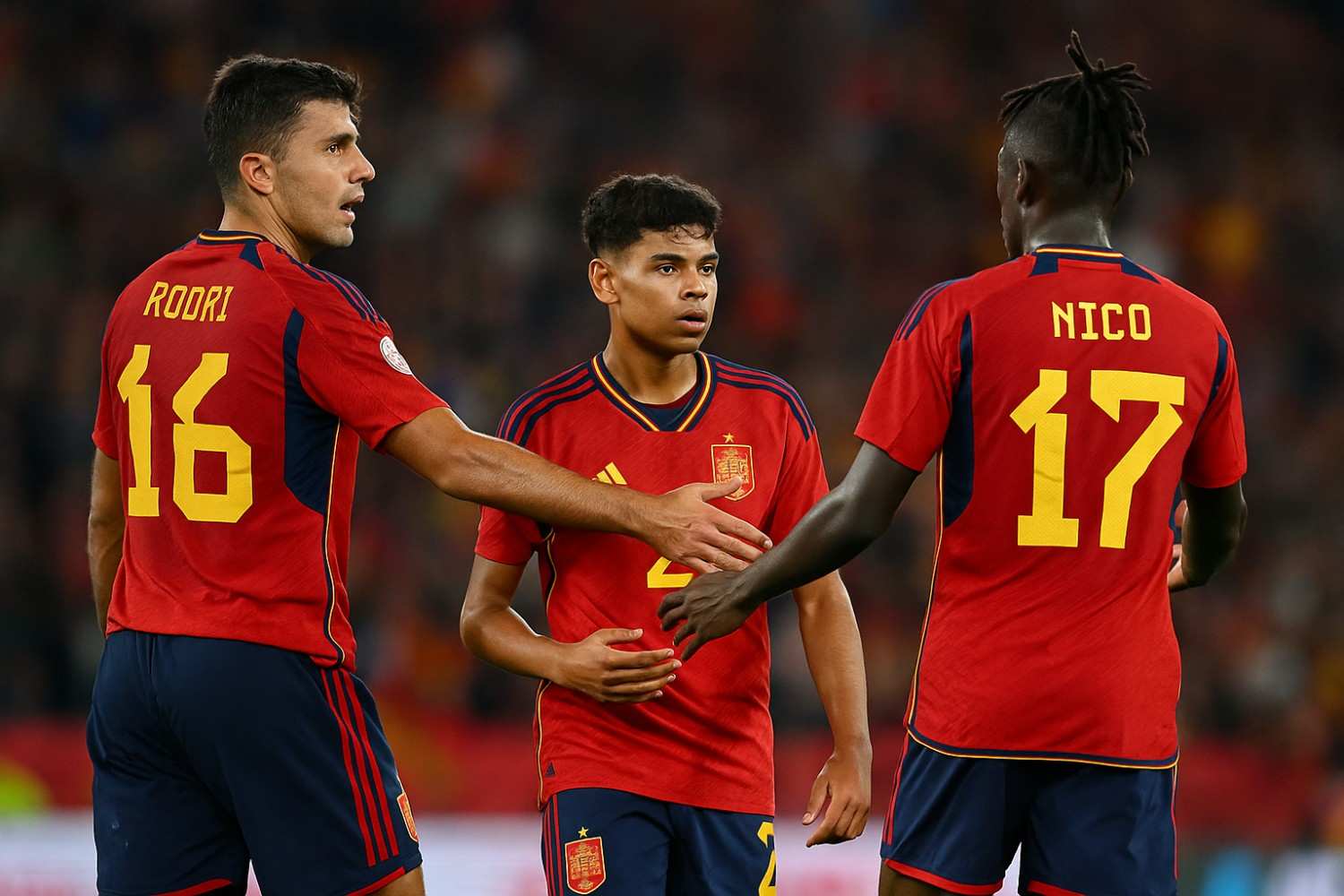
Recent predictions from a supercomputer developed using artificial intelligence techniques indicate that the Spanish national team is the most likely candidate to win the 2026 World Cup, set to be held in the United States, Canada, and Mexico. Meanwhile, Iran continues to hold onto hope for positive results despite the significant challenges it faces.
These predictions are part of the growing analyses that rely on big data and mathematical models, where the performance of teams and players in previous tournaments is analyzed to provide accurate forecasts about future outcomes.
Event Details
All eyes are on the 2026 World Cup, a global sporting event that brings together the best teams from around the world. Studies have shown that Spain, thanks to its rich football history and strong performance in the qualifiers, is considered one of the top contenders for the championship. On the other hand, Iran, which has qualified for the World Cup for the sixth time, aims to achieve a historic feat that elevates the level of football in the country.
The supercomputer's predictions are based on a set of criteria, including performance in previous matches, individual player statistics, and the surrounding conditions of the tournament. The results have shown that Spain has significant chances, reflecting the team's strength and its successful history in global competitions.
Background & Context
Historically, Spain has achieved great successes in football, winning the World Cup in 2010, along with numerous European titles. In contrast, Iran, despite its long history in the game, has not been able to surpass the group stage in previous tournaments. However, the repeated qualifications reflect the development of Iranian football and its desire to compete at the highest levels.
This tournament represents an opportunity for Iran to showcase its strength on the global stage, especially amid the political and economic conditions the country is experiencing. Additionally, the support of Iranian fans will play a significant role in motivating the players to achieve positive results.
Impact & Consequences
If the supercomputer's prediction of Spain's victory comes true, it will enhance its status as a global football power and increase the popularity of the sport in the country. Winning the World Cup would also positively impact the Spanish economy through increased tourism and investment in sports.
For Iran, achieving positive results in the tournament could help improve the country's image on the international stage and boost national spirit among fans. Success in the World Cup could open new horizons for Iranian sports and encourage youth to engage in football.
Regional Significance
The World Cup is an event that unites people and enhances cultural ties between nations. In the Arab region, many look forward to seeing their teams compete in the tournament, reflecting the passion Arabs have for football. The success of any Arab team in the tournament could significantly enhance national identity and pride among fans.
In conclusion, football remains a universal language that brings people together, and the 2026 World Cup presents a new opportunity to showcase talents and athletic abilities. With the predictions from the supercomputer, excitement is building around the upcoming tournament, as everyone looks forward to seeing who will achieve glory in this major sporting event.