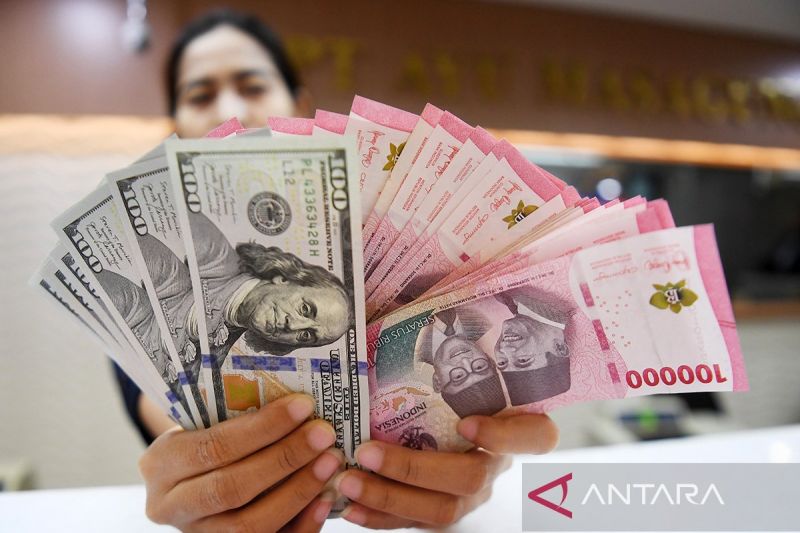
Josua Pardidi, head of the economics department at Permata Bank, stated that the future exchange rate of the Indonesian rupiah heavily relies on political developments between the United States and Iran. These comments come at a sensitive time marked by increasing global tensions, raising concerns about their impact on global financial markets.
Pardidi pointed out that the rupiah may face additional pressures if tensions between the two countries persist, as any escalation in conflict could lead to fluctuations in oil and commodity prices, which in turn would affect the Indonesian economy.
Details of the Situation
Concerns are growing that tensions between the United States and Iran could have negative effects on the global economy, including Indonesia. Indonesia heavily relies on its oil and gas exports, and any changes in the prices of these commodities could impact the value of the rupiah.
Moreover, trade relations between Indonesia and other countries could also be affected, complicating the economic situation in the country. Pardidi emphasizes that investors should exercise caution during this period, as financial markets may experience significant volatility.
Background & Context
Historically, relations between the United States and Iran have been tense, marked by numerous political and economic crises. In recent years, these tensions have escalated significantly, impacting global markets. Indonesia, as a developing nation, is not insulated from these events, as any changes in global policy directly affect its economy.
Indonesia is considered one of the largest economies in Southeast Asia, relying on exports of commodities such as oil and gas. Therefore, any changes in global prices for these goods can significantly impact the Indonesian rupiah.
Impact & Consequences
If tensions between the United States and Iran continue, we may witness negative impacts on the Indonesian rupiah. Such tensions could lead to an increase in oil prices, raising import costs and adversely affecting the balance of payments.
Furthermore, these conditions could lead to a decline in confidence in the Indonesian market, potentially prompting investors to withdraw their investments, thereby impacting economic growth in the country.
Regional Significance
The tensions between the United States and Iran are a concern for many Arab countries, as these tensions could affect oil prices, which in turn reflects on the economies of oil-producing Arab nations. Additionally, any escalation in conflict may lead to increased instability in the region, affecting trade and economic relations.
In this context, Arab countries must be prepared to deal with any changes in the global market and work to strengthen their local economies to be less susceptible to external fluctuations.