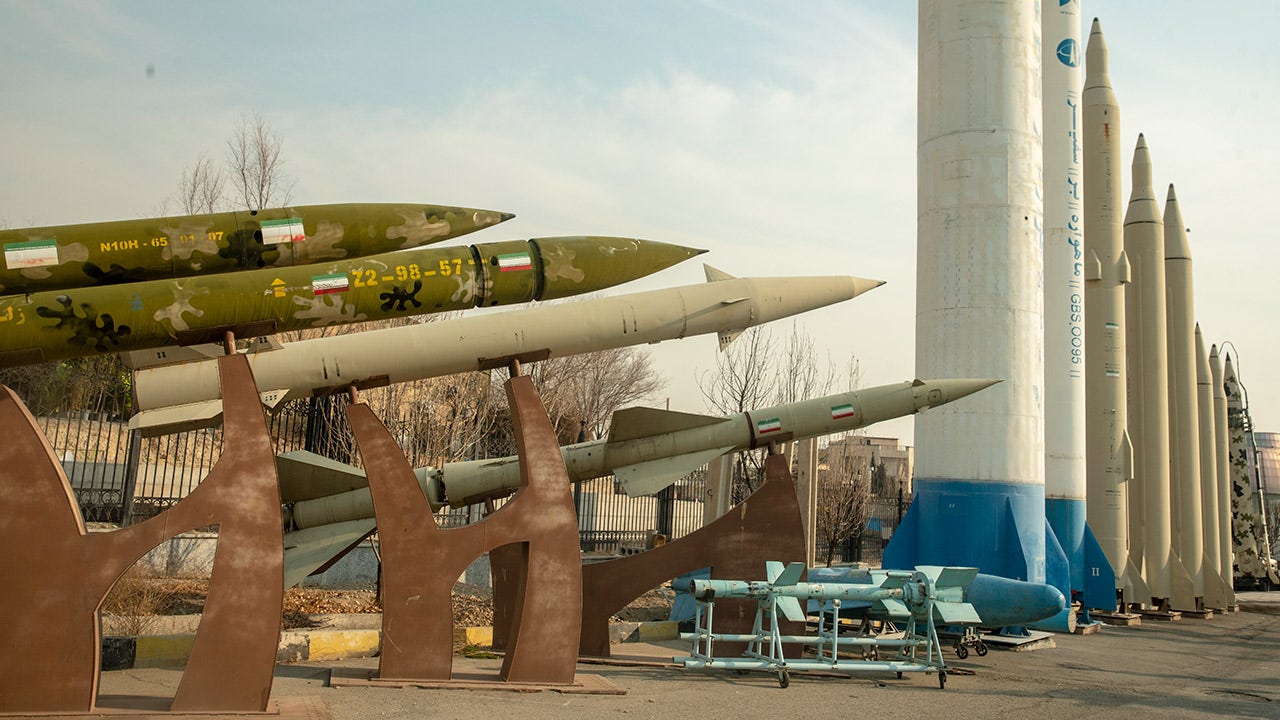
U.S. Secretary of Defense Pete Hegseth has stated that the upcoming phase will be crucial in the relations between the United States and Iran, indicating that Washington is prepared to negotiate 'with bombs.' This statement comes at a time when U.S. Chairman of the Joint Chiefs of Staff Dan Kin announced that American forces have bombed over 11,000 targets inside Iran since the conflict began.
In remarks made today, Tuesday, Hegseth noted that U.S. forces in the Air Force and Naval branches continue to shoot down Iranian missiles and drones, praising their 'lethal' capabilities and the efficiency of pilots operating in the region. He also confirmed that American soldiers are demanding the execution of their mission and the provision of bombs and targets, aware of the dangers posed by Iran's possession of nuclear weapons.
Details of the Event
Hegseth clarified that the last few hours have seen a decrease in the number of Iranian missiles, indicating a decline in Tehran's military capabilities. He confirmed that the U.S. Central Command has detected a 'clear lack of leadership' within Iran. He also pointed out that the ruling system in Iran would be in a better position if it reached an agreement with the United States, while emphasizing that his country does not wish to undertake any military action beyond the utmost necessity.
If an agreement with Iran is not reached, Hegseth asserted that the United States is on high alert to continue military operations, noting that his country is 'closer than ever to achieving victory.' He explained that military operations against Iranian missile and production capabilities are ongoing without pause, with a command bunker destroyed inside Iran and 200 dynamic strikes executed just last night.
Background & Context
These statements come at a sensitive time, as U.S.-Iranian relations have been escalating since February 28, 2026, when the United States and Israel launched a wide-ranging war against Iran. Tehran responded by launching missiles and drones towards Israel, targeting what it describes as American interests in the region, resulting in human casualties and civilian damage in Gulf countries.
Kin also mentioned that U.S. forces have destroyed over 150 Iranian vessels, including all Jamaran-class frigates. He confirmed the continuation of a broad campaign against Iran's defense industrial base, including research and development laboratories and related infrastructure. He explained that the United States is asserting its dominance over the Iranian navy, focusing on targeting its mine-laying capabilities.
Impact & Consequences
Concerns are growing that the continued military escalation between the United States and Iran could lead to greater escalation in the region, potentially affecting regional security and increasing tensions among neighboring countries. Additionally, U.S. military operations may provoke increased Iranian responses, threatening the stability of the region.
At the same time, the international community must closely monitor developments, as any escalation could impact oil prices and global markets. There are also increasing calls from some countries to find diplomatic solutions to avoid further military escalation.
Regional Significance
The current developments pose a threat to security and stability in the Arab region, as any military escalation could have negative repercussions for neighboring countries, especially those suffering from internal tensions or ongoing conflicts. Gulf countries may be directly affected by any escalation, increasing the need for enhanced security and defense cooperation among them.
In conclusion, the situation in the region remains tense, requiring intensive diplomatic efforts to avoid further military escalation and achieve stability in U.S.-Iran relations.