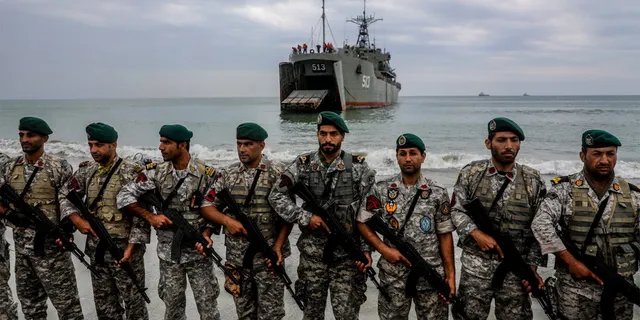
The U.S. Department of Defense (Pentagon) is preparing for limited ground operations within Iranian territory, according to media leaks. These operations include the deployment of special forces and Marines, aimed at executing rapid missions such as destroying military sites or controlling strategic points like Khark Island or seizing uranium.
Reports indicate the sending of thousands of American soldiers to the Middle East, including special units and paratroopers, reflecting a clear military buildup for a potential ground war. This step is conditional on the failure of diplomatic efforts with Iran and the inability to reach an agreement, according to U.S. statements.
Details of the Planned Operations
Potential U.S. objectives include controlling the Iranian Khark Island and extending influence over the Strait of Hormuz. However, leaks suggest that the Pentagon is assessing the high risks of a potential ground landing, which may face missile attacks, drone strikes, and naval mines. Military landings are considered some of the most challenging war maneuvers, requiring precise coordination among naval, air, and ground forces, along with substantial logistical support to ensure mission success and minimize potential losses.
In light of these plans, the Iranian Revolutionary Guard has declared a state of maximum alert across the Strait of Hormuz, sending a message that any attempt at a U.S. military landing will face severe resistance and a war of attrition.
Context and Background
These developments evoke memories of major wars, as military history showcases the most famous landings, from the Normandy invasion that changed the face of Europe, to the Inchon landing in South Korea, and the failure of the Gallipoli campaign. This review aims to analyze the threads of success and failure, comparing them to current challenges.
The Normandy landing, executed on June 6, 1944, is the largest and most famous landing in military history. It was launched by massive forces from the United States, Britain, and Canada, opening a new front against Germany during World War II. This landing enabled the establishment of a bridgehead in western France, paving the way for the liberation of France, Belgium, and the Netherlands from Nazi control.
Consequences and Impact
Although the element of surprise was crucial in the Normandy landing, the current situation is entirely different. Media leaks and official statements regarding the possibility of launching a limited ground attack on Iran diminish the element of surprise, reducing the effectiveness of U.S. military plans. Additionally, geographical risks and rugged terrain may complicate any air or amphibious landing operation.
The Inchon landing in 1950 is one of the boldest military ventures, where United Nations forces executed a surprise amphibious landing deep behind North Korean lines. U.S. General Douglas MacArthur relied on the element of surprise, leading to the operation's success and the recapture of the capital, Seoul. However, the logistical risks were significant, with estimated casualties in the early days around 3,500 soldiers.
Impact on the Arab Region
These developments raise concerns within the U.S. Congress, where members of the Armed Services Committee have expressed worries about the lack of clarity regarding U.S. operational and strategic objectives. They also warn of a potential shortage of munitions, especially interceptor missiles. Any military escalation in the region could significantly affect regional stability and heighten tensions between Arab states and Iran.
In conclusion, the prospects of U.S. ground operations in Iran remain a complex military gamble, requiring a thorough study of military history and the lessons learned from it. Current preparations indicate that any move could be fraught with risks, necessitating extreme caution from all parties involved.