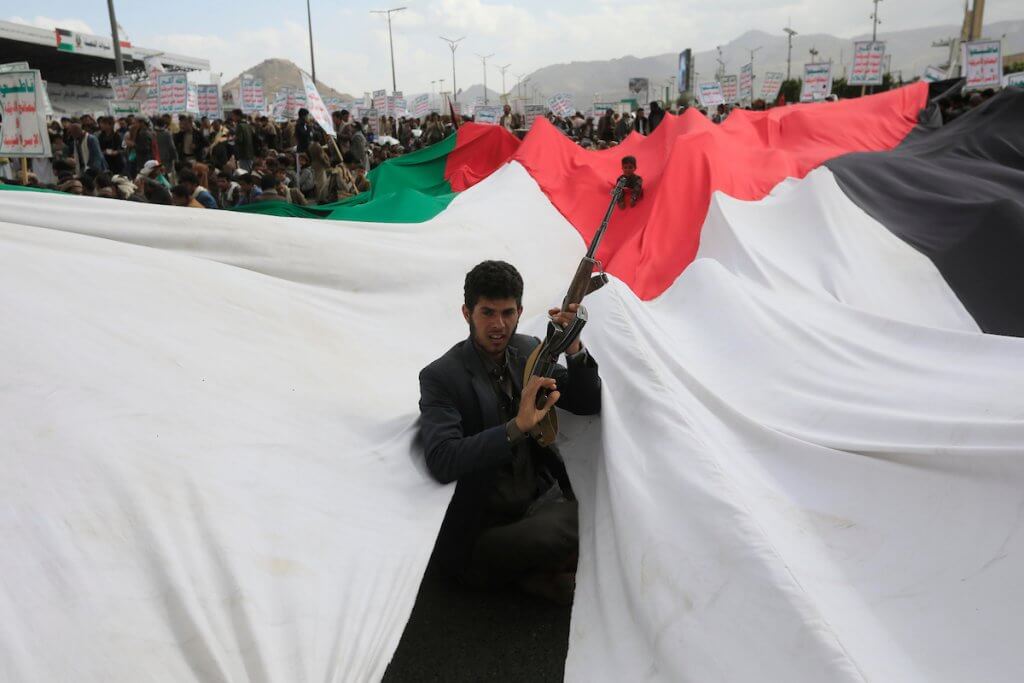
The Ansar Allah group, known as the Houthis, has announced that they are fully prepared for military intervention if confrontations escalate in Yemen. These statements come at a time when the conflict in the country is witnessing a noticeable escalation, raising concerns about the worsening humanitarian and political situations.
These remarks were made by one of the group's leaders, who emphasized that "our hands are on the trigger," indicating that any escalation from adversaries will be met with a strong response. These statements reflect a state of increasing tension in the region, where clashes between government forces and the Houthis are intensifying.
Details of the Situation
The statements from Ansar Allah coincide with escalating clashes on several fronts in Yemen, where government forces backed by the Arab coalition are attempting to regain control of areas lost to the Houthis. In recent days, there has been an uptick in mutual shelling, resulting in numerous civilian casualties.
It is noteworthy that the Houthis have managed to achieve territorial gains in recent years, complicating the conflict further. Observers have pointed out that these statements may indicate the Houthis' readiness to expand their military operations, which could lead to a worsening of the situation in the country.
Background & Context
The history of the conflict in Yemen dates back to 2014 when the Ansar Allah group seized control of the capital, Sana'a. Since then, the country has witnessed a devastating war that has resulted in thousands of deaths and the displacement of millions. The Arab coalition, led by Saudi Arabia, intervened in 2015 to support the internationally recognized government, complicating the conflict and increasing the suffering of civilians.
Several factors intertwine in this conflict, including the regional struggle between Saudi Arabia and Iran, where the Houthis are considered allies of Tehran. This regional conflict adds another dimension to the Yemeni struggle, making political solutions more complex.
Impact & Consequences
The recent statements by Ansar Allah could lead to military escalation in Yemen, threatening to increase the suffering of civilians living in dire humanitarian conditions. Additionally, any escalation could affect the peace efforts that the United Nations is trying to activate, potentially prolonging the conflict.
If a large-scale military intervention occurs, it could open the door to greater regional repercussions, as other parties may intervene in the conflict, further complicating the security situation in the region.
Regional Significance
The situation in Yemen is of significant concern for regional stability. Any escalation in the conflict could negatively impact neighboring countries, especially given the economic and political crises many Arab nations are facing. Furthermore, the increase in violence in Yemen could lead to a greater influx of refugees into neighboring countries, increasing the pressure on these nations.
In conclusion, the situation in Yemen remains under scrutiny, with growing fears of a military escalation that could exacerbate humanitarian and political crises. Under these circumstances, hope remains pinned on international peace efforts to end the conflict and restore stability to the country.