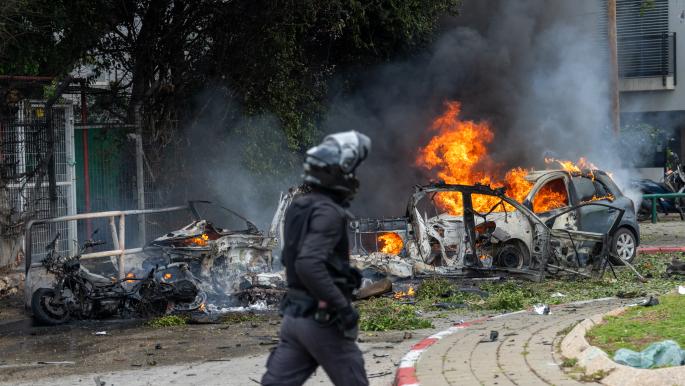
Israeli military leadership is preparing for a potential future war with Iran, anticipating that any confrontation could begin unexpectedly. These preparations come amid rising tensions between Israel and Iran, raising concerns about regional stability.
Reports indicate that the Israeli army is developing new strategies to address potential challenges, focusing on enhancing both defensive and offensive capabilities. These steps are part of a comprehensive assessment of the security situation in the region, which requires unconventional preparations to counter increasing threats.
Details of the Event
The five hypotheses formulated by the Israeli military leadership include various scenarios regarding how to manage the battle if it breaks out. Among these hypotheses is a focus on utilizing advanced technology in military operations, as well as strengthening cooperation with regional and international allies.
The hypotheses also address the possibility of using unconventional weapons, reflecting new trends in modern warfare strategies. These preparations come in light of escalating Iranian threats, including the development of its nuclear and missile programs, complicating the security landscape in the region.
Background & Context
Historically, relations between Israel and Iran have been marked by increasing tensions, with Israel viewing Iran as an existential threat. Since the Islamic Revolution in 1979, relations between the two countries have taken a hostile turn, with Iran supporting armed groups hostile to Israel in the region, such as Hezbollah in Lebanon and Hamas in Gaza.
In recent years, Iran has intensified its military activities in the region, prompting Israel to take proactive steps to enhance its security. This dynamic reflects broader regional tensions, as major powers compete for influence in the Middle East.
Impact & Consequences
If war were to break out between Israel and Iran, it would significantly impact regional and international security. Major powers are likely to intervene in the conflict, further complicating the situation. Additionally, war could exacerbate humanitarian crises in the region, particularly in neighboring countries like Iraq and Syria.
These preparations serve as a warning that conditions may be heading toward escalation, necessitating urgent steps from the international community to reduce tensions. Any escalation in the conflict could lead to widespread economic and political repercussions globally.
Regional Significance
The implications of any potential conflict between Israel and Iran are directly related to the security of neighboring Arab countries. Nations such as Lebanon, Syria, and Jordan could be particularly affected, as war may lead to mass displacement of populations and increased sectarian tensions.
Furthermore, war could reshape alliances in the region, with some Arab countries potentially seeking to strengthen their ties with Iran in response to Israeli threats. These dynamics could lead to radical changes in regional politics.
In conclusion, Israeli preparations for a potential war with Iran indicate the increasing tensions in the region. The current situation requires all parties involved to work towards diplomatic solutions to avoid military escalation that could have dire consequences.