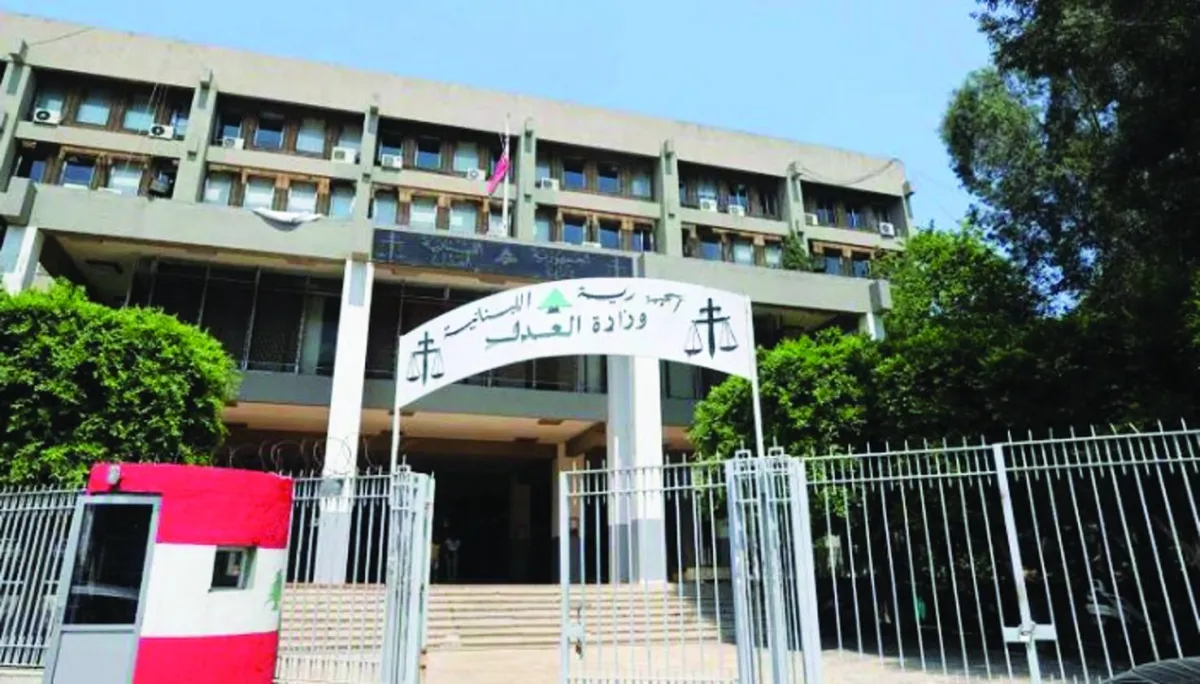
Lebanon is entering a new phase as the retirement of Prosecutor General Jamal Al-Hajjar approaches on April 25. This change is igniting a political and judicial struggle over who will succeed him in this critical position, which is one of the most important and influential judicial roles in the country.
The significance of the Prosecutor General's position goes beyond being the head of public prosecutions and the reference for judicial police; it extends to its political and security dimensions. It represents a precise intersection between the executive authority and the judicial body, and is considered the authorized reference for managing international judicial cooperation.
Details of the Event
In recent years, the role of the Prosecutor General has notably increased, especially in major cases with international dimensions. Among the most prominent of these cases are the investigations related to the Beirut Port explosion, where Al-Hajjar played a pivotal role in receiving and responding to judicial requests from abroad. His role also emerged in coordinating with Lebanese security agencies and their counterparts abroad, particularly in Arab countries, to combat drug trafficking networks, especially shipments of Captagon, which have been a source of ongoing tension between Lebanon and Gulf countries.
The new Prosecutor General will face delicate and complex challenges, as the Lebanese judiciary anticipates requests for judicial and security cooperation from Gulf countries, following the discovery of security cells linked to Hezbollah that were planning operations in several of these countries, such as Kuwait, the United Arab Emirates, Bahrain, and Qatar.
Context and Background
The political tug-of-war over the judicial figure who will assume this position is intensifying, with each party seeking to tilt the balance in favor of its candidate. According to sources, President Joseph Aoun is inclined to support the appointment of the President of the North Criminal Court, Judge Rabih Al-Husseini, while close associates of Prime Minister Nawaf Salam are said to prefer appointing the Attorney General at the Court of Cassation, Judge Ahmad Rami Al-Haj.
In the corridors of the Supreme Judicial Council, there are those who advocate for Judge Rola Othman, who currently serves as the first investigating judge in Beirut, as a potential option reflecting a trend towards enhancing the presence of women in senior judicial positions. However, the influence of the Supreme Judicial Council remains limited after the Constitutional Council annulled the law on the independence of the judiciary, which had granted the council the right to propose three names for this position.
Impact and Consequences
With the absence of the Supreme Judicial Council's influence, the appointment remains contingent on political consensus between the President of the Republic and the Prime Minister, taking into account sectarian balances. Typically, the Prosecutor General is from the Sunni sect, which gives the Prime Minister a wider margin in the selection process. Sources do not rule out the emergence of names outside the list of primary candidates, such as the President of the Criminal Court of Cassation, Judge Osama Mneimneh, and the Director General of the Ministry of Justice, Judge Mohammad Al-Masri.
Current judicial circles indicate that Judge Mohammad Al-Masri's chances have relatively increased in recent days, given that he is the highest-ranking among Sunni judges, a factor that plays a role in the weighting within the judicial body.
Impact on the Arab Region
The repercussions of this change extend beyond Lebanon, as it could affect relations between Lebanon and Gulf countries, especially amid ongoing security and political tensions. The choice of the new Prosecutor General will have a significant impact on how Lebanon deals with security and judicial files, particularly those related to Hezbollah.
In conclusion, this position represents a significant challenge under the current circumstances and reflects the political and judicial conflicts that the country is experiencing. The selection process will be the focus of everyone's attention, as it will determine the course of the Lebanese judiciary in the upcoming phase.