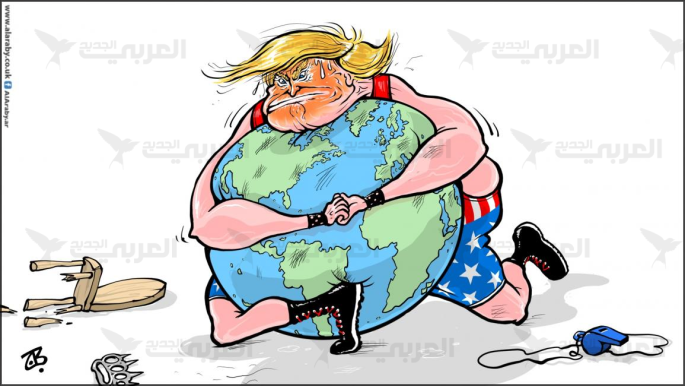
The President of the most powerful nation has sparked widespread debate after affirming the use of military force to achieve peace, even admitting he might bomb a country 'for fun'. These statements evoke historical practices dating back to Roman times, where wars were seen as a means of entertainment and a display of power.
These remarks come at a sensitive time when the world is witnessing increasing political and military tensions. Military power is viewed as a tool to achieve political objectives, raising questions about the ethics associated with the use of force in international relations.
Event Details
In a press conference, the President indicated that the use of military force may be necessary at times to achieve stability and peace. He stated that he does not hesitate to make tough decisions, even if they involve bombing other countries. These statements have elicited mixed reactions, with some viewing them as expressions of power and dominance, while others see them as a call to violence and war.
The President also added that force may be an effective means to achieve peace, a concept rooted in ancient military philosophies. However, this type of thinking raises concerns about the humanitarian consequences of wars and armed conflicts.
Background & Context
Historically, great powers have used military force as a means to achieve their political goals. In ancient times, wars were considered a form of entertainment, with battles organized in arenas before crowds. This type of thinking still exists in some political circles today, where wars are viewed as tools for achieving dominance.
In recent years, the world has seen a rise in armed conflicts, exacerbating humanitarian crises. However, the use of military force as a means to achieve peace raises questions about the effectiveness of this approach, especially in light of peaceful alternatives.
Impact & Consequences
The President's statements underscore that the use of military force may have far-reaching implications for international relations. Rather than promoting peace, these remarks could escalate conflicts and increase tensions between nations. They may also affect public opinion in other countries, leading to negative reactions against military policies.
Moreover, these statements could contribute to the reinforcement of a culture of violence, where force is seen as a means to resolve conflicts. This necessitates a rethinking of how to handle international crises, seeking peaceful solutions rather than relying on military force.
Regional Significance
The Arab region is considered one of the most affected areas by military conflicts. Many Arab countries have experienced wars and armed conflicts, leading to worsening humanitarian crises. The President's statements could exacerbate these crises, as they may be used as a pretext to justify military interventions in the region.
Additionally, these statements could affect relations between Arab countries and major powers, increasing tensions and complicating peace efforts. Under these circumstances, it becomes essential to seek peaceful solutions that promote stability in the region.
In conclusion, the statements of the President of the most powerful nation raise questions about the ethics associated with the use of military force. As global crises increase, it becomes crucial to seek peaceful alternatives that enhance peace and stability, rather than relying on force as a means to achieve political objectives.